


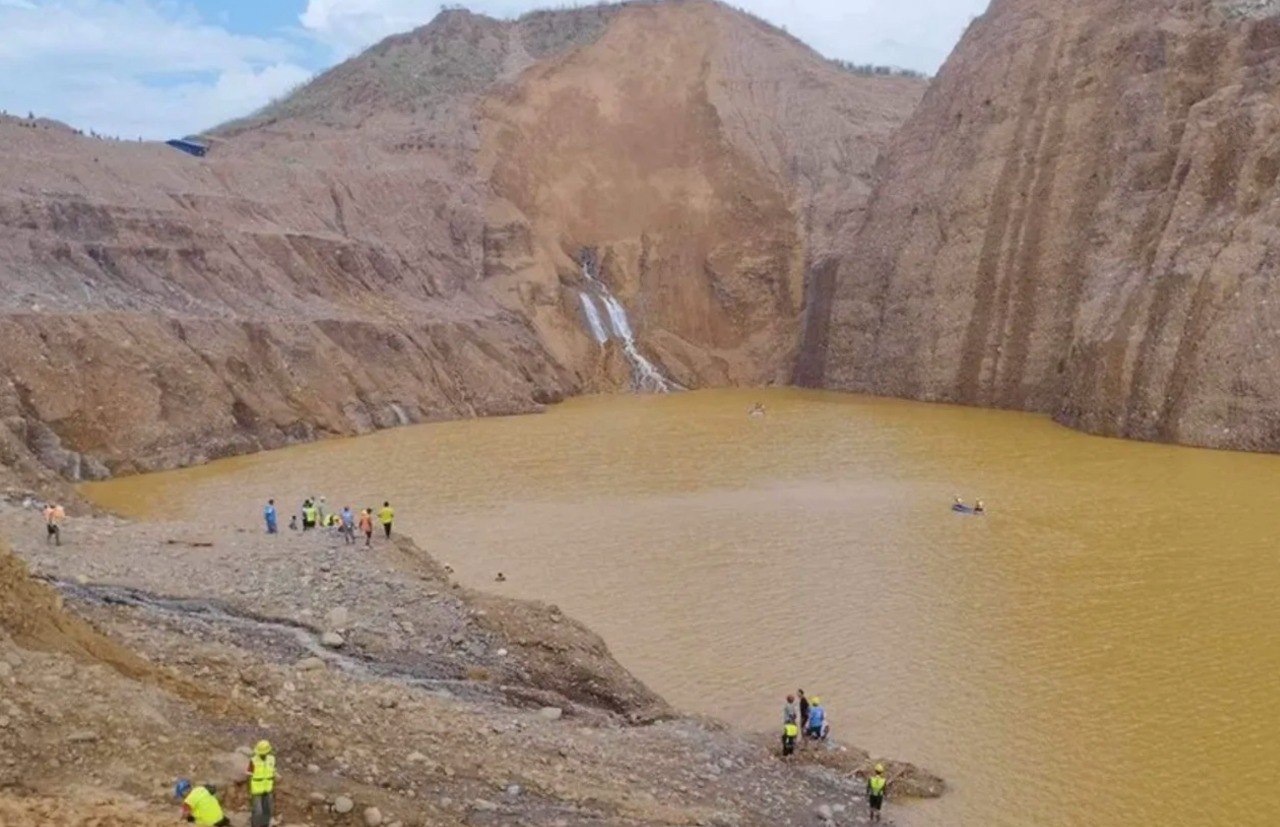
Water seeping from massive abandoned jade mining pits has flooded more than 100 households in Hpakant Township’s Hparpyin Village, forcing residents to evacuate their homes as fears grow over potential structural collapses along nearby earthen barriers.
Hparpyin Village—located roughly 94 miles (151 km) northwest of the Kachin State capital, Myitkyina—has been inundated since early July, when continuous monsoon rainfall filled deep, disused mining excavations bordering the residential settlement.
20-Foot Embankment Threatens Residential Settlement
The village is separated from the abandoned excavation pits by a 20-foot-high earthen embankment. Local residents reported that rainwater accumulated in the unregulated pits over the past month has begun seeping directly through the earth into groundwater channels, overflowing into homes and residential compounds.
“People are worried because similar mining-related incidents have happened before. Whenever there is heavy rain, nobody feels secure,” a Hparpyin village resident told DVB on the condition of anonymity.
Community members warned that sustained monsoon downpours pose an ongoing risk of embankment breaches, raising the threat of catastrophic flash floods or mudslides into low-lying wards.
Pattern of Disasters in Unregulated Mining Hub
The emergency in Hparpyin underscores the severe environmental hazards created by decades of unregulated deep-pit jade extraction across Kachin State, where inactive mining craters and unstable tailings mounds routinely trigger environmental disasters during the annual monsoon season.
Hpakant Mining Hazard & Disaster Snapshot
├── Location: 94 miles (151 km) NW of Myitkyina, Kachin State
├── Current Hazard: 100+ homes flooded by 20-ft leaking pit embankment
└── Recent Incident: Feb 17 Landslide at Kuday Hmaw Village (10 killed, 10 injured)
The flooding follows a fatal incident on Feb. 17, when a massive landslide triggered by unstable soil at a mine in Hpakant’s Kuday Hmaw village killed at least 10 jade scavengers and injured 10 others.
Local aid groups continue to warn that unmaintained mining sites left filled with rainwater remain a constant threat to surrounding civilian populations.