


Originally published on Free Malaysia Today
For Nang Kham, cooking is a way to preserve her Shan heritage while building connections in the country she now calls home.
Cooking for a crowd can be a daunting task. But whenever she volunteers to prepare meals for members of the Coalition of Burma Ethnics Malaysia (Cobem), 64-year-old Nang Kham insists on doing it all herself.
The Shan refugee from Myanmar firmly believes in the old saying that too many cooks spoil the broth. No one else can quite match the care and attention she puts into every dish.
“I prefer doing things on my own. Other cooks may ask me to add this or add that, but it just won’t turn out right. My food has to be made in a certain way for it to taste good,” she told FMT.
“Cooking makes me happy. Seeing people enjoy my food or eat until they’re full is very satisfying.”
Nang Kham’s love of cooking began in her youth, when she sold noodles to help support her family. She honed her culinary skills by learning from experienced cooks and elders in her village.
Since 2023, she has been living in Malaysia as a refugee after fleeing Yangon to escape Myanmar’s civil war that erupted in 2021. Seeking safety and stability, she has since built a new life here, cooking primarily for her community.
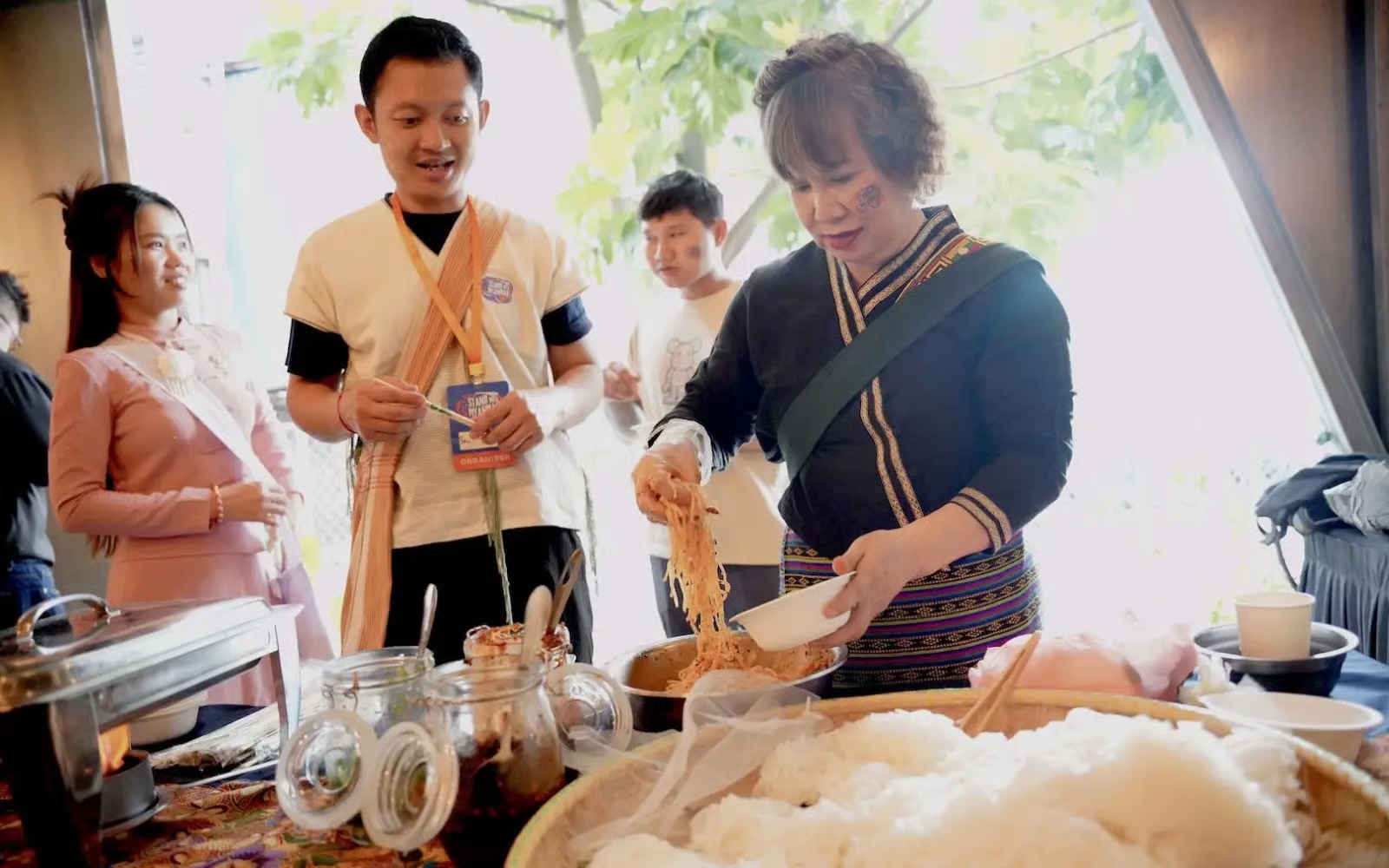
Her culinary talents were recently showcased at Stand With Myanmar, a two-day food festival organised by Cobem, Dari Dapur and Refuge for Refugees, celebrating Myanmar’s food, culture and people.
She prepared a substantial spread for the festival and was delighted to see it disappear within hours.
Most days, she cooks in the kitchen of her modest home in the city, where she is grateful that many of the ingredients needed for traditional Shan dishes can be found at local markets.
Among her signature dishes are som tam (green papaya salad) and Shan tofu, a chickpea-based tofu that can be sliced, fried or added to salads.
Her favourite dish to prepare is Shan Khauk Swe – rice noodles topped with savoury minced chicken or pork, crushed peanuts and pickled greens, served either in a light broth or dry.
“It’s not always easy to get the flavours right, but it’s worth the effort when I see people enjoying it,” she said.
Nang Kham was also recently featured in a Dari Dapur documentary that follows her cooking for Cobem members and radio host Ili Ruzanna.
Dari Dapur producer Elroi Yee describes her as someone who is always eager to lend a hand – the sort of person who would be the first to volunteer at a gotong-royong or cook for a kenduri if circumstances allowed.
“At the same time, she’s going through so many challenges as a refugee. She’s separated from her family, she can’t work legally, she can’t run a business, and she constantly faces the risk of arrest, detention or deportation,” Yee said.
He hopes stories like hers will help Malaysians see the human side of refugees and migrant workers.
“If Malaysians take the time to have a real conversation with refugees – perhaps over a shared meal – we would have a richer understanding of life and humanity,” Yee added.
Nang Kham now leads a quiet life in Kuala Lumpur. A self-confessed homebody, she usually leaves home only to visit the market, the mobile clinic or community events.
While she has yet to try many Malaysian dishes, she has developed a fondness for curry laksa.
“I’m happy here. I have friends in the community. I also hope things get better for my people back in Myanmar,” she said.
“When I was younger, I dreamt of becoming a successful businesswoman. But now I’m happy with the life I have here.”
Although aware of the recent backlash against refugees, Nang Kham chooses to believe in the power of kindness.
Given the chance, she said, she’d love to cook for those who hold negative perceptions of people like her.
“I think once you’ve tried my food, we’ll definitely be friends,” she concluded with a smile.
FMT