


Guest contributor
Moe Gyo
Myanmar is not merely a fragile state trapped in a cycle of authoritarianism and conflict—it is a shattered home, ruled by fear, betrayal, and silence. Its crisis is not just political; it is deeply psychological, rooted in patterns of abuse that mirror those found in the most dysfunctional of families.
In this metaphor, the Myanmar military takes the role of the tyrannical father: violent, paranoid, and obsessed with control. The Bamar political elite acts as the enabling mother, aware of the brutality yet unwilling to intervene, maintaining the illusion of reform while preserving her own comfort and power.
The favored child—the non-political Bamar majority—benefits from this arrangement, shielded and privileged, but still trapped, manipulated, and punished when they step out of line. Meanwhile, the ethnic minorities—the Karen, Kachin, Shan, and others—are the neglected and abused children, discarded and brutalized, their cries for justice ignored.
This is the true shape of Myanmar’s political structure: not a functioning nation-state striving for unity, but a household fractured by violence and maintained by silence. The father demands obedience, the mother excuses the pain, the favored Bamar child remains conflicted, and the abused ethnic children are left with scars no one wants to see.
Understanding Myanmar through this familial metaphor is not mere allegory—it is a necessary reframing. It forces us to confront uncomfortable truths: that reform is a myth, that complicity runs deep, and that the system is designed not to protect but to control and punish.
The roles each member plays in maintaining the dysfunction is explored and why—after decades of bloodshed, betrayal, and false hope—the time has come not to mend the family, but to dismantle it entirely. Only through such rupture can liberation begin.
A family trapped in a cycle of fear, submission, and brutality
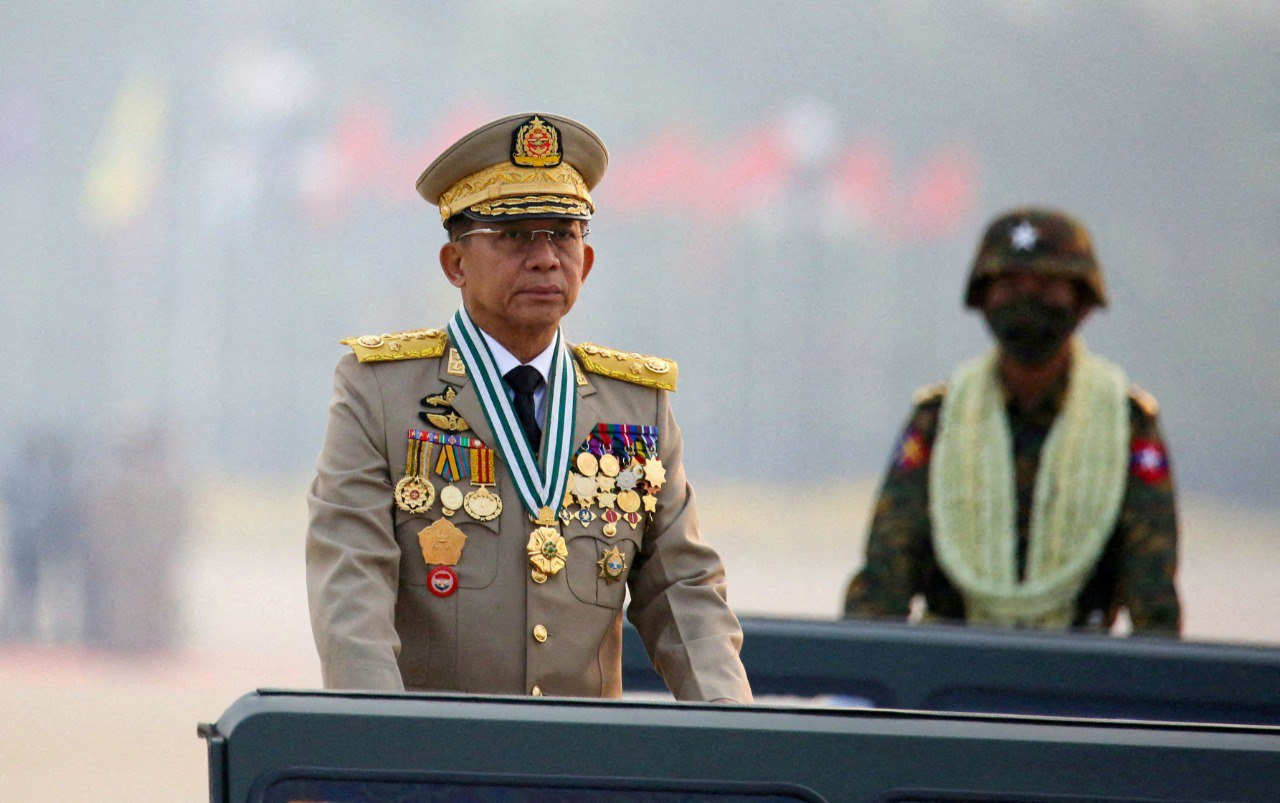
At the center of Myanmar’s dysfunctional family stands the military—the tyrannical father who rules not through love or legitimacy, but through fear, violence, and absolute control. He is not a protector but a predator.
Like any abuser, he insists that his brutality is discipline, that his domination is necessary for order, and that the family would collapse without his firm hand. This lie is the foundation of Myanmar’s political structure.
For decades, the military has operated as a patriarch obsessed with submission. Any sign of independence—particularly from ethnic minorities—is seen as betrayal. Dissent is treated not as dialogue but as disobedience, deserving swift and merciless punishment.
This is not governance; it is domination, carried out through massacres, disappearances, torture, and psychological warfare. The military’s justification is always the same: “for the good of the family.” But the results are unambiguous—generations of trauma, widespread displacement, and a nation paralyzed by fear.
The father’s authority is not just enforced by bullets and boots—it is upheld by myth. The military positions itself as the guardian of national unity, the ultimate father figure who must protect the household from chaos.
But in truth, it is the source of that chaos. It has used nationalism as a weapon to centralize power under Bamar supremacy, portraying ethnic minorities as rebellious children who must be disciplined into submission—or erased.
Like many abusers, the military isolates the family, silences critics, and punishes even the favored child when loyalty wavers. There is no safe space in this home.
It instills not just fear but dependency. It conditions the people of Myanmar to believe they cannot survive without its control. This is how the cycle of abuse continues—through fear, psychological manipulation, and the false promise of protection.
Yet the father cannot be reformed. His power depends on violence, and his authority thrives in silence. So long as the military holds power, Myanmar remains a home built on trauma. The only way to stop the abuse is not to plead with the father but to remove him entirely or leave the family.
The Bamar political elite’s quiet betrayal
The second figure in this metaphorical family is the Bamar political elite, who act as the enabling mother. This role involves a complex mixture of complicity, passivity, and sometimes tacit support of the father’s dominance, no matter the harm caused.
The enabling mother is not powerless. Although she has the political capital, the cultural authority, and, at times, the public support to intervene in the dysfunction of the family, she chooses not to, either out of fear, indifference, or a desire to maintain her own power and position within the family structure.
This complicity has profound consequences. By tolerating the military’s abuses and refusing to fully embrace the demands of ethnic minorities, the Bamar political elite perpetuate a system of exclusion and inequality. They act as intermediaries who, rather than protect the vulnerable, maintain the family hierarchy and the father’s dominance.
The Bamar political elite, even those who are not directly aligned with the military, have been unwilling to dismantle the system because it benefits their own position of privilege. They have been complicit, either out of fear, self-interest, or a misplaced belief that the system can be reformed from within.
It is this failure to protect the people of Myanmar, especially the marginalized ethnic minorities, that makes the Bamar political elite equally culpable in maintaining the country’s dysfunctional and abusive political system.
This is the tragedy of the Bamar political elite: their passivity is not born of ignorance, but of calculation. They understand the father’s brutality and the deep suffering of the ethnic minorities, yet they remain tied to the structure that grants them proximity to power.
They navigate around the military’s dominance, protect their own interests, and preach unity without justice.
The comfort of denial
The non-political Bamar, representing the majority ethnic group, function as the mother’s favorite child. They are the beneficiaries of the system, enjoying privileges that ethnic minorities are denied. In a family context, the favored child receives the most attention, resources, and protection, even if the family is dysfunctional.
They enjoy better access to education, economic opportunities, and political power, often at the expense of the country’s marginalized ethnic groups. Like a favored child in an abusive home, they are conditioned to look away when their siblings—the ethnic minorities—are beaten, silenced, or starved. Their privilege rests on the suffering of others.
However, like the favored child who is occasionally punished to remind them of their place in the family, the non-political Bamar are not immune to the military’s authoritarian rule.
Despite their favored status, they are sometimes subjected to the same repressive tactics used against ethnic minorities, such as violent crackdowns on protests. This serves as a reminder that, while the Bamar may be privileged within the system, no one is truly safe from the reach of the authoritarian father.
The non-political Bamar remain emotionally attached to the Bamar political elite and the dysfunctional family in the hope that things will improve, that change will come within the system, despite the consistent mistreatment by the military.
This is where the Stockholm Syndrome takes root. The non-political Bamar believe they are safe, that the father’s violence will not touch them because they are “protected” by their compliance. But they are wrong. Eventually, the “favored” child too will feel the weight of the father’s wrath.
Ethnic minorities and the pain of exclusion
In the metaphor of Myanmar’s dysfunctional family, the ethnic minorities—Karen, Kachin, Shan, Chin, Mon, Rakhine, and many others—are the neglected and abused children, unloved, unheard, and often unwanted by the dominant power structures.
While the favored child receives protection and privilege, these children are punished merely for existing. They are not seen as equal members of the family but as outsiders, burdens, or threats to be controlled, silenced, or erased.
For decades, the military has subjected these groups to relentless violence: mass displacement, massacres, cultural erasure, sexual violence, and scorched-earth campaigns.
Entire communities have been uprooted or destroyed. Their languages have been suppressed, their histories rewritten or ignored, and their demands for autonomy framed as rebellion.
Like a cruel father who sees his stepchildren as undeserving of love, the state views ethnic minorities as inherently disloyal, forever suspect.
But the abuse is not just physical—it is emotional, structural, and psychological. These communities have long been told they are part of a united family, yet are denied any meaningful say in how that family is run.
Promises of federalism or equality are dangled like false hope, only to be withdrawn when power is threatened. The enabling mother—the Bamar political elite—turns away, justifying her silence in the name of peace or national unity, even as the children cry out for recognition and protection.
However, the reality remains that the military and the Bamar political elite will not act in the interests of ethnic minorities unless forced to do so. Ethnic minorities, like abused children, remain psychologically bound to the system—a Stockholm Syndrome dynamic, unsure of what life could look like outside of the oppressive structures they have always known.
Despite the violence and trauma they face, many continue to hope for reform, for inclusion, and for a family that might finally accept them. But that hope has become a trap. It mirrors the tragic loyalty of abused children who still long for their parent’s love, even as they are hurt again and again.
The truth is difficult but clear: the Myanmar state has never treated these groups as equal members of the nation. Their calls for autonomy or independence are not acts of defiance—they are survival.
The neglected children have waited long enough for justice that will never come from within the current system. Their cries are no longer pleas for acceptance—they are demands for liberation.
The brutal truth behind Myanmar’s fragile state
Myanmar’s “unity” is a carefully crafted lie—one that hides a nation deeply divided and painfully fractured. It is one of the most heterogeneous countries, with over 130 ethnic groups, each with their own language, history, and culture, yet it has been forced into a state that was never built on equality, justice, or mutual respect.
Instead, Myanmar exists as an artificial construct through conquests by successive Burmese kingdoms and the British—a manufactured state legacy seized and hardened by a military and Bamar political elite that demands conformity while denying diversity.
At the core of Myanmar’s fractured identity lies a profound emotional divide between the Bamar majority and the country’s ethnic minorities—one sustained by privilege and historical dominance.
The Bamar people, shaped by centuries of cultural, religious, and political centrality, often lack a true understanding of systemic marginalization. Unlike many ethnic groups, they have not endured prolonged displacement, cultural erasure, or religious exclusion.
As Matthew Walton highlights, “Burmaness”—the normativity of being Bamar and Buddhist—serves as an invisible benchmark against which all other identities are measured and found wanting.
Because this standard remains largely unquestioned within Bamar society, empathy for minority demands—such as federalism or autonomy—is limited.
This emotional distance fuels political resistance to change and helps sustain a status quo that benefits the majority while deepening the wounds of the marginalized.
The state’s vision of “Myanmar” is narrowly defined by this Bamar majority and enforced by a military that views ethnic difference as a threat rather than a strength.
This forced unity has not healed the country—it has only deepened wounds, hardened resentments, and pushed reconciliation further away.
For decades under this imposed unity, Myanmar’s ethnic peoples—Karen, Kachin, Shan, Chin, Mon, Rakhine, and so many others—have suffered. They’ve been beaten down, silenced, and shoved into the shadows.
They are not unruly children to be disciplined or guided; they are distinct peoples with legitimate claims to dignity, autonomy, and self-determination.
Instead of inclusion, they have faced systematic erasure—their languages suppressed, their histories rewritten, and their political aspirations crushed by violence and betrayal.
This is not a failure of governance that can be fixed with token reforms. It is a refusal to confront an inconvenient truth: people cannot be brutalized into unity.
Forced conformity built on fear and exclusion is a fragile foundation destined to crumble.
Global hypocrisy, power plays, and self-serving interests
The world talks. It condemns. It passes resolutions. But Myanmar’s people still bleed, still suffer, and still fight to survive amid broken promises and empty words.
The international community—like the Bamar political elite—maintains a facade of unity and reform, but their actions, or lack thereof, betray a deeper apathy. The true tragedy lies in how global powers want to hold Myanmar together, even when they know the house is already collapsing.
China watches with cold calculation, protecting its strategic interests while shielding Myanmar’s military from real consequences. The Association of Southeast Asian Nations (ASEAN) stands paralyzed, mouthing platitudes but refusing to take any real action against a regime that murders its own.
The United Nations (U.N.) issues reports and calls for peace, but their words fall on deaf ears, powerless against the guns and brutality on the ground. The West imposes half-measures and sanctions that barely scratch the surface—sanctions too little, too late, and easily circumvented.
These international actors are less concerned with justice or the well-being of Myanmar’s people than with maintaining the stability of a regime that serves their geopolitical and economic interests.
The facade of unity they aim to uphold is not for the benefit of the oppressed but to preserve their own position in the global order.
In this sense, the world’s response is eerily similar to the dysfunction within Myanmar’s own political structure, where the military’s violent control and the Bamar political elite’s passive complicity mirror the global powers’ reluctance to confront the reality of Myanmar’s broken state.
No powerful hand lifts the oppressed out of the dark. The global system designed to protect human rights has failed Myanmar’s people. They are left alone to suffer, to resist, and to break—forgotten amid geopolitical games and diplomatic inertia.
The international community, like the Bamar political elite, is willing to sustain the illusion of “unity,” clinging to a fragile state that offers them more control, more resources, and more influence.
But this illusion does nothing to address the underlying violence, the deepening fractures, or the cries for justice that continue to go unanswered.
The hypocrisy is not only about inaction but about perpetuating a lie—holding the system together, pretending that “stability” can be achieved without confronting the violence at its core.
The international community, much like the Bamar political elite, refuses to acknowledge a painful reality: the only way forward is not through pretending the family is intact, but by acknowledging that the dysfunctional system must be dismantled.
This failure is not just a tragedy—it’s a betrayal. Ethnic peoples fighting for survival face a world that watches but refuses to act decisively. While bullets fly and villages burn, international actors prioritize their own interests, alliances, and economic ties over justice and human lives.
The international community’s obsession with maintaining a fractured, oppressive unity mirrors Myanmar’s own cycle of denial and abuse, as it fails to recognize the truth—freedom and liberation cannot come through the preservation of a broken system.
From oppression to militarized self-autonomy or secession
Freedom isn’t some distant dream anymore. It’s the raw, desperate hunger burning in the hearts of those who have suffered too long. When the chains of domination grow tighter and the voices for change are met with gunfire and betrayal, people stop hoping for reform.
They start demanding autonomy. And if that’s not given—if the system continues to choke them—they will break away, no matter the cost.
This isn’t just politics. It’s survival. It’s the refusal to accept a life of silence and fear. It’s the shattering pain of realizing the family you trusted won’t save you—that sometimes the only way to heal is to leave. Staying means another lifetime of wounds.
The military and Bamar political elite cling to a broken vision of forced unity, blind to the fact that their grip is killing the country. The ethnic minorities aren’t asking for favors—they are demanding the right to live, to govern themselves, and to exist with dignity.
If the state won’t give that, the fractures will grow until separation becomes the only option left.
The example of Yugoslavia serves as a grim warning. Like Myanmar, it was an artificial and manufactured state composed of diverse peoples—Serbs, Croats, Slovenes, Macedonians, Montenegrins, Bosniaks, and Albanians—forced into a single identity and held together through force and false promises.
When Yugoslavia’s ethnic groups were denied their rights and identities for too long by the dominant Serbs and their military, suppressed tensions erupted and the country exploded into violence and fragmentation. This fragmentation led to secession and the creation of seven independent nations.
Myanmar is now on a similar path. The brutal truth behind this fragile state is clear: the lie of unity cannot last and will shatter—leaving only the harsh reality of militarized self-autonomy or secession.
For its ethnic minorities, genuine freedom may ultimately come not through reform or coexistence with the military and Bamar political elite. Much like the former Yugoslavia’s fracturing along ethnic lines, Myanmar might face a future where ethnic groups reject central authority to form militarized autonomous enclaves or independent nations. Though painful, this process offers the clearest path to self-determination and healing.
This is the raw truth: you can’t build a nation on oppression. You can’t silence entire peoples and expect them to stay. In a fractured land built on forced unity, breaking free is not just inevitable—it is necessary and coming.
Breaking free from a legacy of violence
Viewing Myanmar’s political system through the lens of a dysfunctional family exposes deeply entrenched patterns of abuse, complicity, and neglect that have shaped the nation’s ongoing struggles.
The military’s authoritarian grip, the enabling stance of the Bamar political elite, the indifferent position of the politically disengaged Bamar majority, and the profound suffering of ethnic minorities together create a complex yet revealing portrait.
It is time for the “ethnic children” of this family to wake up. Hope for reform from within is a dangerous illusion. The family is broken at its core: the father will not change, and the mother refuses to act.
The family must be broken apart. Myanmar’s only way forward is to break free from the toxic, abusive cycle that has trapped it for decades. Waiting for reform that will never come isn’t just naive—it’s perilous. The broken family structure must be dismantled once and for all.
Myanmar must confront this harsh reality: reform within this dysfunctional system is impossible.
True liberation lies only in breaking away—rejecting the abusive father, the passive mother, and the harmful family dynamic.
The path ahead will be difficult and slow, but it remains the only route to genuine freedom.
Moe Gyo is a political consultant and strategist working on the Thailand-Myanmar border.
DVB publishes a diversity of opinions that does not reflect DVB editorial policy. We’d like to hear what you think about this or any of our stories: [email protected]