


Guest contributor
Seán Donal Barry
Myanmar refugees in Malaysia face growing uncertainty as a UN refugee agency documentation process is challenged by a new Malaysian initiative during ongoing refugee deportations.
In the stairwell of a four-storey building in Kuala Lumpur’s Pudu district, James Bawi Thang Bik, the chairperson of the Alliance of Chin Refugees (ACR), points to a notice stuck on the wall at the entrance of a school classroom.
“This is the only protection we have in Malaysia,” James told DVB. Rather than legal protection, the U.N. High Commissioner for Refugees (UNHCR) letter offers recognition of the learning centre inside – an indirect plea for restraint from the Malaysian immigration authorities, which have intensified raids, detentions and deportations over the last year.
Refugees and asylum seekers in Malaysia are treated as undocumented migrants. After status verification, the UNHCR provides them documentation, which isn’t recognized by the Malaysian authorities because the country isn’t a signatory to the 1951 U.N. Refugee Convention, which mandates protections for them.
A UNHCR documentation card may provide a sense of security and identification to 190,000 refugees and asylum seekers from Myanmar in Malaysia, but those without cards may far outnumber those with them, according to human rights advocates in Kuala Lumpur.
In a new twist, this year will see the rollout of a new initiative by the Malaysian government called the Refugee Registration Document, or Dokumen Pendaftaran Pelarian, intended to “replace” UNHCR documentation.
Malaysia’s Ministry of Home Affairs will start a national biometric refugee database and distribute its own identification cards described as “the sole document recognised by the government.”
Malaysia’s Department of Immigration reported in 2025 that it recorded more than 90,000 arrests of “unlicensed foreign immigrants,” though it remains unclear how many had, or were awaiting, UNHCR documentation.
Malaysia’s immigration detention system has been described as “punitive, arbitrary and harmful” by the Geneva-based research group the Global Detention Project, which placed the country among the harshest immigration detention regimes globally.
The Malaysian government says the stepped-up enforcement and new registration initiative are driven by national security concerns and the need to know who is inside their own country.
The UNHCR Malaysia office does not share registration data with the government due to safety and privacy concerns due to the fact that Malaysia is a non-signatory to the U.N. Refugee Convention nor its protocols.
This leaves refugees and asylum seekers with limited access to government services and health care with little clarity over what protections they have under the law.
“In Malaysia, [refugee] kids are not allowed to go to public schools. [To put it] simply, we can say that they’re not allowed to be educated [in Malaysia],” James told DVB.
The ACR office led by James has several Chin refugees from Myanmar seated in the lobby waiting to access free services ranging from welfare assistance to help navigating UNHCR registration to liaising with local authorities.
A coalition of Myanmar refugee organisations, including ACR, advocate for temporary recognition by the authorities and faster processing by UNHCR, which can take years.
“People get arrested before they get registered by the UNHCR,” James added. “We can’t expect all of them to get registered, but at least 51 per cent would make a huge difference.”
Without official documentation, refugees in Malaysia remain particularly vulnerable to arrest and deportation to their home countries. Even refugees registered with the UNHCR can go missing.
In a recent case, refugee community leader Thuzar Maung, her husband and three kids, disappeared from their family home in Kuala Lumpur on July 4, 2023 only to be reported in a Myanmar prison in October last year.
In 2025, the UNHCR faced severe global funding shortfalls that forced widespread program cuts and the loss of thousands of staff positions.
Human rights groups say the impact has been felt and that the squeeze has translated into slower registration processing. Though UNHCR has not published detailed staffing figures for Malaysia, a staff member recently spoke of fears that dozens of positions in the country could soon be affected.
At an ACR learning centre in Pudu, an area with a high concentration of refugees from Myanmar, registration for the new school term was meant to take a week. Word had spread quickly. Queues formed down the stairs and onto the street.
“Suddenly the place is full and we have to close down,” James said. “It’s very hard to say no to them. We want ACR education to be for all refugees. But the problem is that we can’t accept all of them. That’s very sad.”
The informal refugee school operates without institutional support, and demand has far outpaced capacity. James says potential donors often hesitate because refugee organisations are not formally registered. “We can’t be, because we’re not recognised by the government,” he added.
In meetings between human rights groups and the Malaysian government, attendees were told that issues such as workplace-rights and gender-based-violence were problems that could be addressed once the new refugee documentation initiative comes into effect.
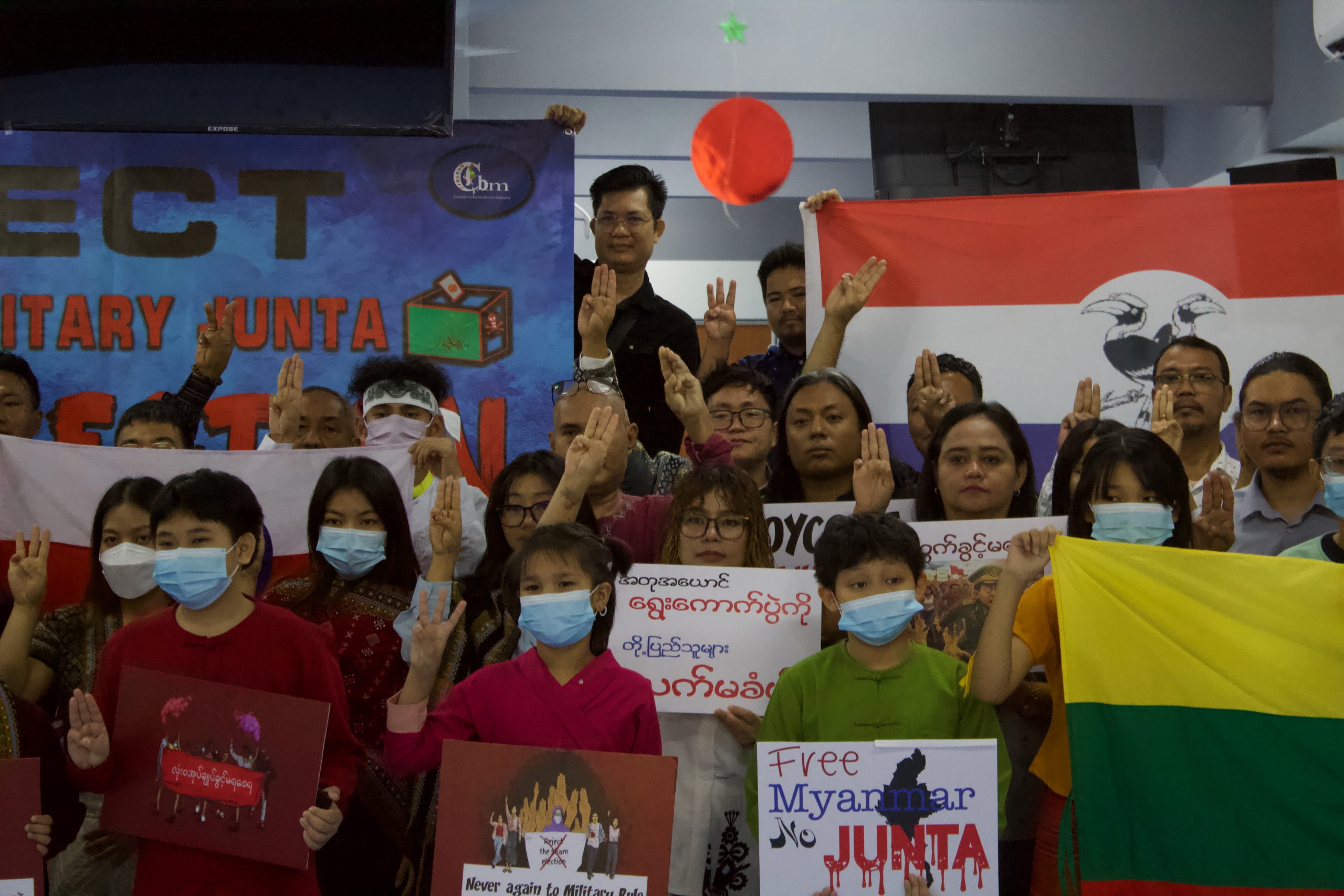
For organisations like ACR and the Coalition of Burma Ethnics Malaysia (COBEM), a refugee community advocacy group, it appears at first glance to answer long-standing calls for temporary recognition and the right to live and work. But James is unconvinced.
“They said they will set up a centre to interview refugees,” he told DVB. “But let’s say a person goes for an interview at the immigration office. If they fail their case, what happens?”
As the new Malaysian initiative, referred to as DPP, enters its initial phase, key questions remain unanswered. It’s unclear whether refugees already registered with UNHCR will be automatically registered in the government database, or whether they will be required to undergo a new registration process with immigration authorities.
With guidelines on eligibility, interviews and categorisation still unpublished, uncertainty over how the DPP will be implemented has become a defining anxiety as 2026 gets underway.
The U.S. Department of Homeland Security cited Myanmar’s “sham” elections and an improving situation in the country as reasons why Myanmar nationals should return – a decision criticised by rights groups as disconnected from realities on the ground.
If a similar logic takes shape with the DPP in Malaysia, fewer, if any, Myanmar refugees would qualify to remain.
UNHCR Malaysia stated on Jan. 2 that the first phase of the DPP is focusing on people currently held in immigration detention centres, and warned that anyone claiming to register refugees under the programme outside those facilities was “not legitimate”, directing the refugee community to the Home Affairs Ministry’s official channels for updates.
How 2026 will be described for Myanmar’s refugees in Malaysia may hinge on how the DPP is ultimately enforced by the authorities, whether UNHCR retains any meaningful role in refugee documentation, and how authorities will define what is a “safe” country.
“We’re not asking for citizenship,” James said. “We just ask for temporary recognition and temporary protection while our country is in chaos. The public needs to change the way they see refugees.”
Seán Donal Barry is an independent journalist covering Myanmar.