


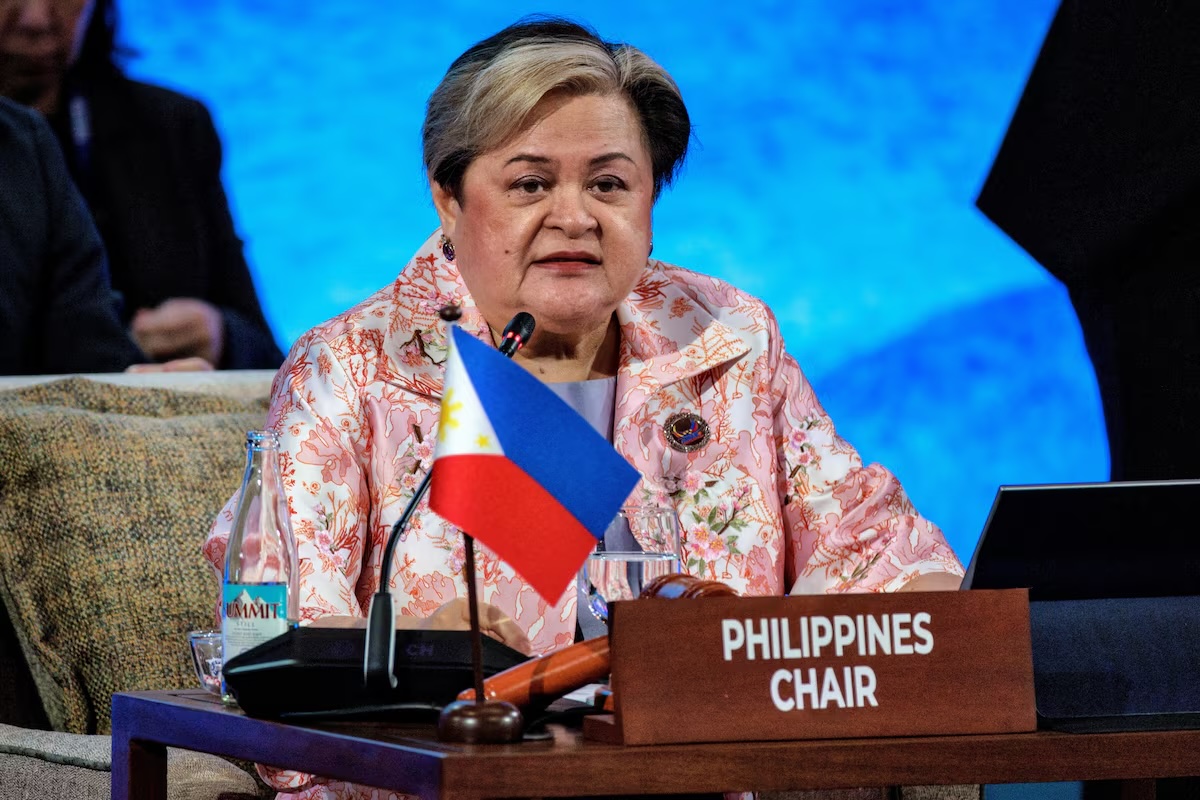
Secretary Lazaro,
If the Philippines truly cares about women, peace, and security, it cannot ignore Myanmar’s women. These issues are deeply connected, yet its current approach relies on the wrong partner.
In January, after the Philippines assumed the ASEAN chairship, you traveled to Naypyidaw and sat across from Min Aung Hlaing—categorically not Myanmar’s legitimate president, but the criminal military general who launched an illegal coup attempt in February 2021 and, five years later, staged an election (under airstrikes, mass arrests, and the imprisonment of democratically elected leaders and democracy activists) to manufacture that title for himself.
In July, you met his foreign minister in Thailand. You called the discussion candid and constructive. You called Myanmar an integral part of ASEAN. And you committed to a humanitarian mission for the last quarter of this year. Just four days later, some of his soldiers brazenly abducted and gang-raped multiple women in Kalewa.
Min Aung Hlaing is not now and never can be a trusted humanitarian actor. Nor can his military ever be a partner for Women, Peace and Security.
A decades-long record of weaponizing sexual violence
The Myanmar military has used rape as a weapon of war for decades, especially against women and girls from ethnic minority communities. It has done so with total impunity.
In 2015, when I had the chance to return to Myanmar, I was nearly arrested for calling for an independent investigation into the gang rape and murder of two young Kachin teachers by Myanmar military soldiers.
Throughout my 38 years of working to bring democracy to Myanmar, I have met survivors of the military’s sexual violence from many different ethnic communities, including Lahu, Kachin, and Rohingya women.
Since the attempted coup in February 2021, the military has continued its airstrikes, arbitrary arrests, torture, village burnings and forced displacement. Over the same period, the Women’s League of Burma has documented more than 900 cases of conflict-related sexual violence and gender-based abuse by the junta.
As Myanmar women’s groups and civil society organizations made clear in their March 2026 position paper, the junta’s continuing violence shows that ASEAN’s Regional Plan of Action on Women, Peace and Security is a complete failure.
The evidence is clear. Where is the accountability?
In 2018, the United Nations placed the Myanmar military on its blacklist for the first time as a party credibly suspected of carrying out rape and other acts of sexual violence in conflict.
It was included on the blacklist again this year. The U.N. Secretary-General’s report described the widespread and systematic use of sexual violence—including rape, gang rape, and sexual slavery—as a tactic of war and political repression in Myanmar.
The evidence has also reached international courts: in 2025, an Argentine federal court issued arrest warrants for Min Aung Hlaing and other military leaders over genocide and crimes against humanity committed against the Rohingya, including gang rape, torture, and mass killings.
This case stands alongside proceedings at the International Court of Justice and investigations by the International Criminal Court.
These are the facts, delivered by the women living them and reinforced by the United Nations and international courts.
How, then, will you be able to speak seriously about the Regional Plan of Action on Women, Peace and Security while ignoring the military’s weaponization of rape and sexual violence against Myanmar’s women?
Blocking humanitarian aid and essential supplies
The junta has also repeatedly blocked or restricted food, medicine, and other essential supplies to Myanmar’s resistance-controlled areas. It is now even restricting sanitary pads.
Since August, the military has widened its blockade on menstrual products, claiming resistance fighters use them for first aid. Medics who treat combat wounds say this claim is false.
Women in conflict-affected areas have been forced to use rags, leaves and newspapers. Women’s groups have reported infections and growing demand for antibiotics. Some women cannot leave their homes while menstruating because they have no safe products. Women are being denied basic health, dignity, and freedom of movement.
In October 2025, ASEAN decided to provide humanitarian assistance to conflict-affected internally displaced people without discrimination, including through “cross-border efforts where necessary.”
Nine months have passed. Your humanitarian mission is not scheduled until the last quarter of this year. Why has this decision taken so long to operationalize, while you found time in January to sit with the general himself?
Will you sit with him again even as he refuses you access to Aung San Suu Kyi and continues bombing the people your humanitarian mission is meant to reach?
Open the door to the women of Myanmar
ASEAN’s Regional Plan of Action on Women, Peace and Security failed Myanmar women from the beginning.
Women Human Rights Defenders (WHRDs), along with women-led and women’s rights organizations that had experienced or documented the military’s sexual violence, were excluded.
Instead, the junta was allowed to appoint its women allies to represent Myanmar in ASEAN’s own gender body, the ASEAN Commission on the Promotion and Protection of the Rights of Women and Children (ACWC).
Not survivors or activists, but military-appointed bureaucrats speaking for the institution that rapes, not for the women it rapes.
Women Human Rights Defenders (WHRDs), along with women-led and women’s rights organizations that have experienced or documented the military’s sexual violence, were excluded.
Instead, the junta was allowed to appoint its women allies to represent Myanmar in ASEAN’s own gender body, the ASEAN Commission on the Promotion and Protection of the Rights of Women and Children (ACWC).
Not survivors or activists, but military-appointed bureaucrats now speak for the institution that rapes, rather than for the women it rapes.
Do not allow the junta to again choose who speaks for Myanmar’s women. You can—and you must–open the door to the women of Myanmar.
Meet directly with independent women’s rights and women-led organizations, such as the Women’s League of Burma, the Shan Women’s Action Network, and the Women’s Organization of Political Prisoners, as well as survivors, women human rights defenders, ethnic women leaders, and women working inside the Spring Revolution.
Hear from the women who are documenting military crimes, delivering aid, and building a federal democracy despite the junta’s campaign of violence
Secretary Lazaro, I write to you woman to woman
Your chairship will be judged not by the commitments it repeats or by the generals it meets. It will be judged by whether it confronts the military’s violence and gets aid to the people most in need.
If you care about Myanmar and Women, Peace and Security:
- Route humanitarian assistance through border-based mechanisms, ethnic service providers, local humanitarian groups, and independent women’s groups and civil society organizations. These groups already reach communities the junta keeps bombing and terrorizing.
- Hear directly from Myanmar’s women. Hear what the military has done. Hear why the junta cannot be treated as a partner for peace. Hear why aid routed through the junta will never be neutral or non-discriminatory. Hear what Myanmar women are doing to build a peaceful future for themselves and for generations to come.
- And let Myanmar women help shape ASEAN’s Women, Peace and Security agenda, not merely appear in consultations after the decisions have already been made.
Woman to woman, I’m asking you to turn ASEAN’s rhetoric on Women, Peace and Security into real, meaningful action. Do not legitimize the men who weaponize rape and other forms of sexual violence, and start listening to the women who have survived it and who seek to end it. That is in your power. And I ask you to use it.
Khin Ohmar is a Myanmar human rights activist who was involved in organizing the ‘8888’ nationwide pro-democracy uprising. She is also the founder and chairperson of Progressive Voice, a Myanmar human rights organization. She developed the Women Peacebuilding Program for Women’s League of Burma and served as program coordinator from 2000 to 2006.
DVB publishes a diversity of opinions that does not reflect DVB editorial policy. We’d like to hear what you think about this or any of our stories: [email protected]