


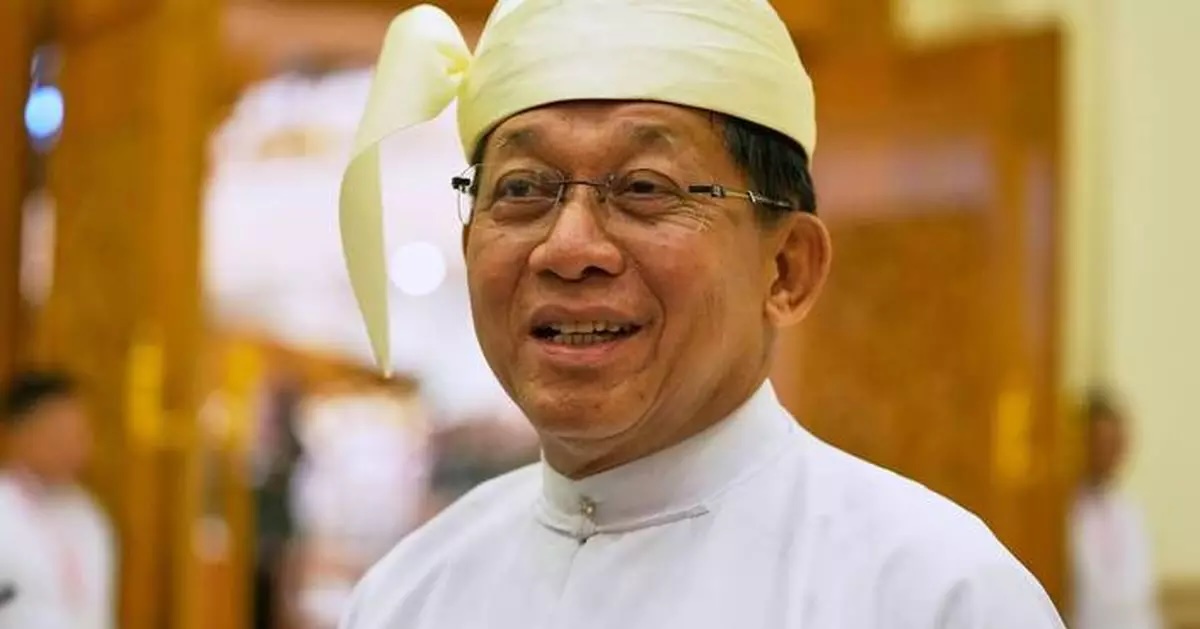
Min Aung Hlaing reports on first 100-days since inauguration
In his address to the Pyidaungsu Hluttaw on Friday to mark his first 100 days since he was inaugurated as Myanmar’s president on April 10, regime leader Min Aung Hlaing stated that his pro-military administration has met with a total of 13 ethnic armed groups to discuss peace since the military coup that ousted Aung San Suu Kyi’s National League for Democracy (NLD) administration on Feb. 1, 2021.
“The government has, since assuming office, accelerated the implementation of its two priority objectives: ensuring national peace and stability and promoting the country’s development.” Min Aung Hlaing said in his speech to both houses of parliament on July 31. His Union Solidarity and Development Party (USDP) administration took office after the regime’s highly controversial 2025-26 elections that ended on Jan. 25.
The polls were labeled a “sham” by the U.N. and several western countries. On April 20, Min Aung Hlaing launched his “100-day plan” to invite ethnic armed groups that haven’t signed the Nationwide Ceasefire Agreement (NCA), including those who withdrew from it following the 2021 coup, to engage in dialogue and negotiations with his administration. Read more on our website
SWAN documents 172 Gender-Based Violence cases in Shan State
The Shan Women’s Action Network (SWAN) 2026 report “Justice Denied in the Face of Violence” documents 172 cases of sexual and gender-based violence in Shan State 2022-25. Intimate partner violence formed the majority of recorded cases at 89. This was followed by 70 cases of reported rape and attempted rape—where children represented at least 30 of the survivors, with the youngest victim being three-years-old.
Perpetrators ranged from partners and family members to soldiers from ethnic armed organizations and regime forces. The SWAN report highlights that “deep-seated patriarchal norms” and ongoing armed conflict since the military coup on Feb. 1, 2021 have fueled widespread violence against women and girls, with vulnerable groups—such as children and persons with disabilities—facing heightened risks.
SWAN concluded that survivors of sexual and gender-based violence continue to face severe barriers to access justice. The report called on ethnic armed groups, local authorities, donors, and the international community to strengthen survivor-centered justice mechanisms, improve accountability for perpetrators, expand support services, and address the social norms that perpetuate gender-based violence and impunity.
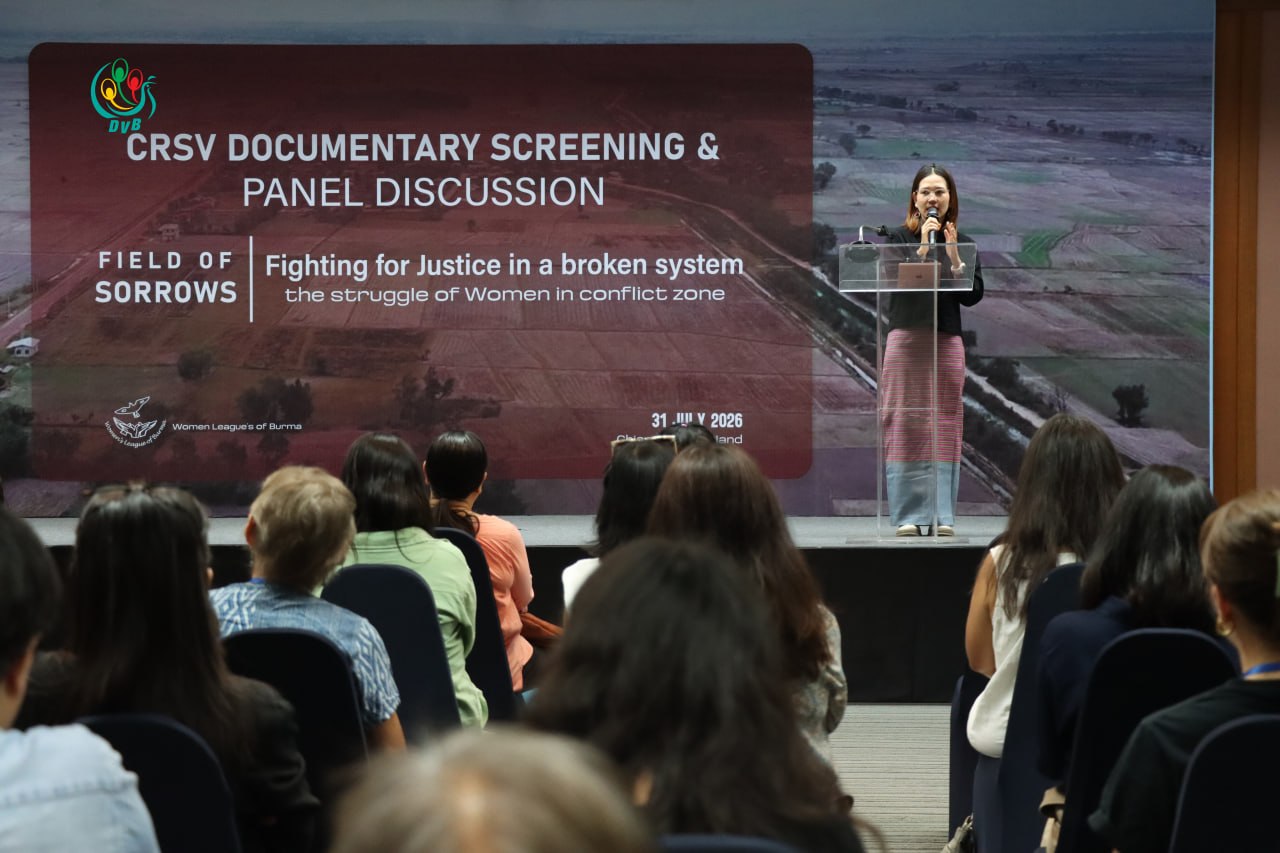
WLB event on conflict-related sexual violence in Myanmar
The Women’s League of Burma (WLB), an umbrella organization representing women from 12 ethnic nationalities in Burma, premiered a documentary film titled “Field of Sorrows,” which examines the systemic weaponization of sexual violence since the Feb. 1, 2021 military coup, and held a panel discussion on conflict-related sexual violence (CRSV) at Chiang Mai University on July 31.
The film highlights the culture of impunity surrounding conflict in Burma, and the severe risks faced by survivors seeking accountability. It captures the emotional and systemic barriers confronting survivors within Burma’s legal and local administrative frameworks. Speaking on condition of anonymity, the film’s director, operating under the pseudonym Lavender, described the personal toll of documenting these structural failures:
“Watching women face systemic injustice, where local authorities and even judicial figures protect the male perpetrators instead of the female victims, right in front of my eyes was heartbreaking. I had to step away and cry while filming. It takes a long time to recover from that emotional toll,” Lavender told DVB. Read more and see the photos on our website
News by Region
ARAKAN—With the monsoon planting window rapidly closing, farmers report that their stored seed supplies have been entirely ruined or exhausted. To avoid total crop failure for the coming harvest, many households are now forced to sow rice reserves originally set aside for daily consumption.
In Kyauktaw Township—located 40 miles (64 km) northeast of the state capital Sittwe—residents estimate that more than 3,000 acres of farmland were damaged or destroyed. “We have to plow and sow again. Many farmers are now using the rice they kept for food,” a farmer in Kyauktaw told DVB. Read more on our website
AYEYARWADY—Nearly 7,000 residents have been displaced from their homes in Lemyethna Township after continuous rainfall since Friday caused a 50-foot (15 m) breach in the Ngawun Dam, sending floodwaters into surrounding areas. Lemyethna is located 75 miles (120 km) north of the region’s capital Pathein.
A Lemyethna resident told DVB on the condition of anonymity that the flood water level submerged even two-storey buildings in the township. The regime’s Department of Fire Services has carried out search and rescue operations since July 31. No casualties have been reported.
SAGAING—Regime forces have reclaimed control over key strongholds along the 81-mile (130 km) Kalay–Tamu highway in Sagaing Region following a two-month full-scale counteroffensive, forcing the People’s Defence Force (PDF) to prepare a strategic withdrawal from the corridor.
The highway serves as the primary overland trade artery connecting Myanmar to the border town of Moreh in India’s Manipur State and forms a critical segment of the 870-mile (1,400 km) India–Myanmar–Thailand Trilateral Highway (IMTT). Read more on our website
(Exchange rate: $1 USD = 4,310 MMK)