


Guest contributor
Fergus Harlow
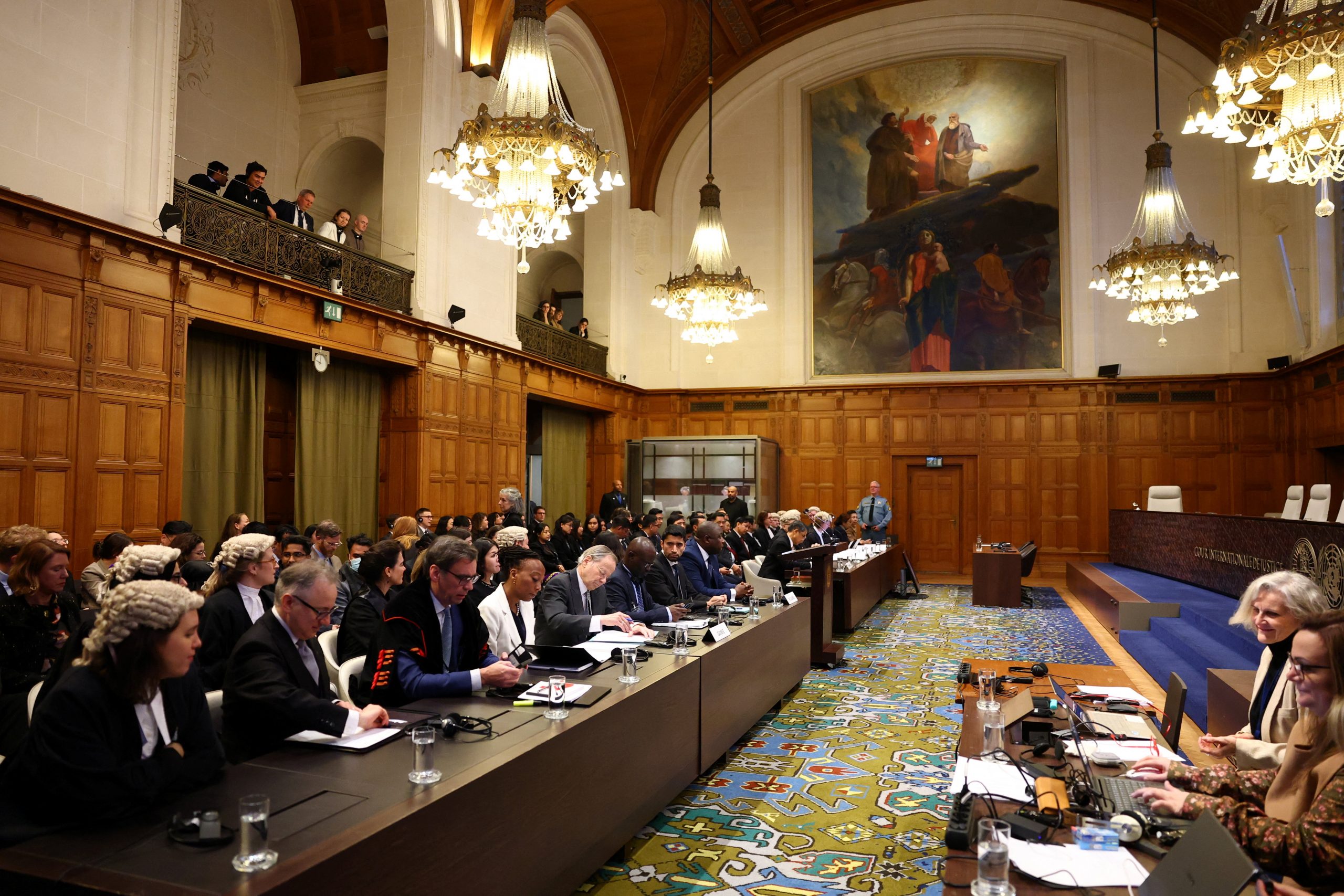
The hearings on allegations of genocide against Myanmar now unfolding at the International Court of Justice (ICJ) in The Hague will shape not only accountability for atrocities committed against the Rohingya but the integrity of international justice itself. With stakes this high, the ICJ must not repeat the mistakes of the past.
What cannot be denied is that the Rohingya people have endured horrific suffering. The Myanmar military committed grave crimes, from extrajudicial killings, sexual violence, and mass displacement to the targeting of civilians. These acts constitute war crimes and crimes against humanity, and accountability for them is non-negotiable.
The question before the court, however, is not whether atrocities occurred, but whether they are being legally characterized with the rigor international law demands. This distinction matters because genocide is not a moral descriptor; it is a specific crime with a precise legal threshold. Confusing genocide with other international crimes does not strengthen justice—it imperils it.
The ICJ must therefore avoid repeating the central failure of the United Nations’ 2018 Fact-Finding Mission on Myanmar, which floundered not because Aung San Suu Kyi’s civilian government was colluding in genocide, as has been widely reported, but because the investigation was structurally incomplete.
Like most academic research into genocide, this mission relied overwhelmingly on the testimony of victims, from Rohingya refugees in Cox’s Bazar, creating the legal equivalent of a trial in which the defendant and their defence were absent.
This is not an indictment of refugee testimony, which is indispensable to any serious investigation, but it was a failure of evidentiary balance. The mission denied the relevance of inter-communal violence that had occurred across three states between 2012 and 2017, presenting Myanmar’s Buddhist population as the aggressor and the Muslim population as innocent victims.
In doing so, essential context necessary for determining intent—the core legal element of genocide—was also absent. These absences are not theoretical. Aung San Suu Kyi is now in her fifth year of imprisonment, sentenced in closed trials by the same military now defending itself before the court.
She is incarcerated alongside the entire elected civilian leadership of Myanmar and more than 22,000 political prisoners—journalists, doctors, teachers, monks, and student activists—detained since the 2021 coup. The civilian government whose actions are repeatedly scrutinized in this case does not merely lack representation; it has been systematically eliminated.
During the 2018 mission, the U.N. confused the term “Myanmar government”, meaning the civilian government and an autonomous military interchangeably, despite markedly different roles and responsibilities.
U.N. resolutions and other statements included accusation and hearsay as fact and there were official documents that did not mention the attacks by the Arakan Rohingya Salvation Army (ARSA) at all.
It is crucial that the ICJ avoid minimizing the role of ARSA and exaggerating the culpability of the defendant in a way that perpetuates the narrative failures of the 2018 mission. That popular narrative—amplified by international newspapers rather than legal bodies—made internal investigations in Myanmar extraordinarily difficult.
National League for Democracy members encountered international observers and investigators, as one member of parliament at the time put it, “with heads full of stories” that were impossible to counter.
Senior Western officials absorbed this framing; Boris Johnson, then the U.K.’s foreign secretary, remarked publicly, “If what the papers are saying is true, the situation is very bad.” Actions followed, and the conditional nature of that statement revealed how repetition often takes the place of verification.
Aung San Suu Kyi’s so-called “complicity in genocide” is not based on direct evidence but inference and interpretation. Journalists may have the luxury of inferring intent from outcome and presenting personal interpretation as fact, but legal determinations cannot rest on media-driven storylines; they must be grounded in evidence tested against the full factual landscape.
When Aung San Suu Kyi rejected the 2018 Fact-Finding Mission, it was widely portrayed as an attempt to conceal wrongdoing. But the more plausible explanation was her consistent warning against international interventions she believed would escalate violence.
That position aligned with every major statement she made and every action she took at that time. If anything, subsequent events—the 2021 military coup, mass repression, and the imprisonment of the elected government—demonstrate not concealment but the catastrophic escalation she warned against.
While Western democracies denounce the military junta’s current national election as a scam, they remain silent about the imprisoned elected government. To avoid adding injustice to injustice, now is a crucial time to call for their release.
The international media has consistently exaggerated guilt on the part of Aung San Suu Kyi while reducing ARSA to the equivalent of a plucky band of rebels confronting the inherent evil of the military rather than recognizing the violent extremist organization it became—one rejected by the majority of the Rohingya population itself.
This framing produces a familiar and emotionally satisfying story for Western audiences: the virtuous underdog versus a singular villain. But it obscures the far more complex and disturbing reality.
World-leading outlets such as The Guardian declined to define ARSA as a terrorist organization, instead reporting that the Myanmar government “calls them terrorists,” implicitly casting doubt and implying prejudice.
In a June 2025 op-ed for DVB, journalist Shafiur Rahman went so far as to claim that “multiple investigations – from the International Crisis Group to Amnesty International – have found no evidence of global-jihadi links.”
Yet Amnesty International did not investigate ARSA’s international links at all; its mandate focused narrowly on violence in Rakhine State. The absence of evidence, in this case, reflected the absence of inquiry.
While the International Crisis Group cautioned in a 2016 report against assuming transnational jihadist links, by 2017, its own reporting documented tactics consistent with terrorist organizations, including intercepted orders from ARSA’s Saudi-born leader instructing members to burn Buddhist homes, not merely attack security forces.
ARSA murdered Rohingya community leaders, massacred Hindu villagers, persecuted Christian and other minority communities, forced Rohingya civilians into conscription, and used villagers as human shields.
These facts are documented by scholars such as Iftekharul Bashar and Ronan Lee and institutions including the European Federation of South Asian Studies, as is the connection to international terror that has haunted Rakhine State since the 1990s.
U.K. scholar Ronan Lee’s analysis of ARSA’s communications revealed a dual strategy: public messaging aimed at international legitimacy, paired with private coercion enforced through violence against the very community ARSA claimed to defend.
Lee’s analysis concludes that ARSA is an ethno-religious organisation, not an ethno-nationalist one seeking Rohingya rights. Following the military’s disproportionate response to ARSA attacks in October 2016, it is difficult to avoid the conclusion that ARSA’s expanded operations in 2017 deliberately sought to provoke an international crisis that would attract attention, funding, and external support, even if it meant sacrificing the Rohingya population.
Indeed, numerous international groups had been calling for jihad in Myanmar ever since the riots in Rakhine State in 2012. None of this mitigates the military’s crimes. But it fundamentally alters the legal framework in which those crimes must be judged.
This distinction is decisive in a genocide trial. Disproportionate military responses to an insurgency—including extrajudicial killings, sexual violence, and the targeting of civilians—constitute war crimes and crimes against humanity. They do not, on their own, establish genocidal intent.
To collapse these categories is not to strengthen accountability, but to risk losing it altogether—allowing real crimes to go unanswered and real perpetrators to evade justice in a process already notorious for its difficulty.
If the ICJ is to serve victims rather than narratives, it must learn from past investigative failures. Justice demands precision. Anything less would betray those it claims to protect.
Fergus Harlow is a writer, scholar, and human rights advocate. He is the Director of the Global Campaign UseYourFreedom.org, which calls for the release of unlawfully imprisoned State Counselor Aung San Suu Kyi and all democratic leaders in Myanmar.
DVB publishes a diversity of opinions that does not reflect DVB editorial policy. We’d like to hear what you think about this or any of our stories: [email protected]