


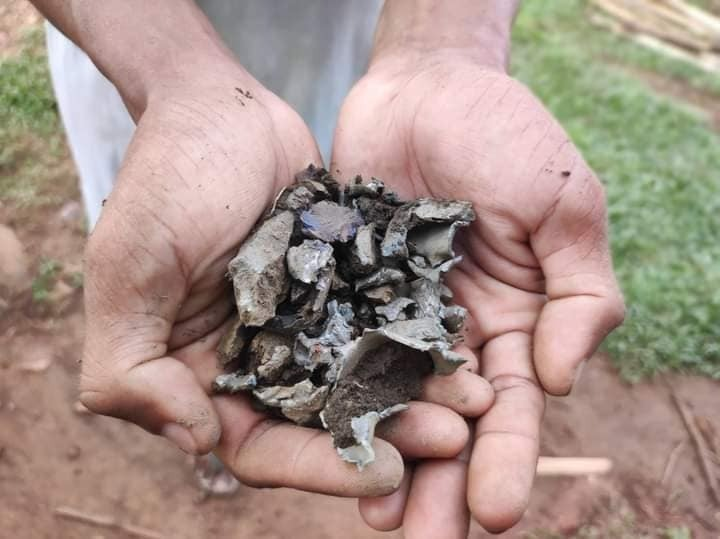
Active employment, domestic manufacturing, and border conflict deployments across Southeast Asia have placed Myanmar and Thailand at the center of global concerns over banned weaponry, according to the Cluster Munition Monitor 2026 report released on Tuesday.
The 150-page assessment, published by the Cluster Munition Coalition (CMC), comes ahead of the Third Review Conference of the Convention on Cluster Munitions in Vientiane, Laos, Sept. 14-18.
Myanmar remains one of the few nations worldwide actively manufacturing and deploying air-dropped and ground-launched cluster munitions.
As a non-signatory to the 2008 Convention on Cluster Munitions, Myanmar operates without international legal constraints, standing as one of only nine nations worldwide actively manufacturing these banned weapons through its state-owned Directorate of Defence Industries (KaPaSa) facilities.
Between mid-2025 and mid-2026, the Myanmar Air Force and ground artillery units systematically deployed domestically produced air-dropped cluster bombs—containing modified mortar submunitions—across active conflict zones in Karen, Karenni, Sagaing, Magway, Chin, and Arakan states, directly hitting displacement camps, civil infrastructure, and resistance supply corridors.
These operations contributed to a global surge of 1,063 cluster munition casualties in 2025, a year in which civilians comprised 87 per cent of all recorded victims.
Compounding this destruction, high failure rates from domestic production defects have left farmlands and residential villages littered with unexploded duds that function as de facto antipersonnel landmines, creating severe long-term contamination made worse by military aid blockades and global funding cuts to clearance organizations.
- Domestic Manufacturing: Myanmar is identified as one of only nine nations actively producing cluster munitions.
- Indiscriminate Combat Use: The Myanmar military deployed cluster munitions during airstrikes and artillery bombardments between mid-2025 and mid-2026.
- Civilian Toll: Casualties from cluster munitions and unexploded duds were recorded across Myanmar throughout 2025, contributing to a global civilian casualty rate of 87 per cent.
While Thailand is not listed as an active manufacturer, the Monitor documented its use of cluster munitions in neighbor territory:
| Country / Sector | Convention Status | Recent Deployment / Operational Context | Regional Impact |
| Thailand | Non-State Party | Deployed cluster munitions in Cambodia in 2025 during border conflict clashes. | Dispersed submunitions over agricultural and border zones, creating long-term explosive remnants of war (ERW) hazards. |
| Southeast Asia Clearance | Affected Region | Impacted by a U.S. foreign assistance freeze enacted in February 2025. | Disrupted mine and ERW clearance capacity across contaminated border areas in Laos, Cambodia, and neighboring states. |
Calls for action at Vientiane summit
Neither Myanmar nor Thailand are states parties to the 2008 Convention on Cluster Munitions.
At the upcoming review conference hosted by Laos—the first nation to host a meeting of states parties in 2011—delegations from 124 countries will address expanding treaty membership, closing funding gaps, and halting international support networks for non-signatory military forces.
“In the face of the continued use of cluster munitions and rising civilian casualties, member countries to the convention need to send a clear message that they will stand firm in their commitment to end all use of these indiscriminate weapons,” said Verity Coyle, deputy crisis, conflict and arms director at Human Rights Watch.
Human rights organizations are urging member states to enforce strict targeted embargoes on the supply of arms, ammunition, and aviation fuel to the military regime in Myanmar, while pressing both Naypyidaw and Bangkok to accede to the global ban treaty.