


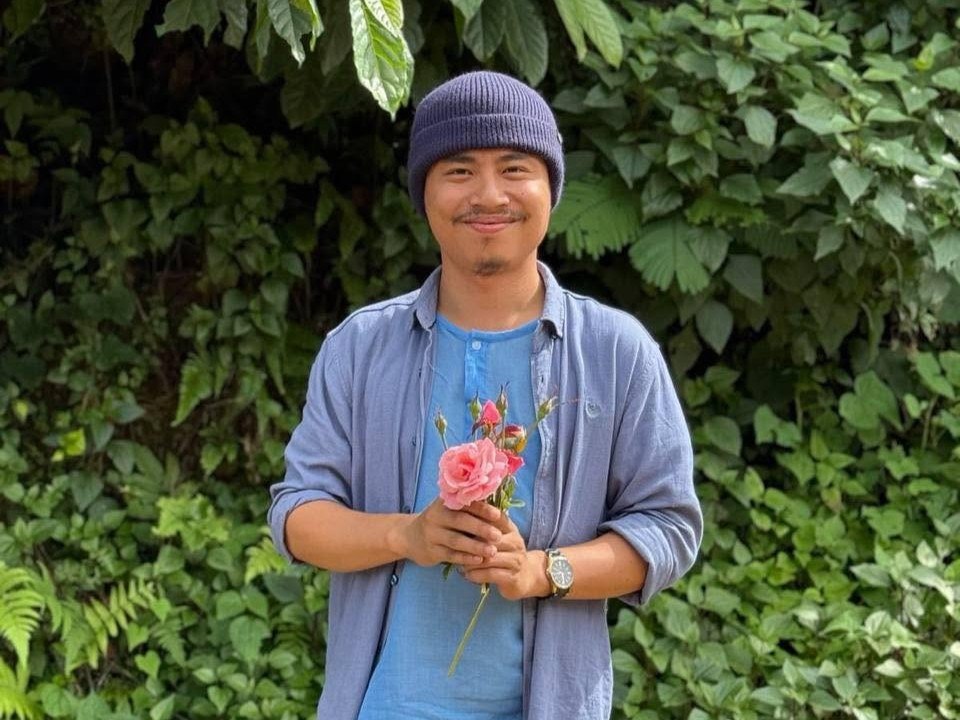
Following the announcement on July 8 that Myanmar activist and strike leader Nan Lin would accept the 2026 Democracy Award from the National Endowment for Democracy (NED) on behalf of “pro-democracy community organizers of Burma’s Spring Revolution,” he spoke to DVB on the five years of resistance to the Feb. 1, 2021 military coup.
In an exclusive interview, Nan Lin discusses accepting the award on behalf of the Spring Revolution, the current “low tide” facing the resistance, the critical balance between armed struggle and non-violent mass political organizing, and the geopolitical pressures facing Myanmar—including China’s support for the military regime’s “sham” elections.
Part 1: Accepting the Democracy Award for the Mass Movement
DVB: First of all, congratulations on receiving the Democracy Award from the National Endowment for Democracy (NED).
Nan Lin: Thank you. For me, it is a very proud moment. However, this award is truly for all our comrades participating in the mass movement. I am deeply honoured to accept it on their behalf. This serves as a great source of strength for our comrades, our movement, and our people.
DVB: How do you feel receiving this recognition at this specific juncture in the revolution?
NL: When we were notified about this award, it came at a time that we view as a “low tide” in the revolution. As we rebuild during this temporary low tide and prepare our next steps to raise the tide once again, receiving this award gives us immense strength.
Our people are facing immense oppression on one side and bitter economic and social crises on the other. Yet, even through all of this, the public remains firmly committed to the revolution. I see this award as a recognition of the people’s struggle, their fight, and their endurance.
DVB: An NED official mentioned that the award was given to you and fellow political activists to serve as an inspiration—recognizing your collective resilience and adaptability. What are your thoughts on that?
NL: The foundation of this adaptability and resilience praised by the NED is, in fact, the people’s endurance and fighting spirit. If we look back at the past five years, the mass movement was remarkably strong. I have always said: a battle that begins with the people must end with the people.
Over these five years, we moved with great momentum, but we also had weaknesses. Our main flaw was relying too much on short-term tactics without connecting them strategically to a long-term revolutionary vision.
Despite our shortcomings as revolutionary forces, the people’s participation remains our greatest strength. Look at the recent Rose Movement or the widespread boycott of the junta’s illegal, sham elections where the public flatly refused to vote. The people see the flaws in the revolution, yet they continue to participate dutifully through whatever means possible.
DVB: To whom specifically do you dedicate this honour?
NL: Every single comrade fighting amidst these struggles is the true winner of this award. I am merely accepting it on their behalf. Specifically, I dedicate this to:
- The Unyielding CDMers: Those in the Civil Disobedience Movement who completely refused to participate in the regime’s machinery, many of whom are now treating the wounded or teaching displaced children.
- Protesters in Enemy Territories: Comrades in Yangon, Mandalay, and urban centers who faced vehicle rammings, live ammunition, and arrests while hanging protest banners or marching.
- Political Prisoners: Those fighting for the Spring Revolution from behind bars, enduring extreme oppression.
- Civilians in Liberated Zones: Communities facing constant travel hardships and regime air attacks—such as the October 2023 airstrike on Bonto village during a peaceful Thadingyut protest.
Part 2: Mass Movement vs. Armed Struggle (Soft Power vs. Hard Power)
DVB: You often highlight the pillars of the movement—mass strikes, the CDM, Social Punishment, and armed resistance. How do you evaluate the balance and impact of these strategies?
NL: If we condense them, there are really two main approaches: the Mass Movement (Soft Power) and the Armed Struggle (Hard Power). We have constantly advocated for ending the dictatorship by balancing these two.
“Armed struggle physically destroys the junta and liberates territories. The non-violent mass movement involves the entire public using political means. We aimed to merge these smartly, but to be brutally honest, we haven’t yet achieved that balance.”
We had abundant tactics—like electricity tax strikes and product boycotts—but we were weak in ideological organizing. Furthermore, by swinging a wide stick with boycotts (such as social punishment targeting actors or those returning to school), we inadvertently created social fractures between those who boycotted and those who didn’t. Moving forward, we must focus heavily on theoretical and political organizing.
DVB: Some members of the public express frustration, asking if mass protests and boycotts are still necessary when “guns are doing the talking.” How do you respond to that?
NL: Relying solely on armed struggle without a connected mass political movement will not lead us to true federal democracy.
Armed struggle requires military training, weapons, and strict chains of command, which often turns the public into mere spectators or donors. Recently, when the revolution faced junta counter-offensives after reaching a military peak, we realized we couldn’t politically consolidate those military victories because we lacked the political and mass movement connections on the ground.
Historically, Myanmar’s military became corrupt because we failed to use political, mass-based mechanisms to keep them in check. To ensure that today’s armed resistance forces do not become tomorrow’s oppressors, we need a politically awakened public to enforce ethics and accountability right now. The mass movement is the bridge that regulates this.
Part 3: Strategic Priorities for Survival and Rebuilding
DVB: With the public experiencing severe hardship after five years of conflict, what is needed for the mass movement to rebuild?
NL: We are focusing on three main areas:
- Developing Human Resources: Training capable political and mass movement organizers, not just for the current revolution, but for the future country.
- Updating Organizing Models: Shifting from short-term street actions (like flash strikes) to sustainable, long-term political and ideological cohesion.
- Aligning Words with Actions: Ensuring that revolutionary administrative bodies (like local defense forces and administrative committees in liberated zones) act democratically, serve the public, and refrain from abusing power.
Part 4: Geopolitics, Realpolitik, and China’s Role
DVB: Regime leader Min Aung Hlaing is attempting to legitimize his power as President through illegal elections, backed by countries like China, India, and Thailand. How will these relationships impact Myanmar long-term?
NL: Global politics has shifted toward pragmatic, interest-based “realpolitik.” Neighboring countries are prioritizing short-term “stability” over the democratic freedoms of the Myanmar people.
Appeasing the military has never worked in Myanmar’s history. Believing that a junta that unjustly overthrown an elected government will somehow pave the way back to democracy is completely illogical. Appeasing them only pushes Myanmar back into a vicious cycle. The only path to genuine peace is uprooting the dictatorship entirely.
DVB: How do you view China’s backing of the junta’s elections and their concerns regarding Western influence in the revolution?
NL: China’s main justification seems to be a paranoid fear that revolutionary forces lean too far West or will create a CIA-backed puppet government.
Let me be clear: the Myanmar people are not anyone’s puppets. We are fighting for our own dignity, freedom, and justice. China’s paranoia leads them to prolong the life of a dictator the public despises, creating a massive wedge between the Myanmar people and the Chinese Communist Party (CCP).
If China wants a genuine relationship with Myanmar, they must stop backing puppet dictators and start listening to the voices and will of the Myanmar people.
Part 5: Assessing the Opposition Leadership
DVB: The National Unity Government (NUG) recently formed the Steering Committee for the Emergence of a Federal Democratic Union (SCEF). What are your thoughts on this step?
NL: In a single word: I am unsatisfied. We need to be blunt. Since 2024, we have called for NUG and NUCC (National Unity Consultative Council) reforms because their initial structures were built for early legitimacy battles, not for the complex administrative, political, and military leadership required today.
While forming the SCEF is better than doing nothing, it must demonstrate practical effectiveness on the ground. If it becomes disconnected from the public or fails to deliver real political and military progress, the revolutionary leadership will face a serious crisis of trust. Mass movement forces will continue to press for public accountability.
Final Message to the Public
DVB: What message would you like to leave with the public and the international community?
NL: To the international community: Stand with the Myanmar people, reject the junta’s sham elections, impose heavier sanctions, and help hold the military accountable for its war crimes.
To the people of Myanmar: This journey has been brutal, but the last five years were not a failure. We now hold expansive liberated territories. Reaching a temporary “low tide” is a natural phase in long-term conflict.
I view 2026 as a pivotal year to reorganize, rebuild our mass organizing structures, and raise the revolutionary tide once again. We still hold the fundamental strength in our hands to win.