


Guest contributor
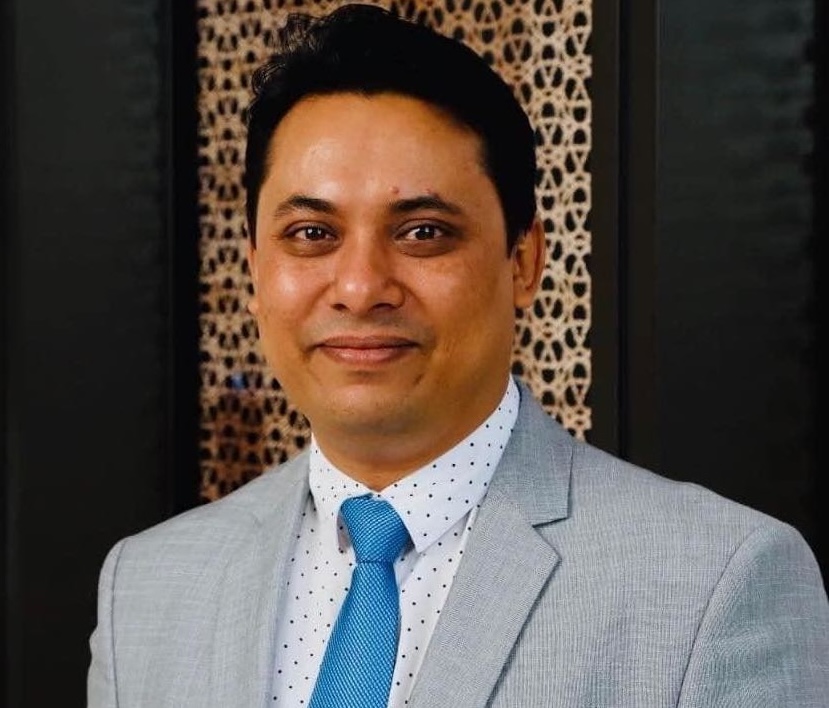
Shafiur Rahman
The landscape in Arakan State is uncertain and dangerous. Rohingya civilians face violence and coercion from both the junta and the Arakan Army.
A recent U.N. report says the AA has reshaped northern Arakan through land seizures, non-Rohingya settlements, forced dismantling of Rohingya homes and the renaming of ancestral villages.
In this context, the country’s highest-ranking Rohingya politician stepped in front of a camera to offer a solution – better branding.
In an interview with DVB English News following his quiet exit from the National Unity Government (NUG), former Deputy Minister for Human Rights Aung Kyaw Moe did not use his 28 minutes to hold the Bamar-dominated shadow cabinet accountable for its unfulfilled promises.
He did not once name the Arakan Army, which now controls much of the Rohingya homeland and is accused of abuses against civilians.
Instead, his interview puts the blame back on the Rohingya for why they remain excluded.
In his telling, they are excluded not because the NUG will not share power or because the AA is abusing its power, but because Rohingya have failed to organise, build alliances and market themselves properly.
Pitching for survival
He argued that the Rohingya must move beyond its reliance on individual activists and journalists and instead learn from the country’s ethnic armed groups.
But his most startling prescription came when discussing how the community should present itself to the Myanmar public.
“What we need to demonstrate to the rest of the country,” he said, “is that the Rohingya are not a liability to Myanmar. They are an asset. They are a resource. They could… provide competitive advantage and added value… and Rohingya could package themselves in such a way.”
It was a bizarre intervention. Basic rights are not a business deal, nor something a persecuted people should have to earn by being useful to the resistance.
By telling Rohingya to “package” themselves as a “competitive advantage,” Aung Kyaw Moe makes their inclusion sound conditional on their value to the wider revolution.
That lets the NUG off the hook for its own failure to deliver rights and power. Why should a persecuted people have to demonstrate this just to earn the basic right to exist within the state?
The point is not that the Rohingya should sit out the revolution. They have as much stake in ending military tyranny as anyone else.
Having reduced citizenship to a marketing pitch, Aung Kyaw Moe turned to diagnosing what he presents as an internal political deficit – a lack of credible institutions.
Lack of Rohingya credible institutions
“The missing component in the Rohingya struggle,” he told DVB, “is organised political institution that’s fit with the contemporary political architecture of Myanmar.”
He urged the community to “step back and reflect to ensure there are institutions rather than individuals or personalities to be doing things in an activist or journalism way.”
Later, he drove the insult home. He said, “There’s a vacuum of political institutions within the Rohingya community… What is lacking in the Rohingya community is a credible institution.”
He is right that Rohingya politics often depends on individuals, and that decades of persecution have made strong institutions hard to build. But he turns that history into a Rohingya failure.
They must organise better, learn from armed groups and build alliances.
He says little about what Myanmar’s political institutions must do – share power and remove the barriers that have kept Rohingya politics weak.
More troubling is his dismissal of people working in an “activist or journalism way.” What does he mean?
Refugee and IDP camp reporters documented abuses and kept the Rohingya crisis in public view when formal politics failed them. Calling that work mere personality-driven noise is unfair.
Perhaps his target is diaspora spokespeople who dominate the airwaves. His references to “individuals”, “personalities” and the pursuit of international attention point in that direction.
That is a legitimate target and, let’s not beat about the bush, he has not always had an easy relationship with some of them.
By leaving the criticism vague, he sweeps in refugee/IDP camp reporters into the same indictment.
Yet this narrative he spins serves an obvious goal – it clears the stage for his own ambition.
His argument clears space for the Rohingya Consultative Council, which he helped establish and now wants to make the focus of his work.
He wants it to become “the most credible political institution that has ever existed within the Rohingya community.”
Learn from the Ethnic Resistance Organisations
Aung Kyaw Moe’s next advice was that the Rohingya must learn from Myanmar’s armed ethnic groups.
He uses EROs as a generic term that describes armed groups as an undifferentiated bloc fighting for democracy.
“We have a lot to learn from different ethnic resistance organisations,” he said. “How they are struggling, how they are tackling the issues that they have been facing…”
Treating every armed group as a model to learn from lets him dodge the uncomfortable truth – the Arakan Army is not a benign ally, but a force carrying out documented abuses against the Rohingya.
It also ignores the reality of power in Myanmar. Groups like the Karen National Union, Kachin Independence Organisation, or the Arakan Army built leverage through standing armies, territorial control, and cross-border resource economies.
The NUG negotiates with them because they hold guns and a lot of territory.
The Rohingya possess none of this. They are overwhelmingly an unarmed civilian population, with no credible representative armed force and no territory under their control.
Lecturing captive civilians for failing to “build alliances” is absurd.
Caught between the AA and the military junta, who were they supposed to ally with?
Demanding that survivors of genocide match the clout of an armed force before their rights are recognised is a test designed for them to fail.
The government he refuses to blame
The most revealing moment in the interview was not what Aung Kyaw Moe said about his own community but what he would not say about the government he had just left.
Asked directly whether the NUG had been clear enough about full citizenship, and whether Rohingya representation there was only for show, the former minister defended the shadow administration completely.
“There is no disagreement or conflict between me and the leadership in the national unity government,” he insisted early on. He described the NUG’s stance on the Rohingya as remarkably steadfast.
He said, “NUG’s positions to the best of my knowledge have been consistent toward the Rohingya… 1982 citizenship law as well shouldn’t be a blockade for Rohingya to be treated and seen as an equal citizen.”
When asked about tokenism, he was even more emphatic about his own agency within the cabinet – “I had an equal say in the cabinet like any other ministers and I could object, I could suggest, I could advise, and there’s no constraint in doing so.”
This paints a picture of a government marked by shared values and direction toward equality.
But that is hard to square with his resignation. He says he had a real voice in cabinet and that the NUG was clear on citizenship and Rohingya rights. So why did he decide he could do more outside it?
Both cannot be true. If an institution is really working as an effective engine of inclusion, a minister does not walk away from it in the middle of a crisis in order to do better work from the sidelines.
By refusing to point to a single structural issue or policy disagreement in the interview, Aung Kyaw Moe leaves the public wondering why he resigned. Yet there were plenty of issues he could have raised.
The shadow government abolished the 2008 constitution by announcement and has amended other statutes when it wanted to, yet since its inception it has never named the Rohingya in the Federal Democracy Charter or in any law or announcement carrying legal force.
Its own People’s Assembly resolved in April 2024 that the 1982 Citizenship Law would be abolished, and nothing has followed.
A replacement law was said to have cabinet approval in 2023, but its text has never been published.
It has stopped short of accepting the Myanmar state’s own responsibility under the Genocide Convention or committing to reparations.
And it could not even manage a public statement acknowledging his departure. Yet in his account, the NUG comes out entirely blameless.
To stay an acceptable partner to the Bamar-dominated mainstream and keep his seat in international circles, the insider must never challenge or offend.
Naming the NUG’s evasions risks being called divisive. So his politeness replaces accountability. And his deference will no doubt pass for statesmanship, he hopes.
That is where the argument becomes uncomfortable. If the junta alone is to blame, and the democratic opposition represents a clean break with the past, why are the Rohingya excluded from meaningful political representation, and effectively absent from plans for Myanmar’s future? At some point, the question has to shift from what the military did to what the opposition itself has failed to do.
In Aung Kyaw Moe’s telling, only one answer is left.
The NUG did not withhold power; the Rohingya were simply too disorganised, too busy with activism, and failed to package themselves as an asset.
And his Rohingya Consultative Council is going to right the ship.
Watch the Newsroom interview with Aung Kyaw Moe on DVB English News YouTube.
Shafiur Rahman is a journalist and documentary filmmaker focusing on the politics of refugee management in South and Southeast Asia. He writes the Rohingya Refugee News newsletter.
DVB publishes a diversity of opinions that does not reflect DVB editorial policy. We’d like to hear what you think about this or any of our stories: [email protected]