


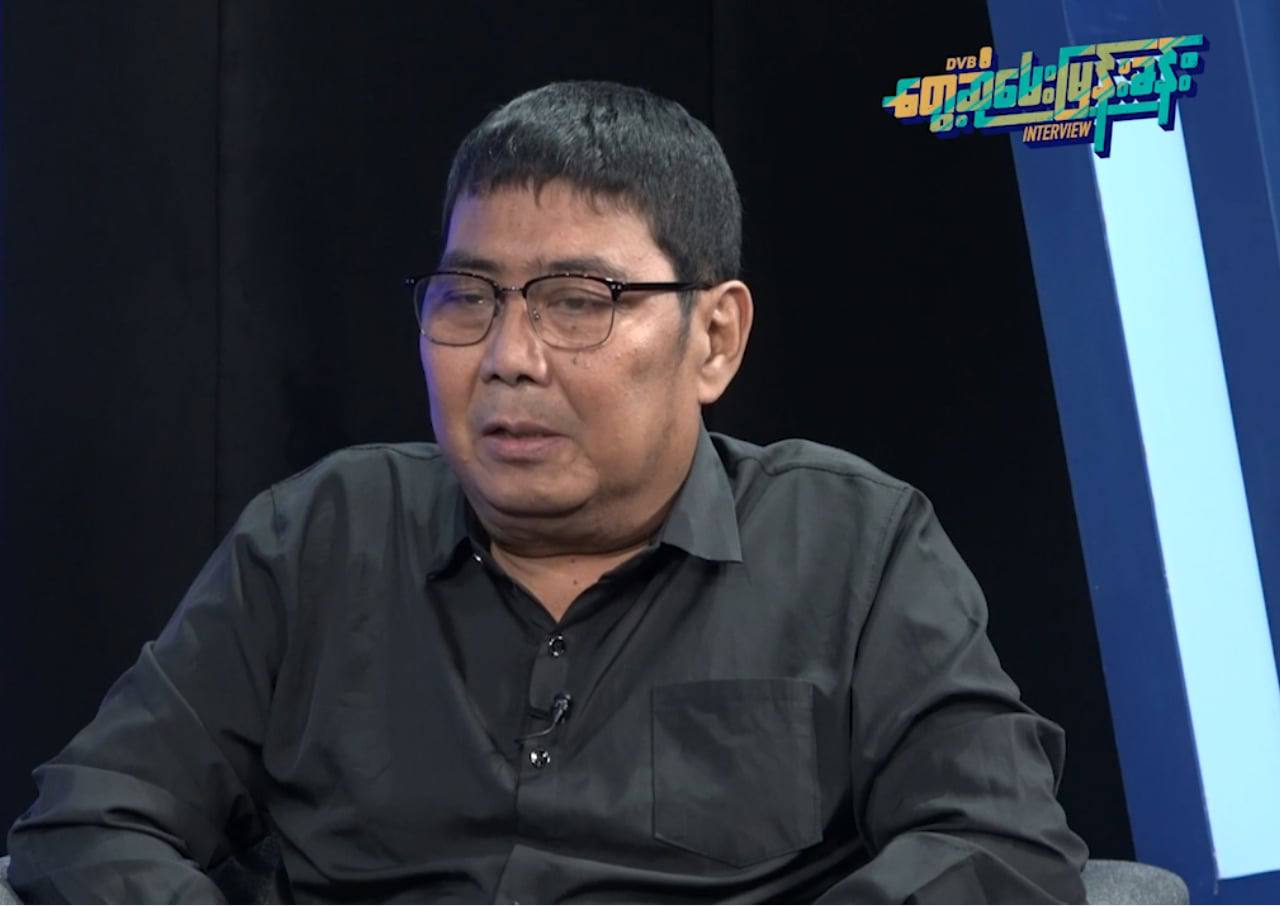
In an exclusive 2024 interview with DVB, the late Karenni State Consultative Council (KSCC) Chairperson Aung San Myint detailed the political blueprint that positioned Karenni State at the forefront of post-coup governance in Myanmar.
By consolidating territory, drafting state constitutions, and establishing state-level citizenship frameworks, Karenni resistance leaders constructed a functioning administration based on “Bottom-Up Federalism.”
Shift to federalism and formation of the KSCC
The Karenni national movement originally fought for separate independence following the outbreak of civil war in 1948. However, in 2001, political leadership formally shifted its strategic objective toward a federal democratic union as the most viable path to resolve long-standing conflict with the state in Myanmar.
Following the 2021 military coup and the collapse of state mechanisms across the country, local youth groups established a Coordination Team that was reorganized on April 9, 2021, into the Karenni State Consultative Council (KSCC) to manage state-wide governance, legislative, and judicial affairs.
Core Political Objectives of the KSCC
├── 1. Eradicate the military dictatorship and all forms of authoritarianism
├── 2. Abolish the military-drafted 2008 Constitution
├── 3. Build a Federal Democratic Union
└── 4. Practically exercise self-determination and local governance
Organizational structure and the Five Pillars
The KSCC was structured around five core stakeholder pillars committed to opposing military rule. While originally comprising 37 council members in 2021, a January 2023 conference restructured the council into a 17-seat mandate, with 13 active seats currently filled and four reserved for non-signatory groups.
| Representation Pillar | Active Participating Entities | Open / Reserved Seats |
| Ethnic Armed Organizations (EAOs) | Karenni National Progressive Party (KNPP), Karenni National Solidarity Organization (KNSO), Karenni National Peace and Development Party (KNPDP) | Karenni National People’s Liberation Front (KNPLF), Kayan New Land Party (KNLP) |
| Political Parties (2020 Anti-Coup) | National League for Democracy (NLD), Kayan National Party (KNP), Kayah State Democratic Party (KSDP) | — |
| Civil Society & Strike Forces | Karenni Nationalities Defence Force (KNDF) | 2 seats reserved for local People’s Defence Forces (PDFs) and strike committees |
| Elected Lawmakers | Ousted Members of Parliament from the 2020 General Election | — |
| Women’s Representation | Karenni Women’s Representation Group | — |
The KSCC expanded the state’s administrative division from Myanmar’s seven official townships into 19 administrative townships, establishing effective territorial control over approximately 85 per cent of Karenni State.
- Liberated Urban Centers: Karenni State’s Mawchi, Bawlake, Ywathit, Mese, and Shadaw, alongside key areas in southern Shan State’s Pekon and Moebye, operate under full resistance control.
- Regime Isolation: In the Karenni State capital Loikaw, along with Hpasawng, regime forces remain largely pinned down inside fortified military bases, relying almost exclusively on standoff airstrikes and long-range artillery bombardment.
- Coordinated Governance: Under Chapter 2 of the National Unity Consultative Council (NUCC) Charter and Article 39 of the Karenni Interim Arrangement, the Interim Executive Council (IEC) executes administrative and judicial functions by coordinating directly with existing ethnic armed groups administrative systems rather than supplanting them.
State citizenship, cross-border trade, and constitutional frameworks
To support long-term self-governance, the KSCC initiated key institutional policies across citizenship, fiscal management, and constitutional law:
- State Citizenship & Immigration: An Immigration Department under the Karenni Ministry of Home Affairs was tasked with conducting population censuses and issuing State Citizenship. Under the Karenni draft constitution, holding state citizenship automatically confers federal union citizenship.
- Economic & Fiscal Policy: Local authorities began formalizing small-scale cross-border trade utilizing the Thai Baht (THB). The council adopted an environmental policy prioritizing resource conservation over rapid commercial extraction.
- Constitutional Milestones: The KSCC completed the Fourth Draft of the Permanent Karenni State Constitution alongside an active Transitional Constitution to govern the post-revolution transition period.
- Union-Level Integration: Demonstrating bottom-up federalism, four KSCC representatives serve as ministers and deputy ministers within the National Unity Government (NUG), while three represent the state within the NUCC. Under Part 1 of the NUCC Charter, state-level leaders hold higher protocol rank than union ministers.
“We do not want a system where power is handed down top-down from a dominant central authority. True federalism relies on a clear division of power where both union and state levels understand their distinct responsibilities and how to interact seamlessly,” Aung San Myint told DVB in 2024.
Read or watch the original 2024 DVB Interview with the late Aung San Myint on DVB TV News.