


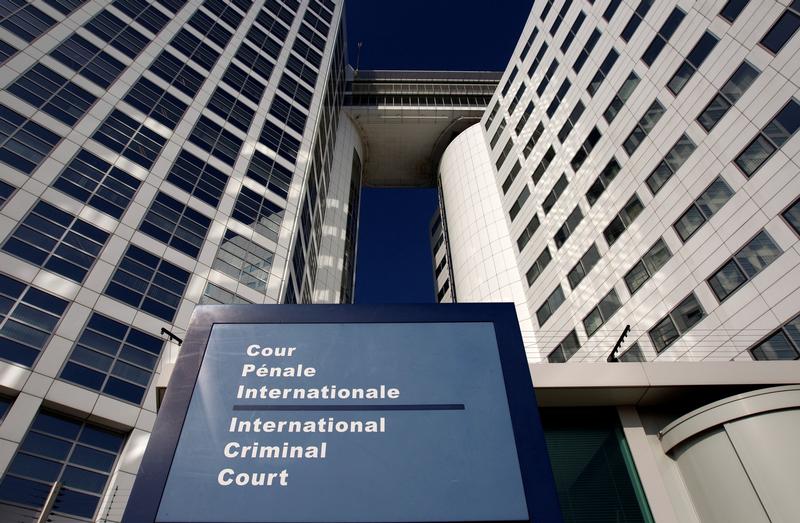
The International Criminal Court (ICC) has affirmed that Min Aung Hlaing’s recent maneuver to shed his military uniform and assume the civilian title of Myanmar’s president will not provide him legal protection against a pending international arrest warrant for crimes against humanity.
“The decision of the judges on whether or not to issue the arrest warrant is solely based on the evidence,” Oriane Maillet, the ICC spokesperson, told DVB in a Newsroom interview on April 14.
“The fact that this person’s election was announced doesn’t change the fact that an arrest warrant was requested against him. The founding treaty of the ICC, the Rome Statute, outlines that the ICC applies equally to all persons without any distinction based on official capacity.”
A pending warrant caught in judicial review
The legal process against Myanmar’s military leader has been in motion since November 27, 2024, when the ICC Chief Prosecutor Karim Khan applied for a formal arrest warrant.
Min Aung Hlaing faces allegations of bearing criminal responsibility for the deportation and persecution of Myanmar’s ethnic Rohingya Muslim community between August and December 2017.
The warrant application is currently sitting with the ICC’s Pre-Trial Chamber judges, who must review the evidence to ensure it meets the necessary standards before formally issuing the warrant.
The ICC states that there is no set timeframe for the judges to make a decision, as it depends entirely on the specific circumstances of the case.
Enforcement and the Sword of Damocles
If the ICC judges officially grant the arrest warrant, Min Aung Hlaing’s diplomatic and personal mobility will be severely permanently restricted.
Because the ICC is a judicial body without its own police force, it relies on its 125 member states to execute its decisions. If Min Aung Hlaing steps foot in any of these member countries, those nations have a strict “legal obligation” to detain him and hand him over to The Hague.
“Once an arrest warrant is issued, this warrant is valid for life,” Maillet told DVB. While the ICC cannot try suspects in absentia—meaning Min Aung Hlaing must be physically present in the courtroom for a trial to begin—the threat of arrest will hang over him indefinitely.
Expanding the scope of justice
While the current ICC warrant application specifically targets the 2017 atrocities against the Rohingya, Maillet added that the Court is closely watching the ongoing violence in Myanmar, which has spread nationwide after the military coup on Feb. 1, 2021.
Although Myanmar is not a state party to the Rome Statute, the ICC established jurisdiction because part of the 2017 crime of deportation occurred on the territory of Bangladesh, which is a member state.
The ICC confirmed it is actively “monitoring the situation in Myanmar following the [2021] coup,” noting that thousands more Rohingya have fled their homes due to violence and have been forced across the border into Bangladesh over the last five years.
The Office of the Prosecutor is currently assessing these recent developments to determine possible further legal steps.
In the meantime, the ICC welcomed complementary justice initiatives, such as the international arrest warrant issued for Min Aung Hlaing by a federal court in Argentina last year under the legal principle of universal jurisdiction.
“We welcome any initiatives that complement the work of the Court,” Maillet told DVB, emphasizing that the ICC serves as a court of last resort to fight impunity for the world’s gravest crimes.