


Guest contributor
Seán Barry
Senior officials from the Karen National Union (KNU) and affiliated civil society organisations formally launched a 10-year climate action plan they describe as the region’s first indigenous-led climate plan on Wednesday.
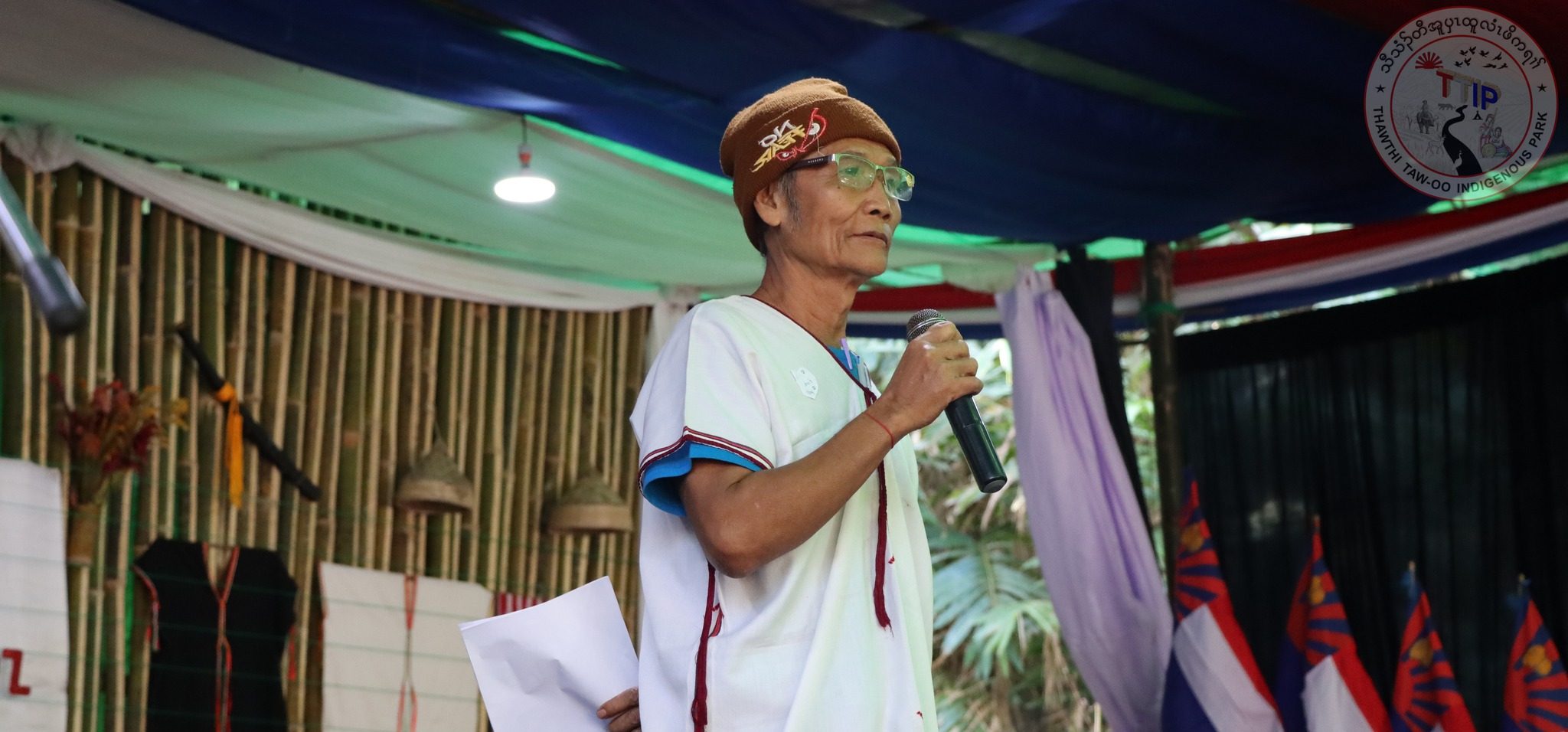
“For the Indigenous people of Karen, the forests, the rivers and the lands are our life – our healthcare suppliers,” said Saw Hla Tun, the KNU joint secretary, adding that these resources were under “huge threat” and that the region’s ecosystems are central to the Karen identity and the community’s survival.
The Kawthoolei Climate Action Plan (K-CAP) outlines commitments to halve deforestation by 2035, restore up to 500,000 hectares of forest, expand community land management and increase access to clean energy across KNU-controlled territory.
“We are now facing frequent natural disasters and climate change,” added Saw Hla Tun. “We need an action plan to address all these problems,” calling the plan “a life-saving tool for us and for the generations to come.”
Environmental degradation in southeastern Myanmar has multiple drivers.
Alongside logging, mining, roadbuilding, and large scale cross-border agribusiness, splinter groups such as the Border Guard Force (BGF) and Democratic Karen Benevolent Army (DKBA) have facilitated extractive industries and cross-border criminal economies – including cyber scam compounds – that have transformed land use across parts of Karen State.
Filling a vacuum
Myanmar had no representation at this year’s COP30 summit in Belém, Brazil, last month. National climate governance has been largely paralysed since after the 2021 military coup, when both the regime and the pro-democracy National Unity Government submitted rival Nationally Determined Contributions.
The U.N. Framework Convention on Climate Change (UNFCCC) avoided taking sides: it published one updated Nationally Determined Contributions (NDC) under the name “Myanmar” in 2021, without attributing it to either the regime or the NUG.
Saw Frankie Abrue of the Karen Natural Resources and Environmental Conservation Committee (KNRECC) said the 2021 coup had opened the country’s environment “to more intense exploitation”, including expanding timber extraction and rare-earth mining.
He added that the loss of central control in many ethnic areas had created space for indigenous and ethnic institutions to implement their own policies, including on the environment.
The plan itself integrates KNU land, forest and energy policies with community-led conservation approaches developed by groups such as the Karen Environmental and Social Action Network (KESAN) and the Tenasserim River and Indigenous Peoples’ Network (TRIPNET) after two years of community consultations.
Karen communities practice reforestation of degraded land, conservation of food crops, protecting wildlife habitats, and preserving natural resource extraction, according to Saw Frankie.
He added that the Indigenous Pavilion at U.N. climate summits remained a “bridge” for engaging the global system until they could seek fuller recognition.
Karen delegations have presented at COP28 and COP29, though their planned event at COP30 was cancelled after a fire at the pavilion.
Questions remain
Full implementation of K-CAP will depend on climate finance reaching conflict-affected areas and non-state actors. When asked about the overall budget required to successfully meet targets, and how any future donor funding would be kept separate from the KNU’s security structures or armed wings, speakers at the launch did not immediately provide specific figures or mechanisms, but said further details were to follow.
The KNU has framed K-CAP as both a local adaptation roadmap and a contribution to global climate targets, and more symbolically, a demonstration of self-determination.
But with international funding for humanitarian aid, civil society and pro-democracy programs in the region having been scaled back significantly, it is unclear how much backing the plan will receive.
“We will work together with anyone, any organisations, any partners – we welcome them,” the KNU’s Saw Hla Tun concluded.
Seán Barry is a Chiang Mai-based freelance journalist and audio producer, with a focus on authoritarianism, human rights, and humanitarian aid. He first visited Myanmar in 2015.