


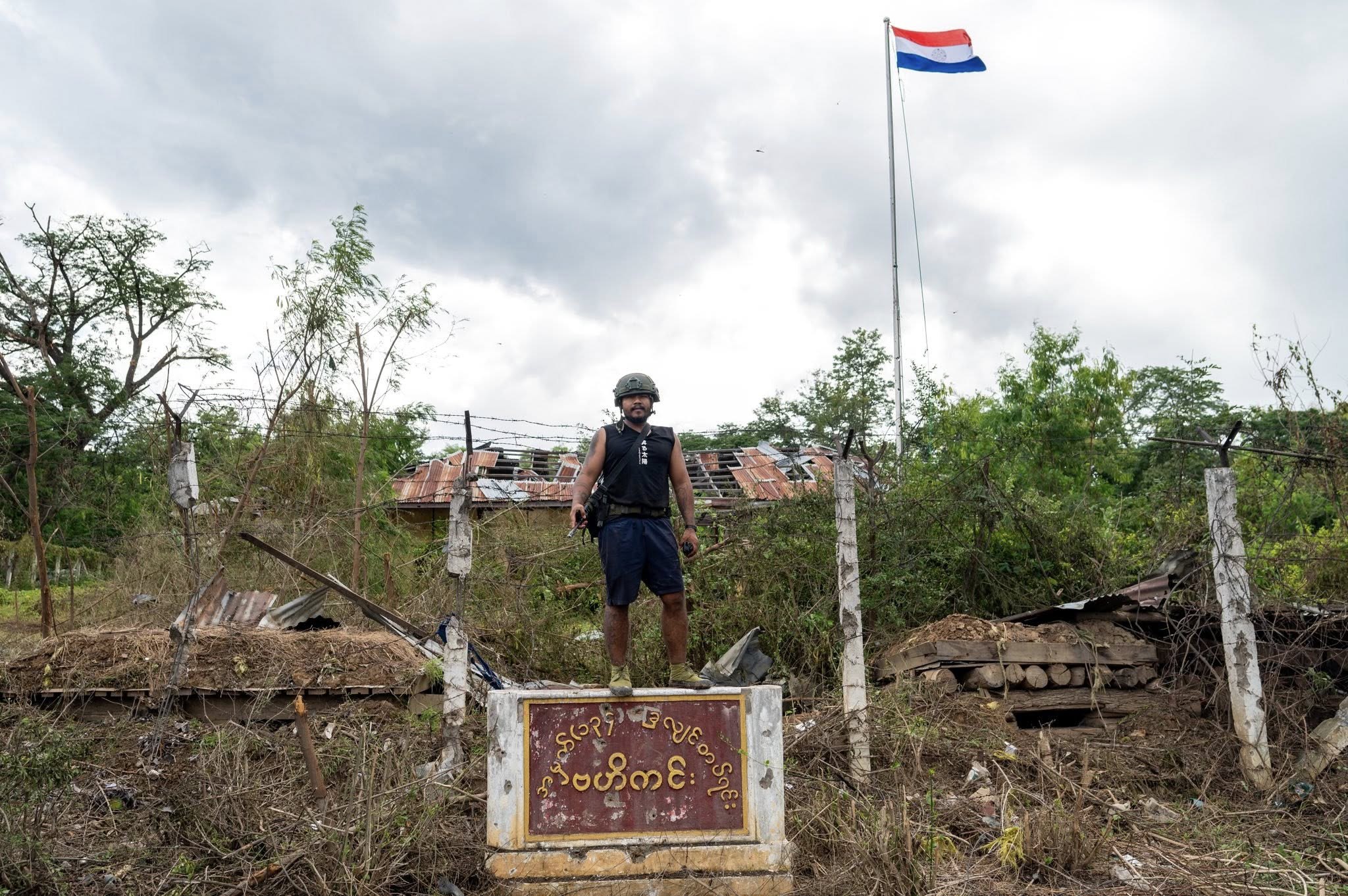
Karenni Nationalities Defence Force (KNDF) Deputy Commander Maui Pho Thaike told DVB that resistance forces have besieged the regime’s remaining Light Infantry Battalion (LIB) 135 outpost in Hpasawng town of Karenni State since June 25. He claimed that Karenni forces captured LIB 134 on July 2.
“[Troops inside] LIB 135 are trapped. The regime can only resupply them by air,” said Maui in an interview with DVB, adding that once LIB 135 falls a stretch of territory from the Myanmar–Thailand border to the edge of Bawlakhe Township, 70 miles (112 km) south of the Karenni State capital Loikaw, would be fully under resistance control.
Hpasawng is located 73 miles (117 km) south of Loikaw, which is under regime control along with Bawlakhe. Resistance forces claim it controls six towns in Karenni, including Mese on the Myanmar-Thailand border.
The regime retook control of Moebye town, in Pekon Township of southern Shan State, which is located 100 miles (160 km) south of the Shan State capital Taunggyi and 11 miles (17 km) north of Loikaw, on July 2.
Maui accused regime forces of using “chemical gas” weapons that caused resistance members to feel “weak” upon inhalation. He cited this as one of the factors that forced resistance forces to withdraw from the town, leaving it for the regime to retake.
Karenni forces claimed on July 3 that it shot down a Myanmar Air Force jet allegedly carrying out an airstrike on Hpasawng. Local media reported that airstrikes have killed 10 civilians and injured 13 others in the mining town of Mawchi in Hpasawng Township during the first two weeks of the month.
A Mawchi resident told DVB that the town was “deserted” due to frequent retaliatory airstrikes. Mawchi, located 84 miles (135 km) southeast of Loikaw, came under KNDF control in January 2024.
The Karenni Interim Executive Council (IEC) claimed that airstrikes have killed 33 civilians and injured 94 state-wide from Jan. 1 to July 9. It called on the international community to impose a no-fly zone over its airspace.