


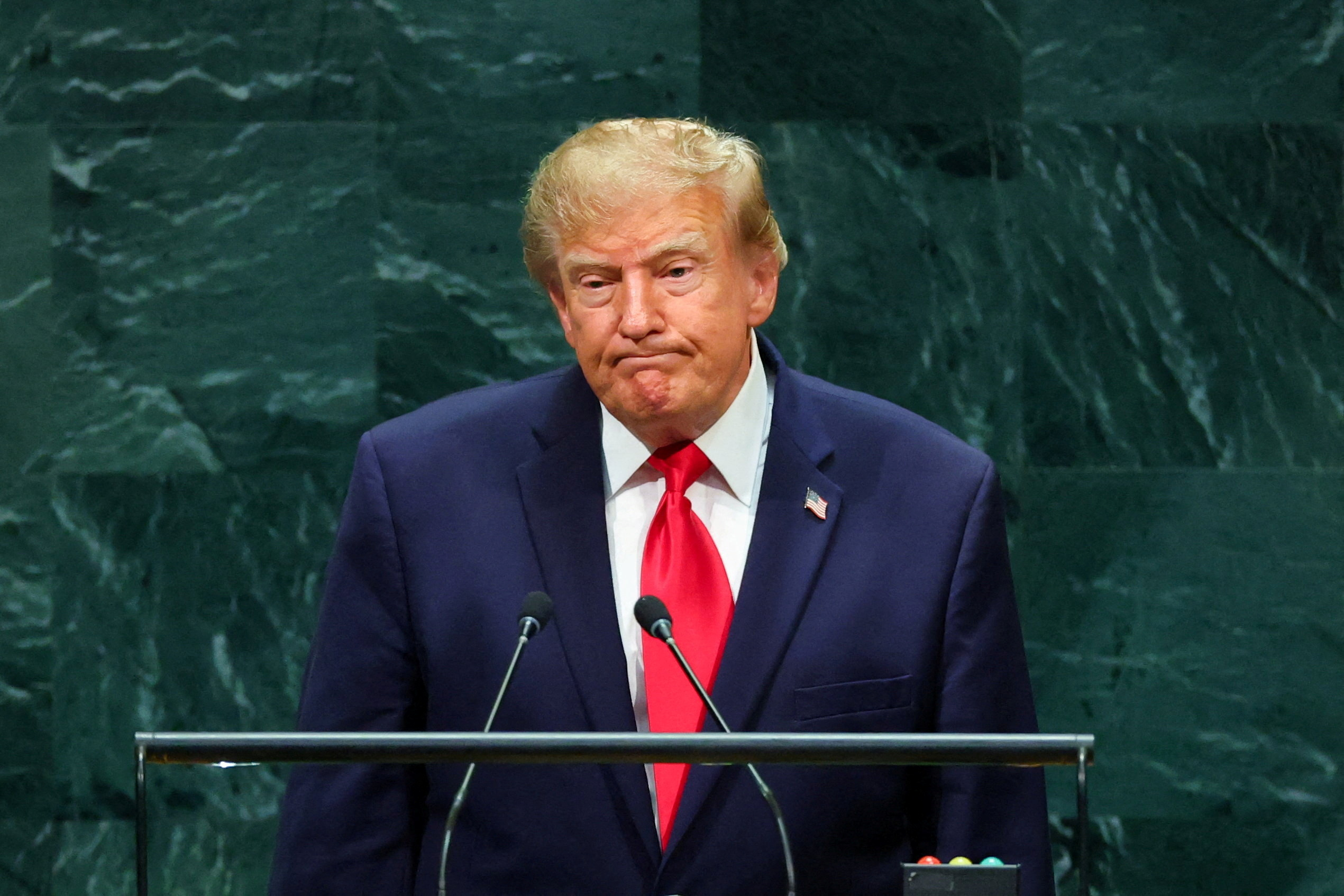
President Donald Trump urged countries to leave the International Criminal Court immediately, calling it “evil” and “a rogue institution,” but only Naoero, a tiny Pacific island nation formerly known as Nauru, has followed suit during the U.N. General Assembly this week.
Trump’s appeal on Tuesday capped an escalating U.S. campaign against the Hague-based court, which Washington says oversteps its authority by claiming jurisdiction over citizens of countries, including the United States and Israel, that have not ratified its founding treaty known as the Rome Statute.
While a handful of countries have moved to leave the ICC, many governments, particularly in Europe, have rallied to defend the Netherlands-based court as a cornerstone of international justice. Parties to the statute include 125 countries.
Netherlands Prime Minister Rob Jetten, addressing the U.N. General Assembly on Thursday, said the court is “under attack” and at risk, without mentioning the United States.
“How can you possibly be opposed to prosecuting the very worst crimes?” he asked.
“And I believe there can be only one response. To say: hands off the ICC, and all those other institutions that protect the international legal order.” The remarks drew loud applause from delegates.
The U.S. has imposed financial sanctions and visa bans on court staff, and officials have prepared sanctions that could undercut the court’s ability to operate, sources familiar with the matter said.
‘Dismantle the ICC’
In July, U.S. Secretary of State Marco Rubio launched a diplomatic push to “dismantle the ICC — brick by brick, if necessary,” claiming the court posed a threat to American service members and those carrying out Trump’s deportations of migrants and strikes on alleged drug trafficking boats.
Trump has said the campaign is aimed at protecting Israeli Prime Minister Benjamin Netanyahu, against whom the ICC issued arrest warrants in 2024 alongside his then-defense minister and a Hamas military commander over the Gaza war.
Since Rubio announced the campaign, Venezuela and Chad have announced plans to withdraw from the court. Burkina Faso, Mali and Niger announced their exits the previous year, denouncing the court as an instrument of “neocolonial repression.”
Naoero President David Adeang said in his speech to the U.N. General Assembly on Tuesday he would formally withdraw his country from the Rome Statute due to the ICC’s “increasing irrelevance.”
“Naoero joins a growing number of nations standing up for their sovereignty against the ICC’s illegitimate overreach,” US Assistant Secretary for East Asian and Pacific Affairs Michael DeSombre said on X after meeting the island nation’s deputy foreign minister.
Defending the court
The European Union rallied behind the court and officials have discussed drawing up a blocking statute in response to the potential U.S. sanctions.
E.U. foreign policy chief Kaja Kallas told reporters this week the bloc had options to defend the court.
“We have the tools in our toolbox when it gets really serious, how to defend ICC, and here [at the U.N.] we are rallying countries behind supporting the ICC functioning and the accountability part because it’s not only a European issue; it’s much broader than that,” she said.
Tomoko Akane, the ICC president already under US sanctions, opens new tab, is a Japanese national. Japan’s government called the proposed sanctions “very unfortunate” and dispatched an official to The Hague to discuss how it could support her.
Prime Minister Sanae Takaichi noted Japan’s support for the ICC in her address to the General Assembly on Tuesday.
“Since the end of the Second World War, Japan, as a peace-loving nation, has attached great importance to the rule of law in the settlement of any disputes,” Takaichi said.
Brian Finucane, a senior adviser at the International Crisis Group, said many countries remain invested in the ICC’s mission of accountability, limiting the impact of Washington’s campaign against the court.
He noted that Russian President Vladimir Putin targeted the ICC after it issued a warrant for his arrest.
“The Trump administration has managed to align itself with Putin in terms of, you know, imposing targeting ICC personnel with sanctions, and of course, Putin would also benefit from the destruction of the court,” Finucane said.
The application charges the military leader with crimes against humanity—specifically the deportation and persecution of the Rohingya population—committed during the military’s violent “clearance operations” in Arakan State in 2017.
Marking the first time the ICC prosecutor has sought a warrant against a top Myanmar military official, the move relies on jurisdiction established through Bangladesh, an ICC member state where over a million displaced Rohingya fled.
Rights organizations and legal experts have noted that any political maneuvering by Min Aung Hlaing to adopt civilian governance titles will afford him no legal immunity under international law, while member states of the Rome Statute would be legally obligated to detain and transfer the general should he enter their territory after an ICC arrest warrant is issued.
REUTERS