


Guest contributor
Shalini Perumal
On Sunday, the Myanmar military is performing a theatrical display of “disciplined democracy.” However, the 2025-26 elections are not a path toward peace; they are a calculated strategy to legitimize its 2021 coup.
While the United Nations and the broader international community have rightly labeled these polls a “sham,” the responses from Myanmar’s immediate neighbours—specifically India, Thailand and Bangladesh—reveal a deeply troubling prioritisation of cold foreign policy pragmatism over international law and humanitarian ethics.
To understand why these elections are inherently fraudulent, one must look at the environment in which they occur. Since the coup, Myanmar has devolved into a multi-front civil war. The junta, led by Senior General Min Aung Hlaing, currently lacks territorial control over nearly half the country.
Armed resistance from the People’s Defense Forces (PDFs) and Ethnic Armed Organizations (EAOs) has pushed the military out of key border regions and several urban centers.
Consequently, the junta has admitted it cannot hold elections nationwide. The “voting” will take place primarily in military-controlled enclaves, effectively disenfranchising millions of internally displaced persons (IDPs) and those living in resistance-controlled zones.
Furthermore, the political landscape has been razed: the National League for Democracy (NLD) party, which won back-to-back landslide victories in 2015 and 2020, has been dissolved by the regime.
The NLD leaders, including State Counsellor Aung San Suu Kyi and President Win Myint, have been held in detention since the junta seized power during the coup on Feb. 1, 2021.
The junta’s newly-enacted “Election Protection Law” even criminalizes criticism of the vote, with penalties ranging from long-term imprisonment to death. Under these conditions, “voting” is not an act of civic participation; it is an act of coerced submission.
Perhaps the most disappointing reaction has come from New Delhi. Despite being the world’s largest democracy, India has signaled a willingness to send observers and maintain formal engagement with the junta throughout this electoral process. This stance is ostensibly driven by two factors: “Act East” infrastructure projects and a fear of ceding influence to China.
However, India’s support for these elections is not just ethically hollow—it is strategically flawed. By engaging with a “sham” process, India is violating the spirit of international legal norms that reject the legitimacy of regimes born from the illegal overthrow of democratically-elected governments.
New Delhi’s “pragmatism” ignores the reality on the ground. The junta is no longer the stable partner India once imagined it to be. Its grip on the border regions—where India’s Kaladan Multi-Modal Transit Transport Project is located—is slipping.
By siding with a losing and illegitimate military, India risks alienating the resistance and the ethnic groups who will eventually govern these territories. In its attempt to counterbalance China, India is ironically adopting China’s playbook: supporting autocracy at the expense of regional stability and its own long-term interests.
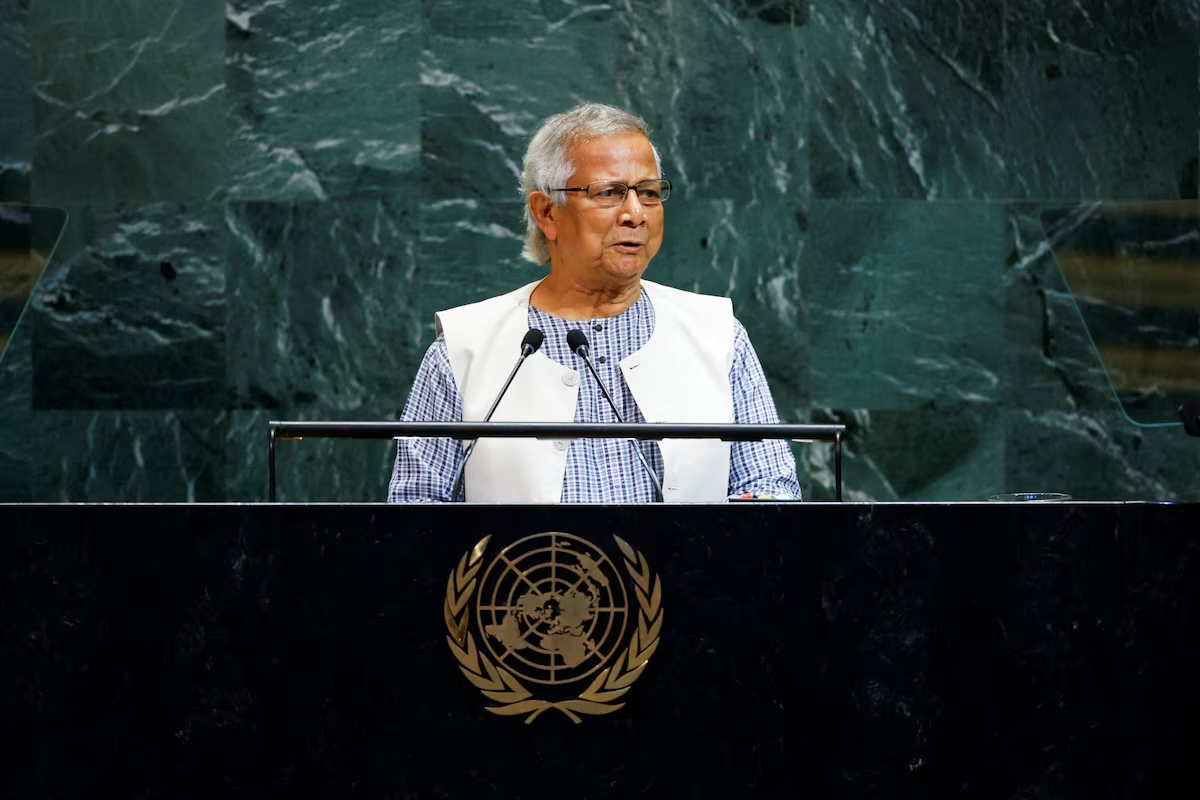
Bangladesh’s stance is driven by a different, though equally problematic, desperation. Hosting over 1.2 million Rohingya refugees has placed an immense strain on Dhaka’s resources and social fabric. The interim government, led by Muhammad Yunus, is under immense domestic pressure to find a “sustainable solution.”
This pressure has led Dhaka to entertain the dangerous notion that any government in Naypyidaw—even one born from a fraudulent election—is better than no government. There is a simmering hope in Dhaka that a “civilianized” junta in Naypyidaw might finally engage in repatriation.
This is a mirage. The very generals organizing these elections are the architects of the 2017 genocidal campaign against the Rohingya. To believe that a regime seeking “legitimacy” through a sham vote will suddenly grant citizenship and safety to the Rohingya is an exercise in self-deception.
By lending even tacit support to these elections, Bangladesh risks validating a junta that has no intention of allowing a “safe and dignified” return. Instead, Dhaka may find itself complicit in a “pilot project” that returns refugees to what are essentially open-air prisons in Rakhine State, further violating the principle of non-refoulement.
By choosing to send observers to Myanmar’s 2025-26 elections, Thailand is also providing a dangerous veneer of international legitimacy to a brutal military junta. Thai Foreign Minister Sihasak Phuangketkeow has characterized the vote as a potential “starting point” for positive developments and a return to stability, even while admitting the election is neither “perfect” nor likely to be “free and credible.”
However, this stance ignores the reality that the junta has forcibly dissolved the democratic opposition and continues to use mass violence against its own people. By breaking ranks with the broader Association of Southeast Asian Nations (ASEAN) consensus, which refused to send observers to avoid endorsing a “sham” process, Thailand’s policy prioritizes narrow diplomatic engagement over the fundamental humanitarian necessity of holding the junta accountable for its ongoing crimes.
The decision by Thailand, India, and Bangladesh to send observers represents a collective betrayal of humanitarian principles in the region. These three nations are effectively normalizing a junta that not only orchestrated the 2017 Rohingya genocide but is currently overseeing a conflict that has displaced over 3.3 million people.
By focusing on the technicalities of ballot boxes while the junta carries out indiscriminate airstrikes and systemic repression, these governments are signaling that they are willing to accept managed electoral theater as a substitute for genuine democracy. This non-humanitarian policy provides the junta with the diplomatic cover it craves, ensuring that the architects of ethnic cleansing can remain in power under a thin, state-sponsored mask of “civilian transition.”
The combined stances of India, Thailand and Bangladesh create a dangerous precedent for Southeast Asia. When regional powers prioritize immediate, narrow interests over the fundamental rights of a neighboring population, they embolden authoritarianism across the globe.
The international community, led by the U.N., has been vocal in its rejection of the junta polls. They recognize that an election held amidst airstrikes, mass displacement, and the systematic silencing of the opposition cannot produce a government capable of governing.
If New Delhi, Bangkok and Dhaka continue to diverge from this consensus, they are not helping create stability; they are entrenching a cycle of violence that will inevitably spill across their own borders in the form of increased refugee flows, transnational crime, and regional insurgency.
As we look toward the new year in 2026, the situation in Myanmar serves as a stark reminder that true stability cannot be built on a foundation of lies. For India and Thailand, the path forward must involve engaging with the National Unity Government (NUG) and acknowledging that a democratic Myanmar is the only reliable partner for its security needs.
For Bangladesh, the solution to the Rohingya refugee crisis lies in international pressure for a genuine transition, not in making deals with the very junta who committed these crimes against humanity.
The junta’s 2025-26 elections are not a new beginning; they are a desperate attempt to forestall the inevitable end of military rule. Those who support them, whether through observers or diplomatic recognition, will find themselves on the wrong side of history—and on the wrong side of a very dangerous regional instability.
Shalini Perumal is a creative international development professional who has worked previously in Mae Sot, Thailand at Mae Tao Clinic, consulted for Finnish Refugee Council Myanmar, and served as a Writer/Researcher at Insight Myanmar Podcast. She is currently a freelance journalist working on a novel.
DVB publishes a diversity of opinions that does not reflect DVB editorial policy. We’d like to hear what you think about this or any of our stories: [email protected]