


Alambara
Belarus and Myanmar have long been regarded primarily as arms-trading partners. However, in recent years, relations between the two authoritarian regimes have expanded well beyond military cooperation.
This broader relationship is reflected in the Belarus–Myanmar Roadmap for Cooperation (2026–2028), an agreement signed by ministers from both countries during Belarusian President Alexander Lukashenko’s first official visit to Myanmar in November 2025.
According to an investigation by BELPOL, an organization documenting alleged crimes committed by Lukashenko’s regime, the roadmap outlines cooperation across several sectors, ranging from military technology and industrial production to trade and finance.
The plans include assembling and manufacturing vehicles and machinery in Myanmar, securing loans from Belarusian banks, and exploring the trade of diamonds and other precious gemstones.
What support is Belarus planning to provide Myanmar’s military?
Under the roadmap, the two countries plan to cooperate in the production and supply of optical equipment and related components.
Belarus’s State Military-Industrial Committee and Myanmar’s Ministry of Defence have been designated as the responsible institutions.
Senior Myanmar military officials have also visited BelOMO, a Belarusian optical equipment manufacturer whose products include military applications.
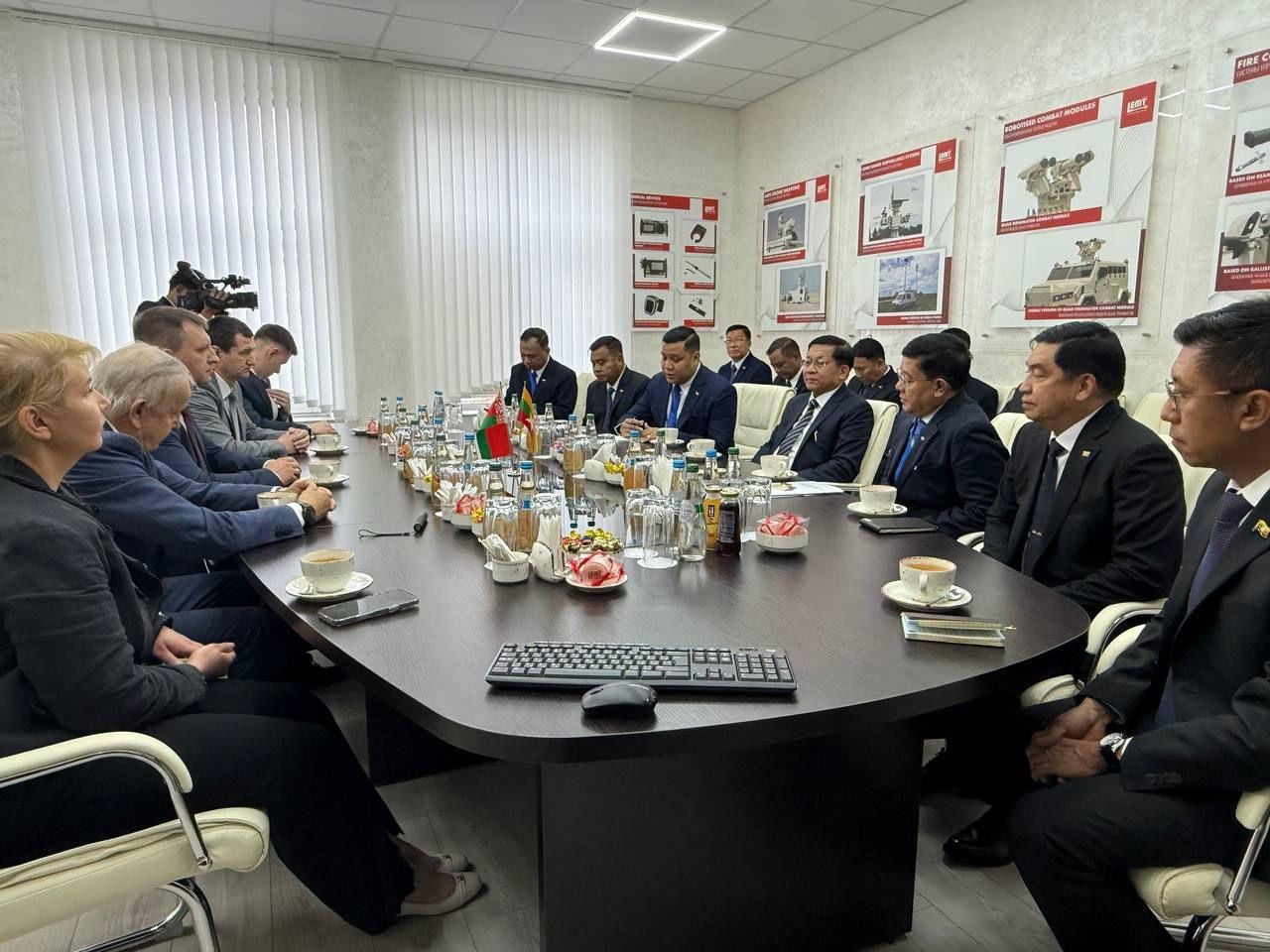
According to Linn Thant, the Prague-based representative of Myanmar’s National Unity Government (NUG), lower prices are one reason Myanmar’s military has purchased equipment from Belarus rather than relying entirely on Russia.
“When Russian military equipment becomes too expensive and unaffordable, they turn to cheaper alternatives from Belarus. This is what we have found from examining the records,” he told DVB.
Beyond military technology, the roadmap includes plans to explore cooperation between Belarusian industrial association Bellegprom and Myanmar’s Ministry of Industry in producing and supplying specialized textiles and uniforms for Myanmar’s security forces.
Myanmar’s Ministry of Defence is also listed alongside civilian ministries as a responsible institution for projects involving the domestic assembly and production of vehicles and tractors.
Although the specific roles of these ministries remain unclear, companies from the two countries have already signed agreements related to vehicle and tractor production in Myanmar using Belarusian technology.
Myanmar-based Eastern Valley Partners has reportedly obtained a vehicle manufacturing license from Belarusian automaker MAZ, while Myanmar Empire Co., Ltd. has signed an agreement with Belarusian tractor manufacturer MTZ.
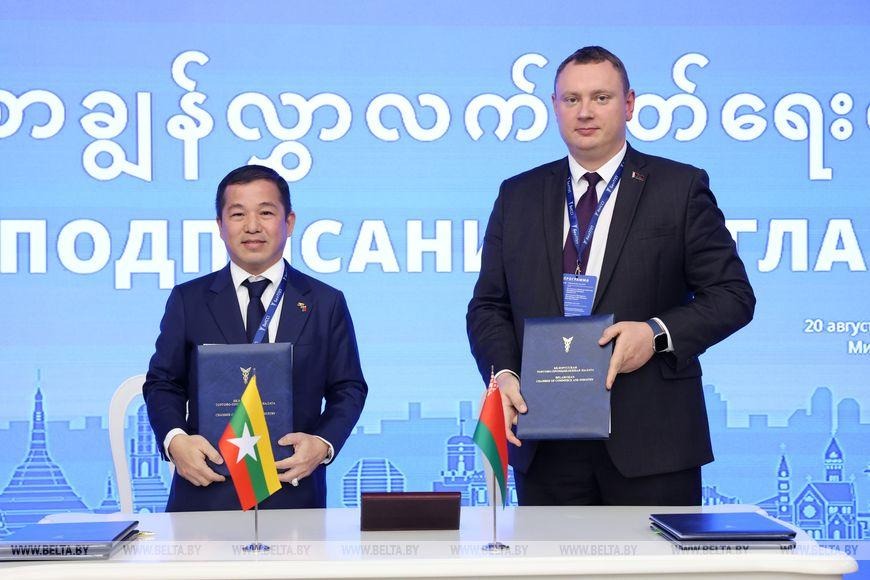
Myanmar Empire Co., Ltd. was founded by Maung Maung Naing, who has been described as a nominee involved in business operations linked to the family of Myanmar regime leader Min Aung Hlaing.
The roadmap also includes cooperation between the ministries of home affairs in combating crime, exchanging information, and developing forensic science capabilities.
Cooperation in gems trading
Another significant component of the agreement involves exploring opportunities for mutual supply in diamonds and other precious gemstones.
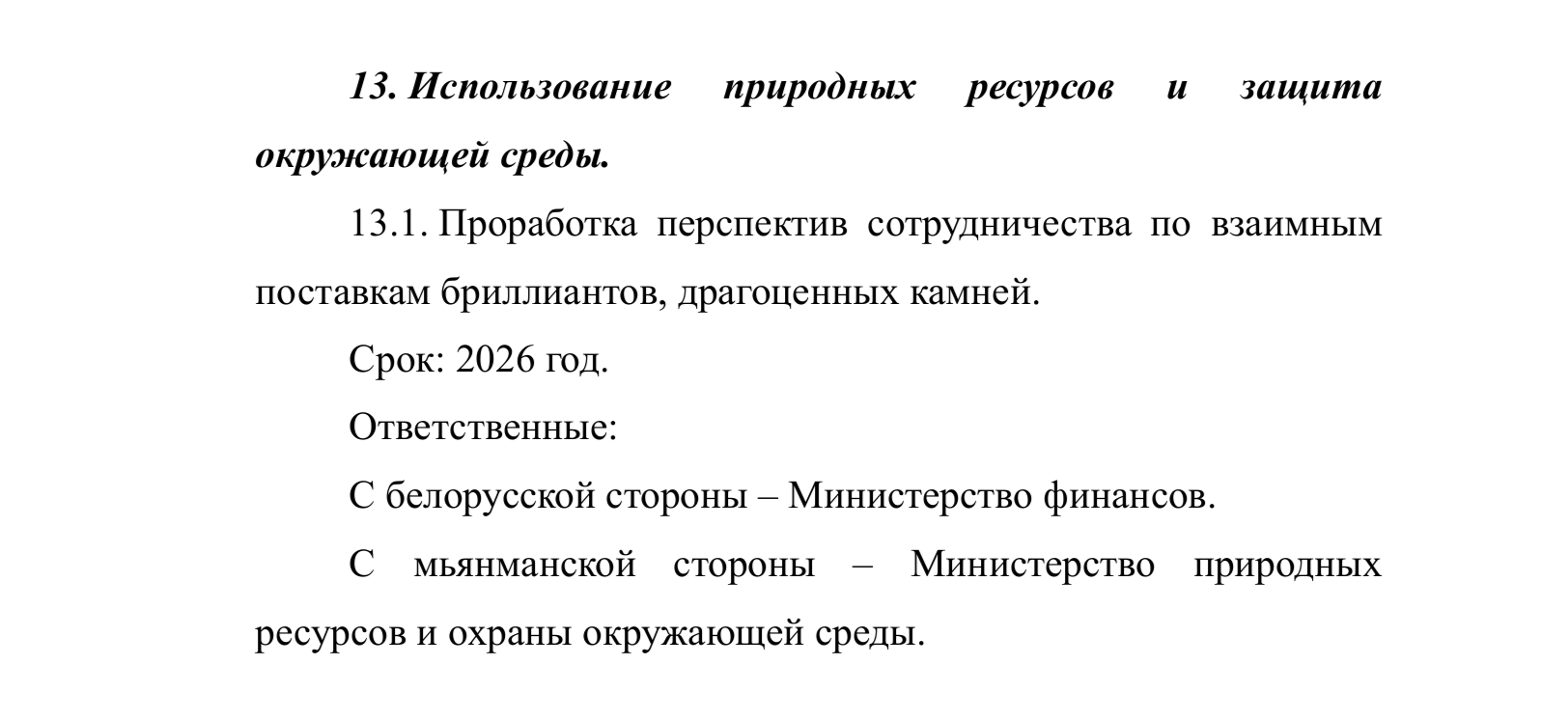
The roadmap identifies Belarus’s Ministry of Finance and Myanmar’s Ministry of Natural Resources and Environmental Conservation as the principal institutions responsible for this initiative.
BELPOL argues that the direct involvement of Belarus’s Ministry of Finance in gemstone trading arrangements with Myanmar could signal an effort to circumvent international sanctions by entering grey markets for precious stones.
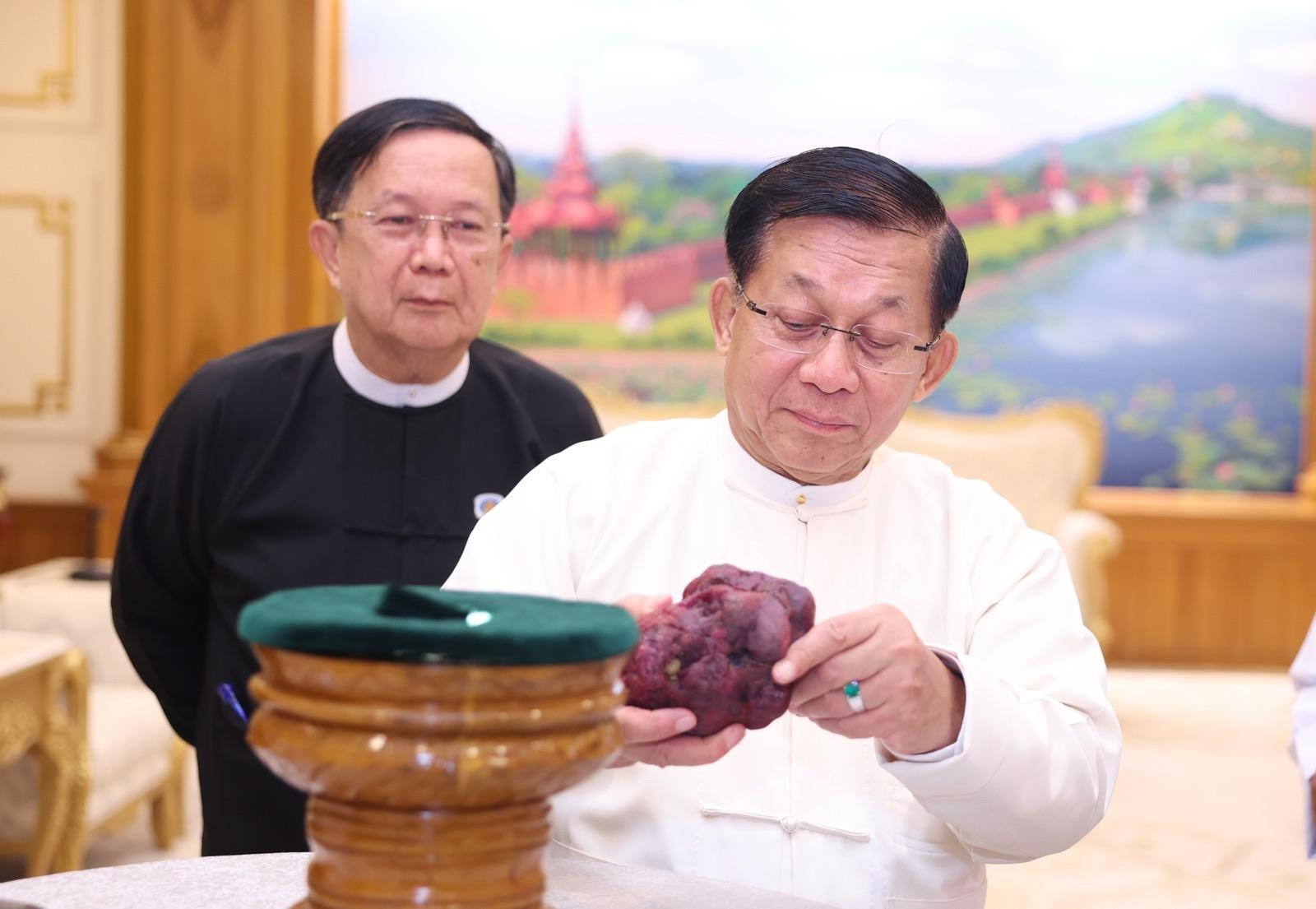
Regime leader Min Aung Hlaing examines an 11,000-carat ruby discovered in Mogok, Mandalay Region, on May 7, 2026. (Credit: Regime Media)
Belarus relies heavily on imported diamonds and gemstones, with a significant share reportedly originating from Russia.
Professor Andreas Heinemann-Grüder, a Russia expert at the University of Bonn, told DVB that Belarus may be seeking to reduce its dependence on precious stones imported from Russia.
He also pointed to the growing use of national currencies in bilateral transactions, suggesting that gemstones could provide an alternative means of payment.
“Settlements in national currencies [Myanmar kyat vs. Belarusian ruble] are expanding, but for the time being, precious stones may serve as a secure payment back-up,” he told DVB.
There is currently no evidence in the roadmap that gemstones have been used for such payments.
Cooperation across trade, finance and other sectors
The roadmap also outlines plans to explore the supply of Belarusian fertilizers to Myanmar.
Belarusian industrial group Belneftekhim and Myanmar’s Ministry of Agriculture, Livestock and Irrigation are identified as the responsible institutions for this initiative.
During Min Aung Hlaing’s visit to Belarus in August, he toured the Grodno Azot fertilizer plant, which is associated with the Belneftekhim group.
During the visit, Grodno Azot and Myanmar Empire Co., Ltd. signed an agreement reportedly related to supplying fertilizers to Myanmar.
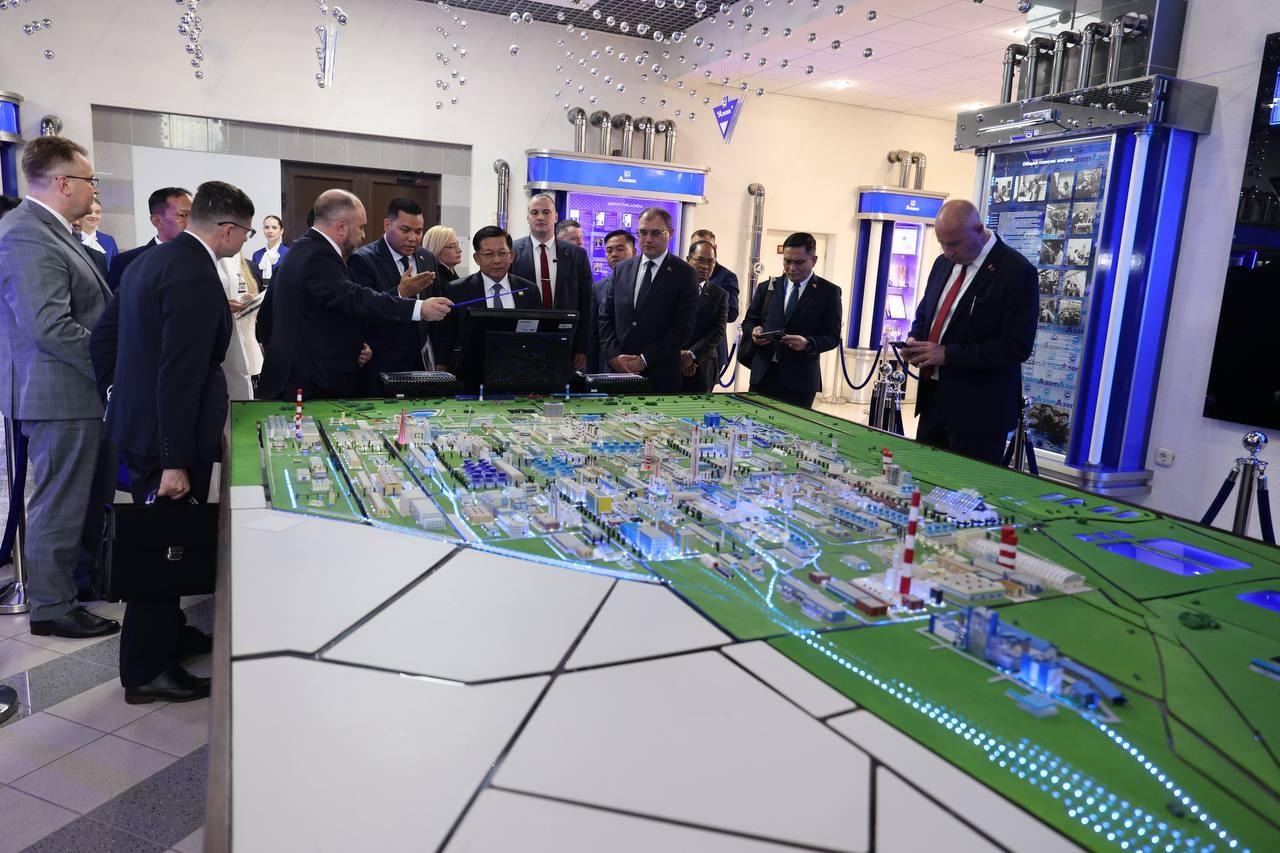
Regime leader Min Aung Hlaing views exhibits at the Grodno Azot Fertilizer Plant in Belarus on Aug. 20, 2026. (Credit: Regime Media)
The two countries also plan to expand financial cooperation, including the use of loans from Belarusian banks to support bilateral trade.
Myanmar’s pro-military parliament has approved borrowing arrangements involving the Development Bank of the Republic of Belarus (DBRB) and Belinvestbank, with interest rates reported at up to 9.33 per cent.
Beyond these economic arrangements, the three-year roadmap covers cooperation in diplomacy, parliamentary relations, science and technology, agriculture and livestock, tourism, and exchanges between strategic research institutions and think tanks.
It also includes initiatives involving the media and cultural sectors.
A relationship without limits?
Taken together, the agreements indicate that Belarus and Myanmar are seeking to expand their existing military relationship into a broader partnership involving multiple sectors.
Leaders of both countries have described their relationship as one without limits.
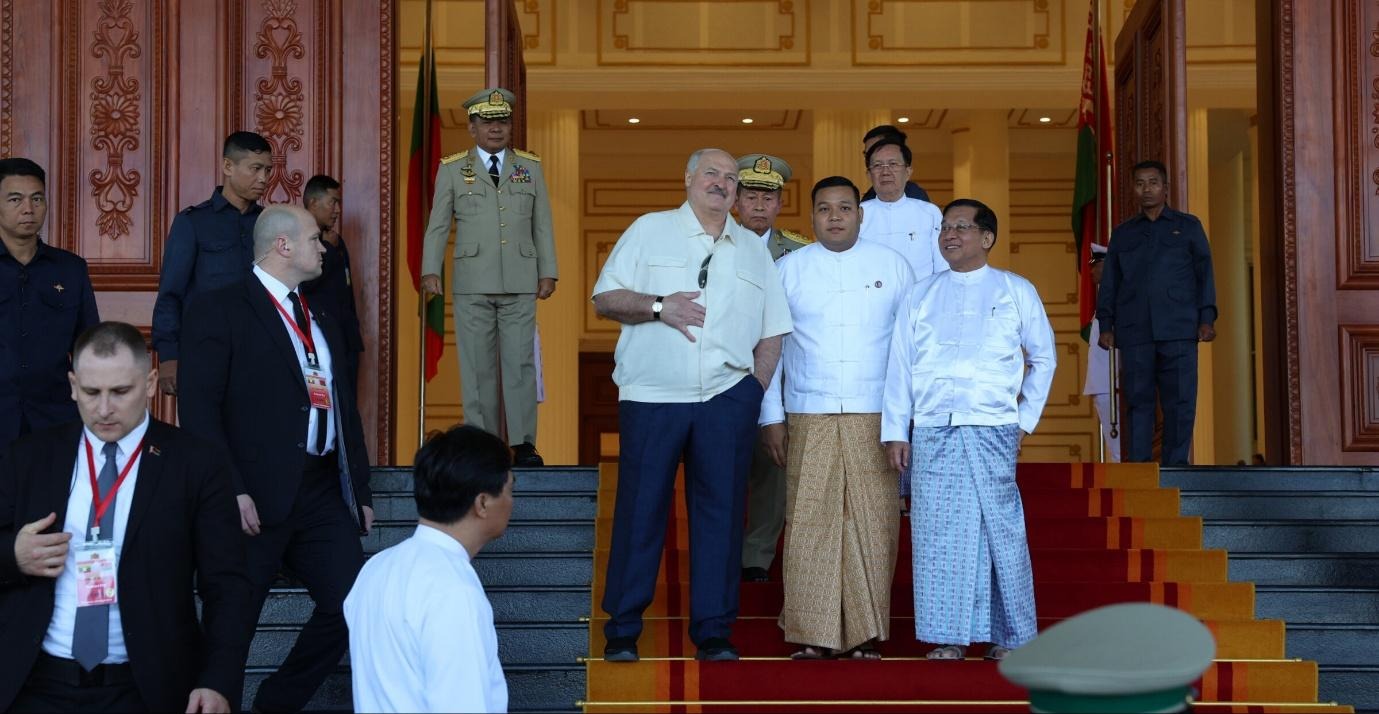
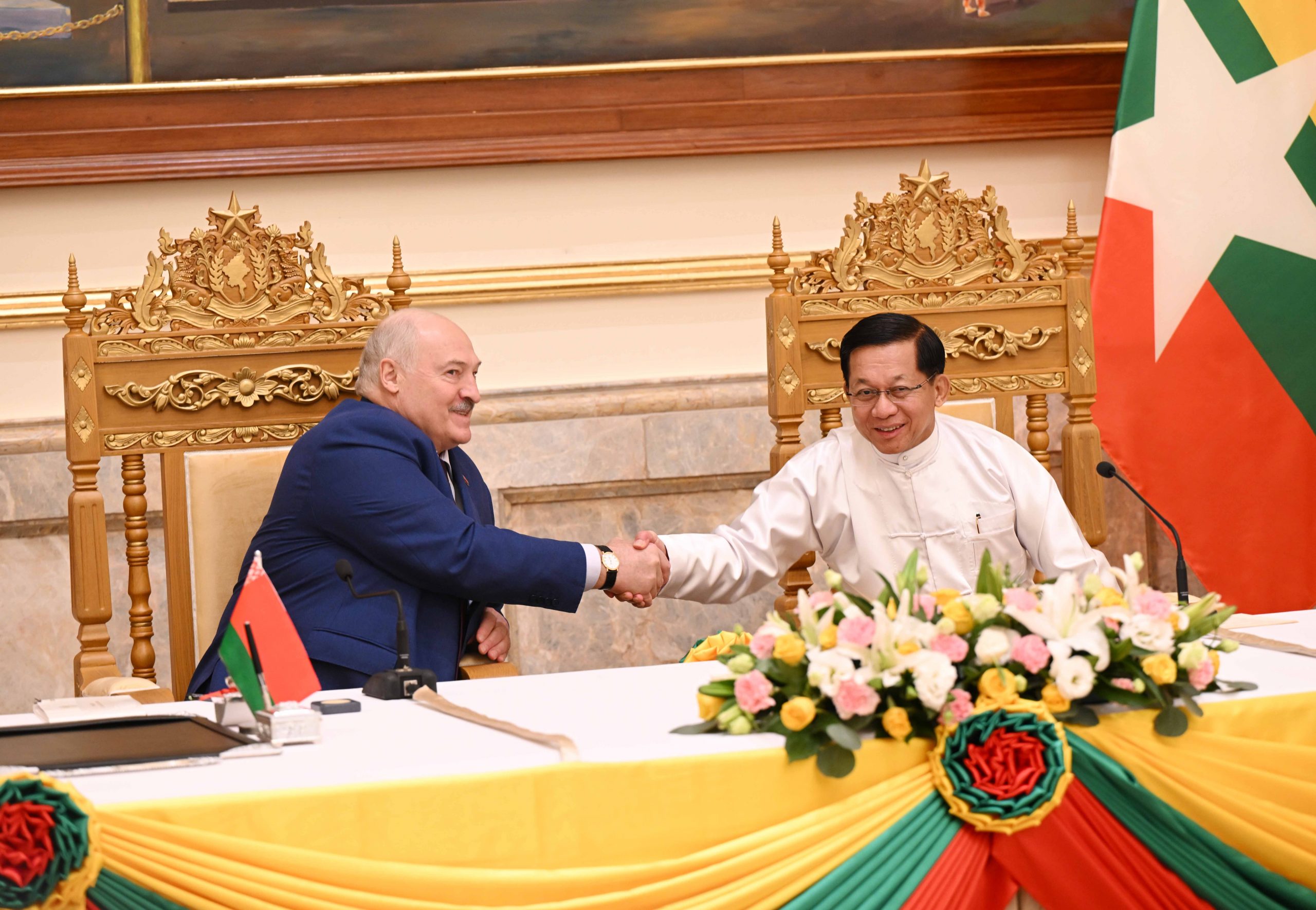
Belarusian President Alexander Lukashenko with Min Aung Hlaing at the Presidential Residence in Naypyidaw on Nov. 28, 2025. (Credit: President of Belarus)
Yet not all the initiatives outlined in the roadmap have been translated into concrete projects, and the extent of their implementation remains unclear.
Belarus appears eager to accelerate their implementation.
During a meeting with Min Aung Hlaing, President Lukashenko urged both sides to turn the proposed projects into practical results by 2027.
He also stressed that actively implementing the agreements would be essential to maintaining and developing relations between the two countries in the years ahead.
But questions remain about who stands to benefit from this growing partnership.
The NUG’s Linn Thant argued that the projects are not intended to benefit the people of either country, but instead serve the interests of the two leaders and help them remain in power.
Despite the geographical distance between Belarus and Myanmar, their shared interests have brought the two leaders closer together. Whether those interests can sustain their relationship in the long term, however, remains uncertain.
“A relationship based solely on mutual interests is not a genuinely strong relationship,” Linn Thant told DVB.
*Alambara is the pseudonym of a data analyst on the DVB data team, where they work on research, data support for the newsroom, and open-source investigation to trace the military regime’s networks.