


By HaRDstories and Delta News Agency
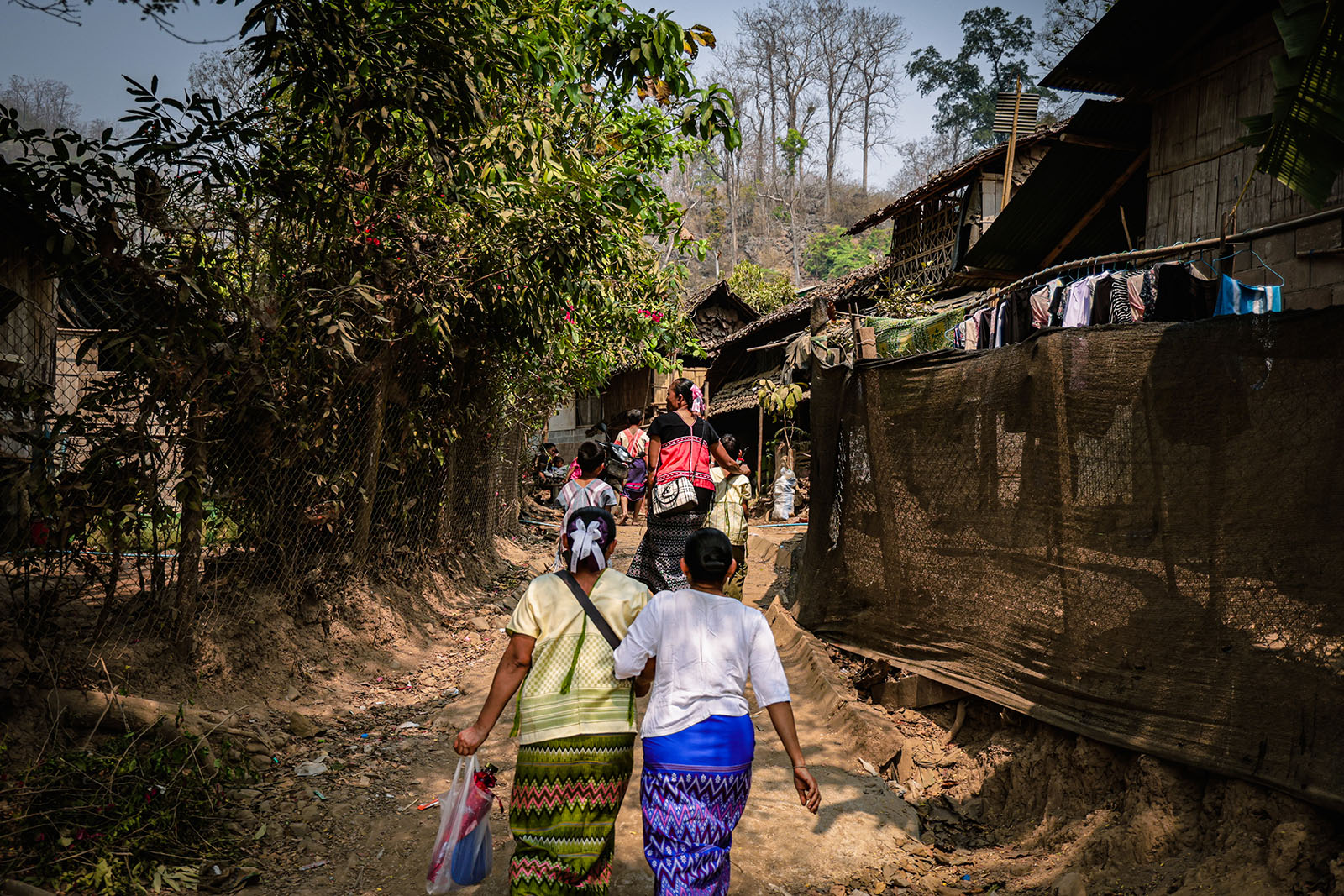
Since October last year, thousands of refugees along the Thai-Myanmar border have done something once forbidden to them: taken a legal job outside the camp fences. But that freedom has come with its own challenges.
Ko Chit left the Mae La refugee camp last November, bringing to a close nearly twenty years behind its fences.
He is 29 now, and the camp in northwestern Thailand had been the only home he really knew. He arrived in 2007, a ten-year-old travelling with his grandmother, part of a Muslim Karen family that had fled fighting around Hpa-an, across the border in Myanmar’s Karen state.
“When I left the camp, I didn’t want to look back,” he said. In truth, he had little reason to stay.
Humanitarian funding for the nine refugee camps has collapsed in the past year, and at Mae La, more than 80 per cent of residents no longer receive food assistance, according to the Border Consortium (TBC), a coalition of NGOs that coordinates aid along the border.
The policy that let Ko Chit go marked the end of a decades-old ban. On Aug. 26, 2025, Thailand’s parliament approved a resolution allowing refugees from the nine camps to take legal jobs outside their boundaries, effective that October – a reversal of a rule that had confined generations to camp life.
Free to work
Ko Chit found work at a poultry plant in Lopburi province, several hundred kilometres from the border. He spends his shifts inside a cold-storage room kept at -18°C, dressed in a thick white thermal suit, packing chicken for a daily wage of 365 Thai baht ($11 USD).
Asked whether the hard work makes him miss the camp, he answered: “Why would I go back? The camp is in ruins. It’s crawling with drug addicts and yaba users. Murders, robberies, bullying – it’s everywhere.”
More than 6,000 refugees have left the nine camps for legal work since the policy took effect, according to the U.N. Refugee Agency (UNHCR) – a small fraction of the roughly 80,000 refugees living there, about 45,000 of them of working age.
For Leon de Riedmatten, TBC’s executive director, the resolution is “a momentous step forward.” “TBC and refugee communities have been calling for access to legal employment for decades,” he told HaRDstories in July. “It’s deeply encouraging to see it becoming a reality.”
The experience of those in work, he said, has been largely positive. “Many refugees have told us they are proud to be supporting their families, sending money home, and becoming self-reliant after decades of enforced dependence on humanitarian aid.” They receive full legal protections, including the minimum wage, and are treated on broadly comparable terms as other migrant workers in Thailand.
Refugees unhappy with their conditions can return to camp and look for other work, de Riedmatten said.
Not everyone stays
Saw Htoo, 40, who asked to be identified by a pseudonym, is one of them. He spent just over three months at a factory in Samut Prakan, on the outskirts of Bangkok, before giving up and returning to Mae La. He left the camp in late November and was back by early March. “I wasn’t happy, so I came back,” he said.
He earned 370 Thai baht a day, but his employer deducted 4,500 to 5,000 baht a month for rent, electricity and water, leaving him little to send home. Learning an unfamiliar trade in middle age made it harder still: his job involved cutting, bending and welding steel, tasks he had never performed before, which he described as feeling “like carrying a mountain.”
“If you make a mistake, they send you home,” he said. “Weld something wrong, drill a hole too wide, and they suspend you for three days.” Seven-hour shifts left him constantly on edge. “It was awkward, and it was hard,” he said.
He was one of 24 workers who eventually shared a single bus back to Mae La, each paying 1,500 baht for the fare. “Now, I can’t go back there,” he said of the factory job, though he hasn’t ruled out trying something else.
Camp aid workers say his experience points to a deeper mismatch. Vocational courses inside the camps tend to cover baking or Thai-language skills, whilst employers on the outside are overwhelmingly after general labourers, steel benders in particular. “It wouldn’t be bad if they gave us some preparatory training beforehand, based on the kind of work we’re actually going to do,” Saw Htoo said.
No organisation contacted for this story tracks returns the way it tracks departures. Saw Pwe Say, secretary of the Karen Refugee Committee (KRC), said the right to work now extends to all nine camps, though he could not say how many refugees have left from each one.
From aid to self-reliance
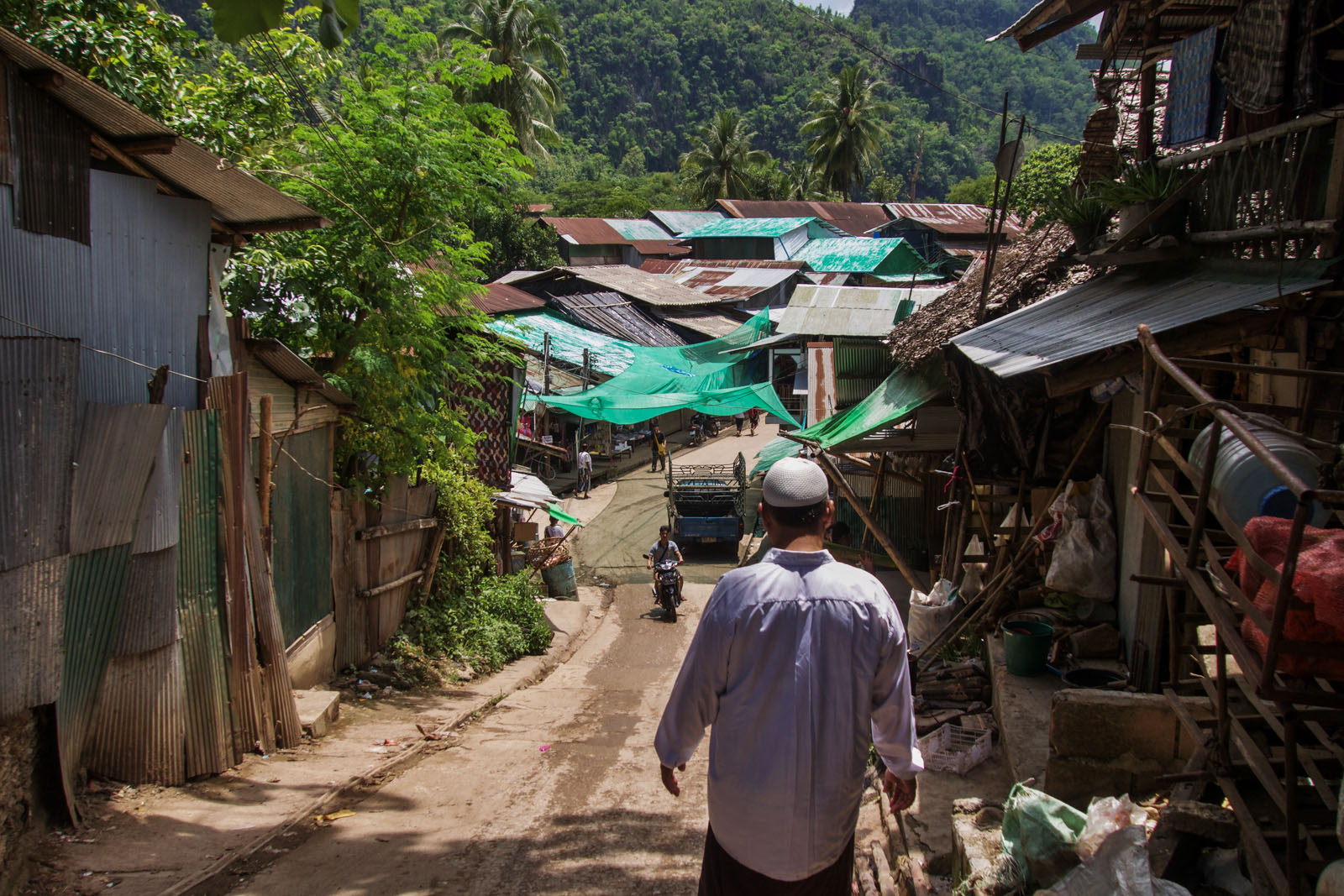
Only refugees holding the ministry’s 13-digit identification number are eligible to apply for outside work, Saw Pwe Say said. Since June, the government has also been issuing eligible refugees “Myanmar Displaced Persons” cards, granting legal status and access to services such as banking and telecommunications, according to UNHCR.
Those who leave for work are separately issued a card listing phone numbers to call if anything goes wrong, wherever they end up.
Refugee status and migrant-worker status, he added, remain legally distinct in Thailand, and that distinction still causes friction. Migrant workers operate under a well-established, if costly, regulatory system; refugees pay far less to take a job outside camp, but the framework around them is thinner, with no standard employment contract between employer and worker.
The Committee for Coordination of Services to Displaced Persons in Thailand (CCSDPT) said most employment processes are now handled through official government channels.
“The situation is gradually transitioning from a reliance on humanitarian assistance toward self-reliance,” said Akekasit Subannapong, the committee’s advocacy coordinator.
De Riedmatten described the policy as still new, with “issues being identified and resolved as implementation progresses.”
One gap has been geography: refugees in smaller, more remote camps have engaged less, he said, largely because of the transport costs involved, leaving opportunities concentrated around the larger, more central camps
He would also like the work itself to diversify. Refugees hold skills and languages that could serve hospitality and other sectors, not just manual labour, he said, and he hopes future reform will let smaller employers hire through a faster, less bureaucratic process.
Not everyone can work, in any case. Refugees who are elderly, disabled, or otherwise unable to work will remain dependent on humanitarian aid, he said – support that must continue even as others become self-reliant.
Longing and hope
Saw Htoo is behind Mae La’s fences again, resigned to the days still ahead of him there. But despite the ordeal of his first job outside the camp, he is considering giving it another try – not as a welder this time, but perhaps harvesting corn.
Ko Chit has ruled out going back. For the first time, he has steady work and money of his own. But under the policy, his family is not permitted to join him, so for as long as he keeps working, he will not see them.
“I miss them so much; my five-year-old son, my three-year-old daughter, my wife,” he said. They remain in Mae La. His hope, he said, is that the work will eventually buy his family a more dignified life together.
This story is part of a collaborative reporting project between HaRDstories and Delta News Agency, supported by the Canada Fund for Local Initiatives.