


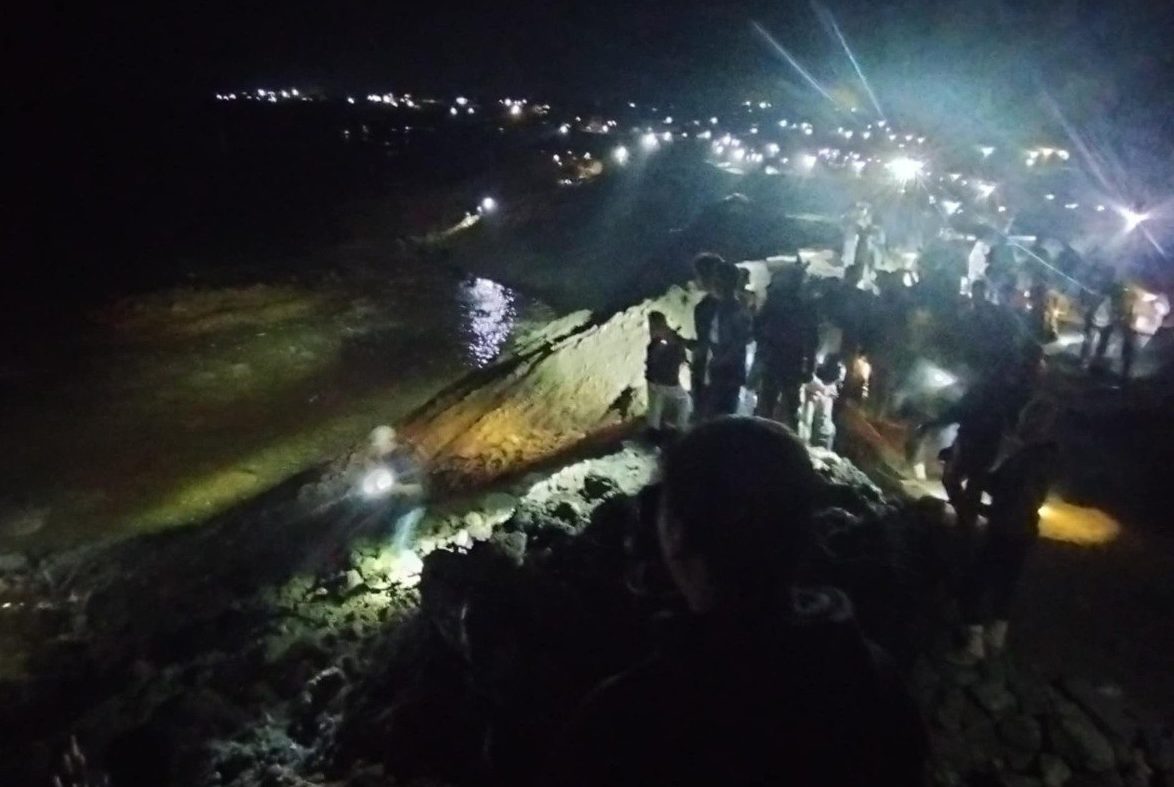
One jade miner was killed and two others sustained injuries after a massive pile of mining waste collapsed at an unregulated site in Hpakant Township, Kachin State, on Monday. The victim was buried under a sudden shift of unstable soil and rock debris, adding to a rising casualty toll linked to informal gem scavenging during the annual rainy season.
“One miner was buried under the collapsed soil and died. Waste piles can become saturated with rainwater during heavy monsoon rains, causing them to collapse,” a Hpakant resident told DVB on the condition of anonymity.
Residents reported that discarded waste heaps become heavily saturated with water during intense monsoon downpours, leading to frequent structural collapses.
It remains unconfirmed whether the specific mining territory where the collapse occurred was under the control of the Kachin Independence Army (KIA) or military regime forces, as both groups maintain overlapping control across different sectors of the township.
Pattern of disasters in the Hpakant mining hub
Hpakant—located 94 miles (151 km) northwest of the state capital, Myitkyina, and 58 miles (93 km) southwest of the KIA headquarters in Laiza—is the global epicenter of Myanmar’s jade industry.
The region has long suffered from chronic, deadly landslides driven by unregulated slope destabilization, inadequate safety measures, and heavy monsoon rains.
Hpakant Jade Mine Disasters (2026 Chronology)
├── Feb 16: Mine collapse at Kuday Hmaw village kills 10 miners, injures 10 others
├── June 30: Monsoon landslide at Nanmaw village claims 5 lives, leaves 15 missing
└── Sept 14: Soil and rock waste pile collapses at unregulated site; 1 dead, 2 injured
The ongoing conflict between military forces and resistance groups since the 2021 coup has further eroded regulatory oversight of the sector.
The absence of strict environmental and safety enforcement has left thousands of freelance miners vulnerable to recurring accidents as they scavenge for raw jade along unstable, waterlogged tailings cliffs.