


Guest contributor
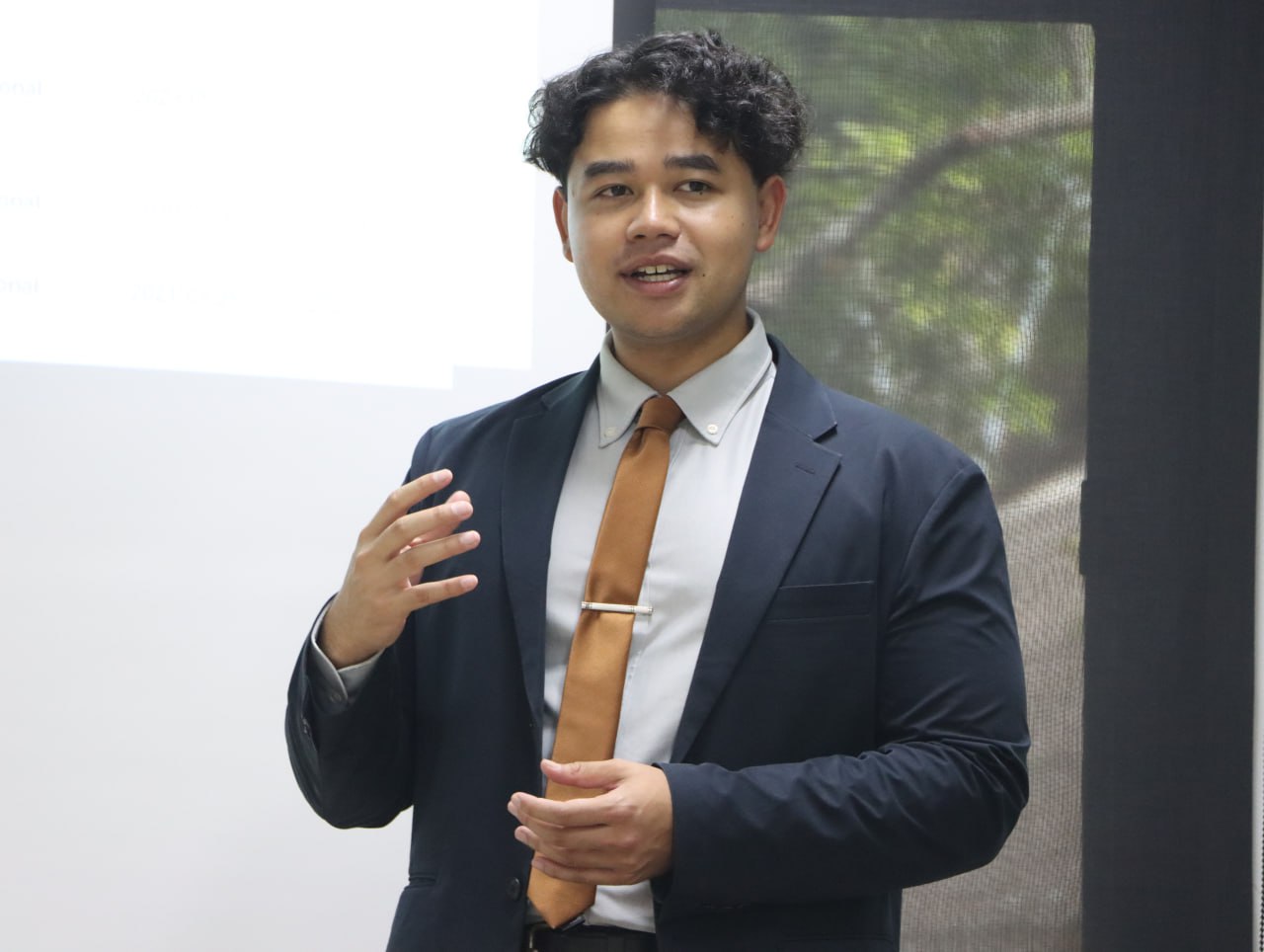
Napas Thein
The University of Toronto’s Myanmar Policy and Community Knowledge Hub (MyPACK) recently hosted a screening of films from the Democratic Voice of Burma’s DVB Peacock Film Festival.
The event was simple: four short documentaries, a panel discussion, and a small crowd of students, faculty, and community members.
But the talk symbolized something else: a starting point for re-engagement for how we think about Myanmar in Canada.
The program opened with remarks from Political Science Professor Matthew Walton, who reminded the audience that in Myanmar, filmmaking is an act of courage.
The four short films presented glimpses of life under military rule, showing daily realities of fear, displacement, and survival.
How Yangon Protesters Are Being Watched captured the cycle of protests and crackdowns in Myanmar’s largest city. Tomorrow of Loikaw focused on civilians in war-torn Karenni (Kayah) State trying to rebuild amid constant uncertainty. Again & Again depicted life under ongoing airstrikes. Mothers from the Crescent Land followed Rohingya women in refugee camps, enduring loss while maintaining solidarity.
After the screening, a panel featuring DVB Peacock Film Festival organizer Chan Thiri Soe, along with DVB News host and reporter Yamin Myat Aye, as well as Rohingya human rights activist Aleyah Bilal discussed how journalism helps keep Myanmar’s struggle visible.
Together, the films served as a snapshot of what living through the past five years in Myanmar has meant for ordinary people to an audience of academics and students.
Events like this matter because they create empathy and draw in new people who might not otherwise think about Myanmar. Art and media reach audiences that policy papers cannot. It helps people see, not just read.
Nowadays, we have to be honest with ourselves about the political reality. Canada’s foreign policy, like much of the West including the United States, has turned inward.
When attention does turn outward, it is dominated by other issues along with building trade relations in the face of economic nationalism. Myanmar has slipped from view.
Re-engaging policymakers means adapting to that reality. It may require reframing Myanmar’s relevance to Canada, finding new solutions, and rethinking how we present the importance of Myanmar in every country’s foreign policy and, more specifically, their “Indo-Pacific Strategies” beyond economic objectives.
Canada once invested over $600 million CAD in humanitarian and development assistance for Myanmar amidst the Rohingya crisis and leading into the coup, a commitment that was both morally grounded and strategically sound.
The near-disappearance of that support is not just a retreat of conscience, it’s bad policy. It signals inconsistency to partners across Asia who once saw Canada as a credible, values-driven actor. A more pragmatic, economics-focused foreign policy under Prime Minister Mark Carney’s government (and many other Western nations) is inevitable.
To put it simply, appeals grounded purely in moral duty or democratic ideals are no longer enough to sustain policy interest in the West.
Supporting a federal, democratic Myanmar, pushing for the end of junta rule, and assisting those affected by the crisis should not be seen as addressing isolated, unconnected events on the other side of the world.
To regain traction, Myanmar must be both visible and positioned within a framework that Canadians and others in the West can see.
The film screening was one small step toward this broader goal. Visual culture is key to reminding us empathy still matters, and that cultural understanding can reopen political space when traditional advocacy has stalled.
Watch the four films mentioned, and all other DVB Peacock Film Festival short documentaries, on-demand via DVB TV News YouTube.
Napas Thein is an Inaugural Research Fellow of the Myanmar Policy and Community Knowledge Hub (MyPACK) based at the Munk School, University of Toronto, and works with the Burmese diaspora in Canada.
DVB publishes a diversity of opinions that does not reflect DVB editorial policy. We’d like to hear what you think about this or any of our stories: [email protected]