


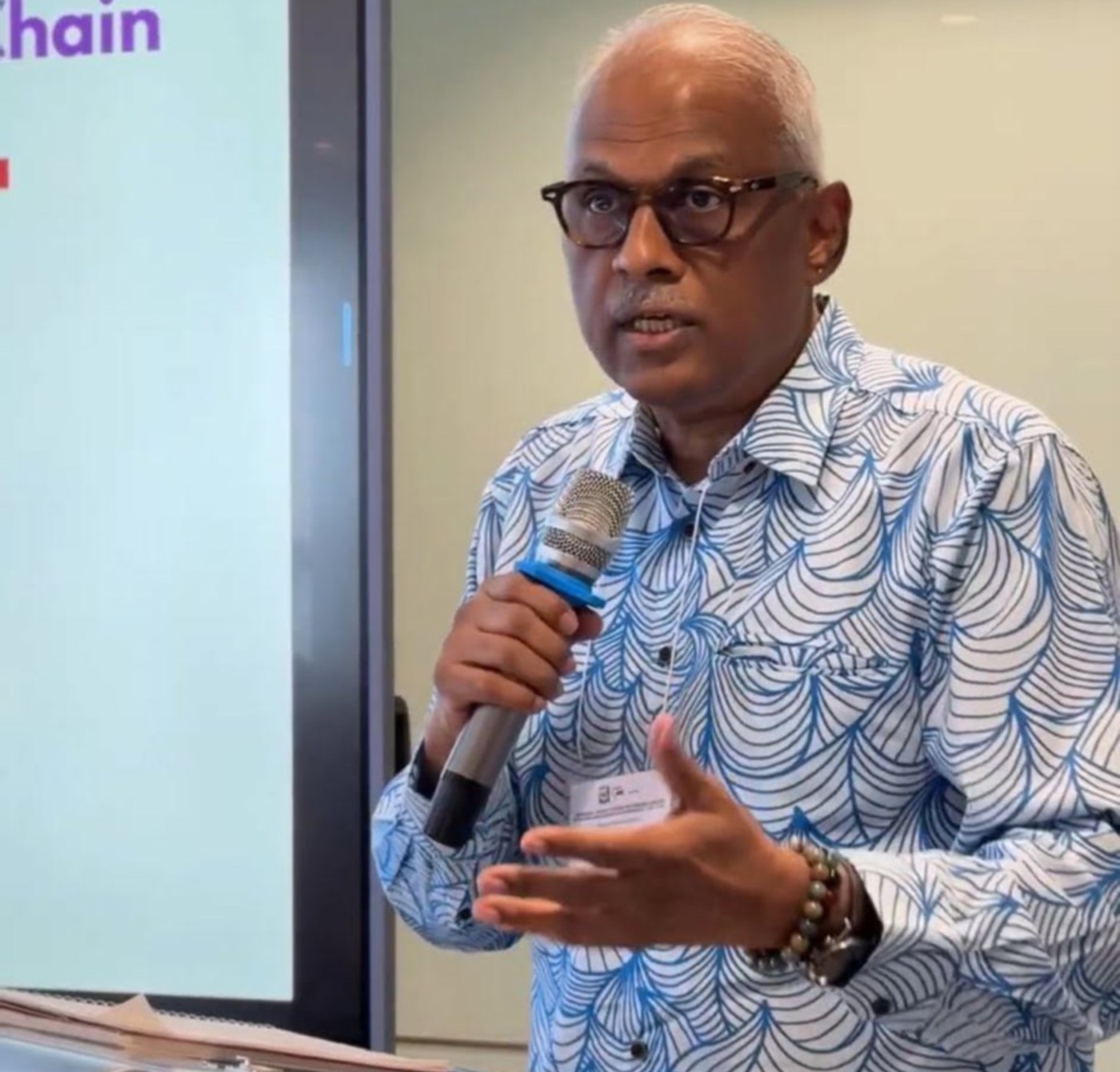
In a blistering rebuke of regional diplomacy and domestic immigration enforcement, former Malaysian lawmaker and co-chair of ASEAN Parliamentarians for Human Rights (APHR) Charles Santiago expressed “total disgust” over Prime Minister Anwar Ibrahim’s decision to roll out the red carpet for Myanmar regime leader Min Aung Hlaing.
In a Newsroom interview with DVB, Santiago warned that Malaysia’s high-level engagement with the Myanmar regime leader—alongside the forced repatriation of thousands of vulnerable asylum seekers—violates international law, undermines the Association of Southeast Asian Nations (ASEAN) Five-Point Consensus, which is the peace framework for Myanmar drafted in 2021, and directly betrays the democratic aspirations of the Myanmar people.
Santiago described the spectacle of ASEAN leaders recognizing Min Aung Hlaing as “President” of Myanmar as an alarming break between collective regional policy and bilateral opportunism.
ASEAN’s ‘Failed Diplomacy’
“It is quite clear that by Malaysia extending an invitation to Min Aung Hlaing to visit Malaysia, there was a fundamental break between what ASEAN is saying and what individual countries in ASEAN are doing,” Santiago told DVB.
Responding to Prime Minister Anwar Inrahim’s defense that years of criticism had achieved little and that direct diplomacy was worth attempting, Santiago countered that ASEAN’s diplomatic methodology has been fundamentally flawed from the outset.
By fixating on begging Min Aung Hlaing to reform, Santiago argued, regional governments have ignored the real democratic alternative being built from the bottom up across Myanmar’s ethnic nationality homelands.
“The different ethnic states [are] working together to form a federal republic, a federal government… but this is something that ASEAN governments refuse to accept,” added Santiago.
The ‘Myth of Voluntarism’
Turning to Malaysia’s domestic migration crackdown, the former member of parliament sharply criticized his government’s deportation of 1,476 Myanmar nationals from immigration detention centers, including plans to expel an additional 3,500 people this month.
Santiago asserted that returning asylum seekers to an active war zone constitutes a direct violation of the customary international law principle of non-refoulement. Addressing government claims that the 5,000 nationals agreed to return to Myanmar voluntarily, Santiago dismissed it as official propaganda.
“There is no evidence to say they volunteered to go back. Just because you are saying it doesn’t mean the people who are affected volunteered,” he told DVB. “Therefore, this whole notion of voluntarism that the government is putting forward, I think, really has to be challenged, and they have to provide evidence.”
Santiago pointed to reports that over 400 ethnic Rakhine returnees were held in military custody upon arrival in Yangon—with only a fraction released since Sept. 29—confirming that Malaysia sent names to the regime for vetting, effectively handing it a target list.
He warned that deportations will never stem migration so long as the regime continues to bomb its citizens: “If you don’t stop the bombs, if you don’t stop the fear… people will still come to Malaysia. You might send back 3,000, but the very next day another 3,000 is coming,” he said.
Anti-Rohingya Xenophobia
Santiago linked the deportation drive to a toxic, coordinated social media campaign against Rohingya refugees in Malaysia, noting with sorrow that despite shared religious ties between Muslim-majority Malaysia and the Rohingya, “you do not see a Muslim solidarity.”
He also criticized Foreign Minister Mohamad Hasan and Home Minister Saifuddin Nasution Ismail for attacking the U.N. High Commissioner for Refugees (UNHCR) in Malaysia over slow third-country resettlement, emphasizing that Western borders have tightened and that foreign governments will not accept refugees screened by a Malaysian state-run system due to corruption concerns.
Regarding Malaysia’s rollout of the state-run refugee registration document programme, known as DPP in Malay, Santiago warned that refugees distrust the mechanism: “They think that by giving their information, the government will come after them. That is the fear.”
With ASEAN set to convene its summit in Manila, Philippines, Nov. 16-18, Santiago called on the regional bloc to stick to its own Five Point Consensus, which was a peace plan agreed to by Min Aung Hlaing in 2021 two months after the coup but never implemented upon his return to Myanmar.
Stay tuned for our upcoming Newsroom interview with Charles Santiago on DVB English News YouTube or Spotify. Listen on Apple, or wherever you get podcasts.