


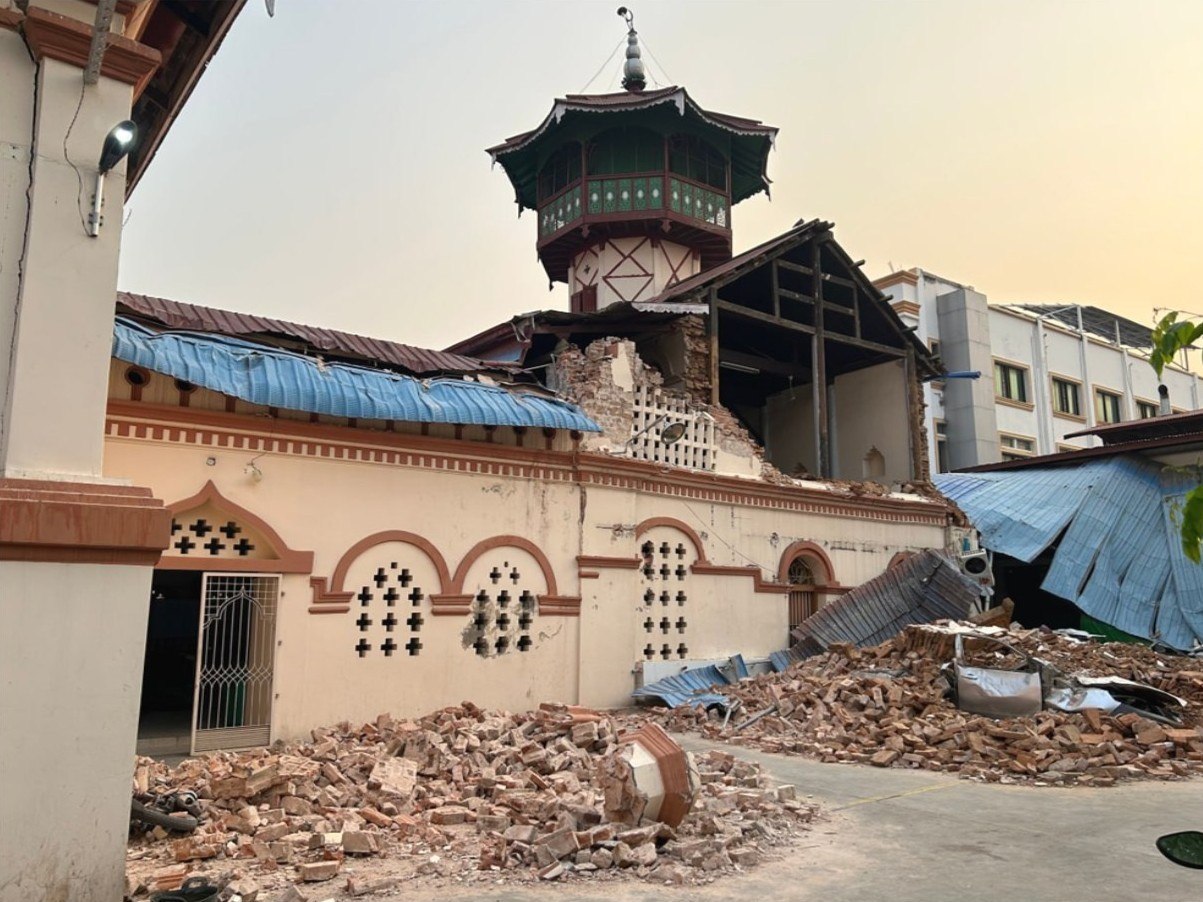
The Burma Human Rights Network (BHRN) launched its latest research report, “Blocked from Rebuilding: Myanmar Junta Restrictions on Mosque Repair and Reconstruction,” at the Foreign Correspondents’ Club of Thailand (FCCT) in Bangkok on Wednesday.
The report details systematic restrictions imposed by the military regime on repairing Islamic places of worship damaged or destroyed during the devastating 7.7-magnitude earthquake that struck Myanmar on March 28, 2025.
Speaking to DVB, a BHRN representative accused the regime in Naypyidaw of attempting to “erase” the historical presence of Muslims in Mandalay by systematically denying permits to reconstruct damaged infrastructure.
Key Findings:
- Minimal Rebuilding Approvals: Out of applications submitted to ward, township, district, and regional offices for more than 70 damaged mosques in Mandalay, the regime has granted repair permission for only four. The Panthay Mosque in Mandalay’s Maha Aungmyay Township remains the sole facility authorized to undergo complete reconstruction from scratch.
- Fatalities and Structural Vulnerability: BHRN documented that 670 Muslims were killed when at least 180 mosques collapsed during the 2025 earthquake. It attributes the high death toll among worshippers to the structural fragility of aging buildings, noting that requests for routine maintenance, structural reinforcement, and renovations have been systematically rejected by successive military regime since 1962.
- Scope of Earthquake Damage: Researchers confirm that 183 mosques were damaged or destroyed nationwide during the quake—including 152 in Mandalay Region, 15 in Naypyidaw, eight in Bago Region, six in Sagaing Region, and two in southern Shan State. Overall, DVB data records at least 4,477 casualties nationwide from the earthquake, with 2,916 fatalities recorded in Mandalay Region alone.
- Bureaucratic Obstacles and Corruption: The Mandalay City Development Committee (MCDC) refuses to authorize rebuilding for facilities not situated on “religious grounds” formally registered with the regime’s General Administration Department (GAD). Approvals require permission from the MCDC, GAD, the regime’s Ministry of Construction, and Ministry of Religious Affairs and Culture—a process BHRN describes as lacking a uniform legal framework and heavily subject to official discretion, informal mandates, and systemic extortion.