


My experience as a Rohingya lawmaker reveals why Myanmar cannot achieve lasting peace without equal citizenship, political inclusion and recognition of its diversity.
Guest contributor
Shwe Maung
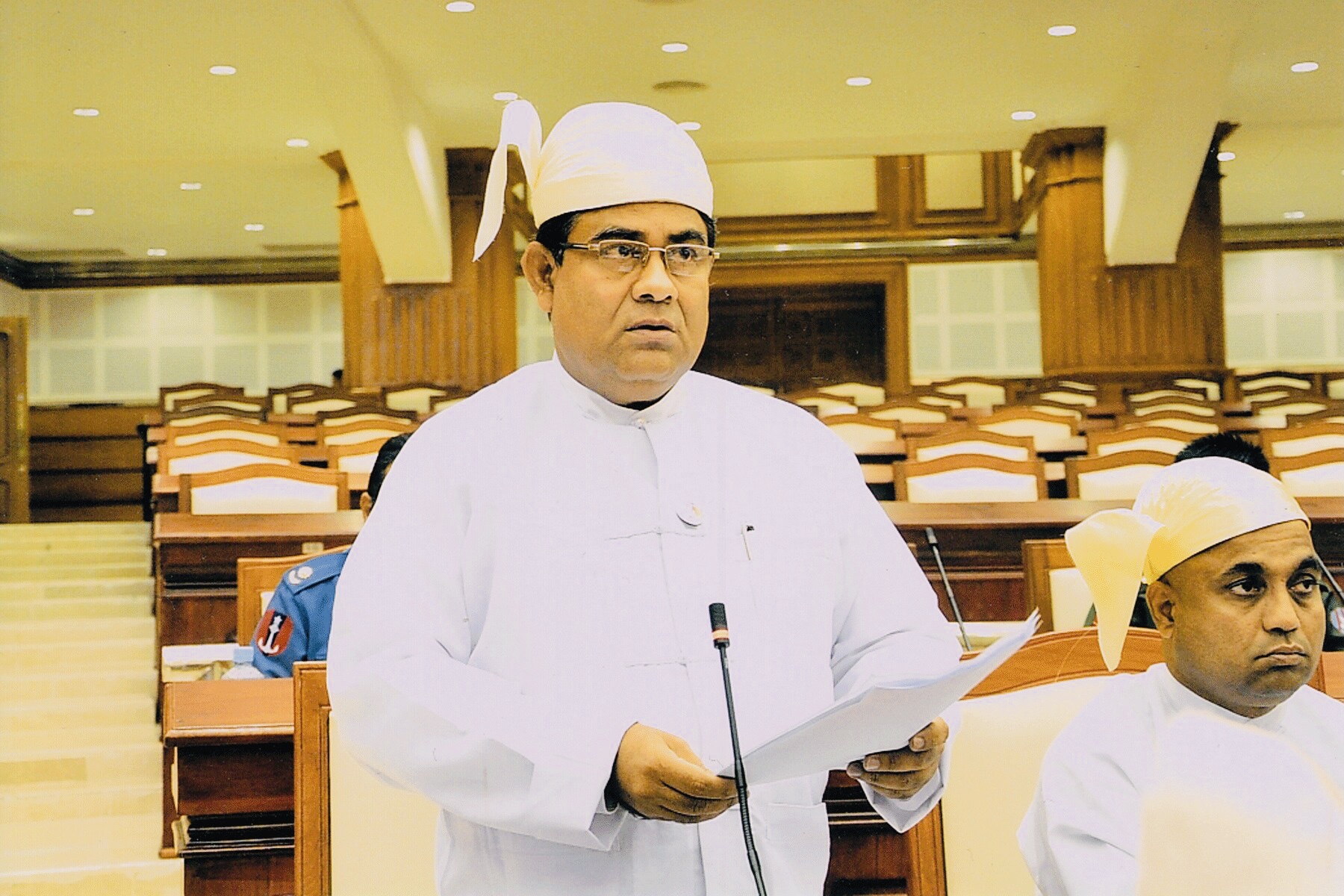
In 2010, I was elected to Myanmar’s Parliament to represent Buthidaung, a township in northern Arakan State, which was later renamed to Rahine by then-dictator Ne Win as a divide and rule tactic.
Five years later, Myanmar’s electoral authorities barred me from seeking reelection on citizenship grounds.
I had served as a lawmaker in a country that was supposedly moving toward democracy. Yet the same political system that had allowed me to represent my constituents now questioned my eligibility to participate in its elections.
That contradiction revealed something fundamental about Myanmar’s political transition: Elections alone cannot create democracy when the state refuses to recognize the equal rights and ethnic identity of its people.
It also explains why the Rohingya crisis remains unresolved.
For years, the international community has approached the plight of the Rohingya primarily as a humanitarian emergency.
The world has witnessed mass displacement, persecution and atrocities, including the military’s brutal campaign in 2017 that drove more than 700,000 Rohingya into neighboring Bangladesh, which the U.S. government determined as genocide.
Humanitarian assistance has saved lives. International legal proceedings have kept attention on accountability. Diplomatic initiatives have sought conditions for refugee repatriation.
All these efforts matter. But they cannot substitute for a political solution.
The Rohingya crisis is not simply a refugee crisis. It is a political crisis rooted in the denial of identity, discriminatory citizenship policies and systematic exclusion from political power.
In this, both the Myanmar military and Arakan Army have the same policies although they are fighting each other.
I learned this firsthand.
When I entered Parliament, Myanmar was attracting international optimism. After decades of military dictatorship, the country appeared to be opening its political system. Elections were taking place, political institutions were evolving and foreign governments were cautiously welcoming reform.
But beneath that optimism lay a profound contradiction.
The political transition did not dismantle the institutional discrimination that had long marginalized the Rohingya. Instead, our citizenship, identity and right to political participation remained extremely vulnerable to decisions by those in power.
As a Rohingya parliamentarian, I expected to participate in a political system in which my community’s very identity was increasingly rejected.
The issue was never merely a disagreement over terminology. The refusal to recognize Rohingya identity was closely connected to efforts to exclude Rohingya from citizenship, political representation and national belonging.
Myanmar’s political leaders could celebrate democratic reform while denying that an entire community belonged within the country’s political future.
My disqualification in 2015 exposed the limits of that transition. If an elected representative or a sitting MP could be excluded on citizenship grounds after serving in Parliament, what protection could ordinary Rohingya citizens expect?
The lesson was unmistakable: Democracy without equal citizenship is not genuine democracy.
The question of Rohingya identity has frequently been framed as a historical dispute. Competing narratives about migration, illegal migration, ancestry and ethnicity have been used to challenge our place in Arakan as well as Myanmar.
Historical questions deserve rigorous scholarly examination. But fundamental human rights cannot depend on whether a government accepts a particular interpretation of history.
People do not lose their rights because political authorities reject their ethnic identity. Nor does recognizing Rohingya identity require denying the history, identity or legitimate rights of the Rakhine people.
Arakan has long been home to diverse ethnic and religious communities. Its future cannot be built by forcing one community to surrender its identity to satisfy another.
The security of one community should never depend on the insecurity of another. This principle is especially urgent today.
Myanmar’s military coup in 2021 destroyed the remaining foundations of the country’s democratic transition and plunged it into a wider political and armed conflict.
In Arakan State, the rise of the Arakan Army and the changing balance of territorial control have created a new political reality.
But a change in who controls territory does not automatically resolve the underlying questions of citizenship, equality and political legitimacy.
The central question is not simply who governs Arakan. It is how Arakan will be governed — and whether all its communities will have equal rights, meaningful political representation and credible guarantees of security.
No authority, whether military, revolutionary or civilian, can establish durable peace by excluding a population from its political future.
Rakhine people have legitimate aspirations for security, political participation, cultural preservation and greater control over their own affairs. Rohingya people have equally legitimate aspirations to live safely and freely in their ancestral homeland, with citizenship, dignity and political rights.
These aspirations need not be mutually exclusive.
An inclusive political settlement must recognize that both communities, alongside other ethnic and religious groups, have a stake in Arakan’s future.
That requires more than promises of peaceful coexistence. It requires institutions, legal protections and political arrangements that prevent discrimination, protect civilians and guarantee meaningful participation.
For Rohingya refugees in Bangladesh, the right to return remains essential. But repatriation without citizenship, freedom of movement, physical security and protection against renewed persecution would risk recreating the conditions that forced them to flee.
Returning people to a place where they remain politically excluded is not a durable solution. The international community must therefore reconsider how it approaches the crisis.
The United Nations, the United States, the Association of Southeast Asian Nations (ASEAN) and other international partners should connect humanitarian assistance and diplomatic engagement to a coherent political strategy.
That strategy should prioritize nondiscriminatory citizenship protections, inclusive governance, civilian security, accountability for grave abuses and the meaningful participation of Rohingya representatives in decisions affecting their future.
Engagement with any authority exercising power in Myanmar should be judged not merely by promises, territorial control or diplomatic access, but by measurable improvements in the treatment of civilians.
Myanmar’s broader political tragedy offers an important warning. A country cannot achieve lasting stability by excluding communities from citizenship, political power or national belonging.
Federalism, democratic governance and peacebuilding will remain incomplete unless they address the rights of all ethnic and religious communities, including those who have been historically marginalized.
My years in Parliament taught me that political representation is meaningful only when supported by equal rights and institutions capable of protecting them.
I entered Myanmar’s Parliament believing that political participation could help build a more inclusive country. My subsequent exclusion demonstrated how easily the appearance of democratic reform could coexist with deeply entrenched discrimination.
I still believe that Myanmar can have a peaceful and democratic future. But it will require confronting the political failures that made the Rohingya crisis possible.
For Arakan, that future must not be framed as a contest between Rakhine and Rohingya rights. Both communities must be able to live safely, preserve their identities and participate in shaping their common homeland.
This concept must be accepted by the Arakan Army whether they want a confederate state or a federal state or an independent state.
Peace without equality is fragile. Democracy without inclusion is incomplete. And repatriation without rights cannot deliver a lasting solution.
That is the lesson I carry from Myanmar’s Parliament, and the international community can no longer afford to ignore.
Shwe Maung represented Buthidaung Township in Myanmar’s Parliament from 2010 to 2015. He is a well-known and courageous politician. He is chairperson of the Arakan Rohingya National Congress (ARNC) and president and chief executive of the Arakan Institute for Peace and Human Rights (AiPAH).
DVB publishes a diversity of opinions that does not reflect DVB editorial policy. We’d like to hear what you think about this or any of our stories: [email protected]