


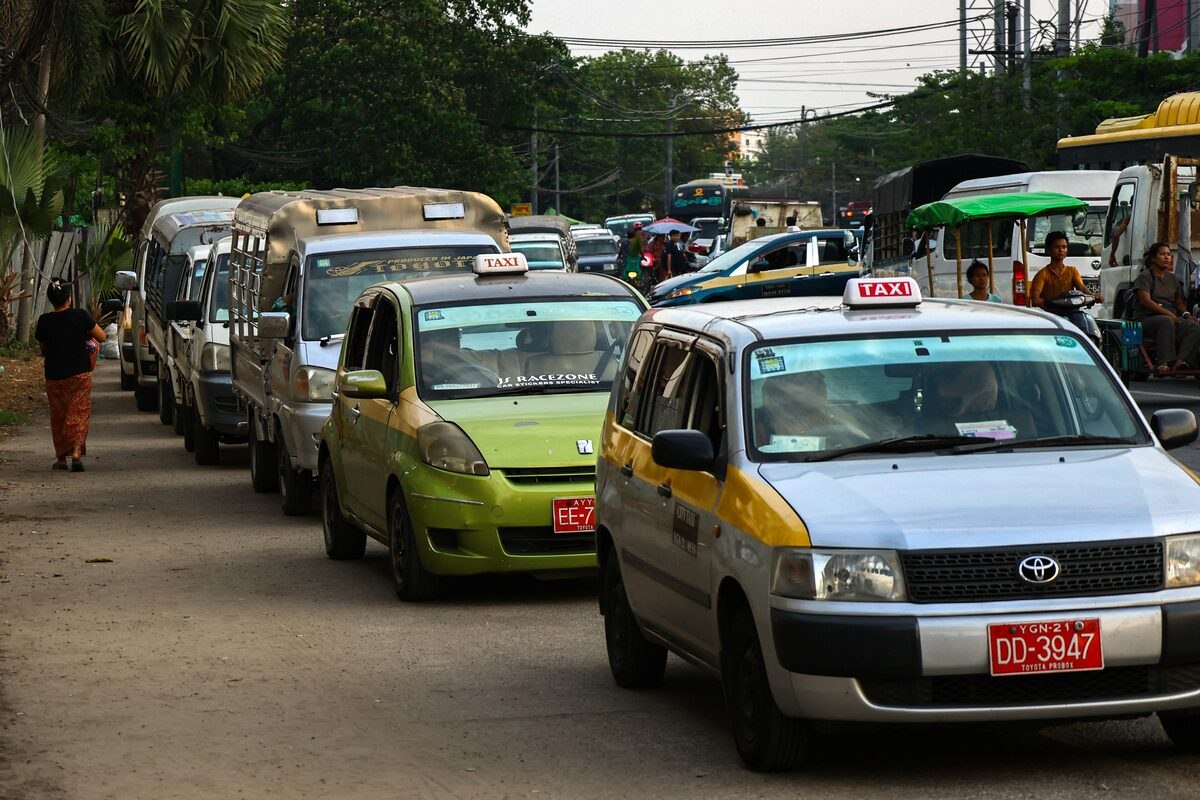
The Myanmar regime abolished its controversial “even-odd” vehicle license plate fuel rationing system on Wednesday, citing severe transport disruptions suffered by the public.
Speaking at a press conference in Naypyidaw, regime spokesperson Khaing Khaing Soe confirmed the immediate cancellation of the vehicular plate rotation while clarifying that the digital quick response (QR) code system used at filling stations will remain in effect to manage national energy security.
“We have noticed and understand the transportation difficulties faced by the public even though the even-odd system did help with fuel consumption,” Khaing Khaing Soe told regime media on Sept. 9.
Under the rule, vehicles with even-numbered license plates were restricted to driving on even dates, while odd-numbered plates were permitted on odd dates.
According to regime statistics, the plate restrictions reduced average daily fuel consumption by approximately 29 per cent, cutting nationwide usage from 3.54 million gallons (13.4 million liters) to 2.5 million gallons (9.5 million liters) and saving an estimated $6 million USD per day in foreign exchange reserves.
Despite its fiscal benefits, the system generated widespread public frustration and enforcement abuses.
Drivers caught operating vehicles on non-permitted days faced penalties of up to one month in prison and a fine of 20,000 MMK ($4.60 USD), though Yangon residents reported that motorists routinely paid bribes to traffic police officers to avoid impoundment and jail terms.
To replace physical road restrictions, the military administration will rely on its digital QR code purchasing framework, which the regime’s Ministry of Energy reported was operational in over 880 of the country’s 2,943 licensed fuel stations as of April.
The shift in fuel regulation highlights the regime’s ongoing struggle to manage foreign exchange reserves and vital energy supplies.
Data from the regime-controlled Petroleum Products Regulatory Department indicates that Myanmar imports approximately 5 million tons of petroleum annually at an expenditure exceeding $5 billion USD per year.
While Naypyidaw claims the rationing measures saved substantial capital since their inception in March, the economic burden of total fuel import dependency remains a central vulnerability for the regime amidst persistent financial pressure and regional conflict.