


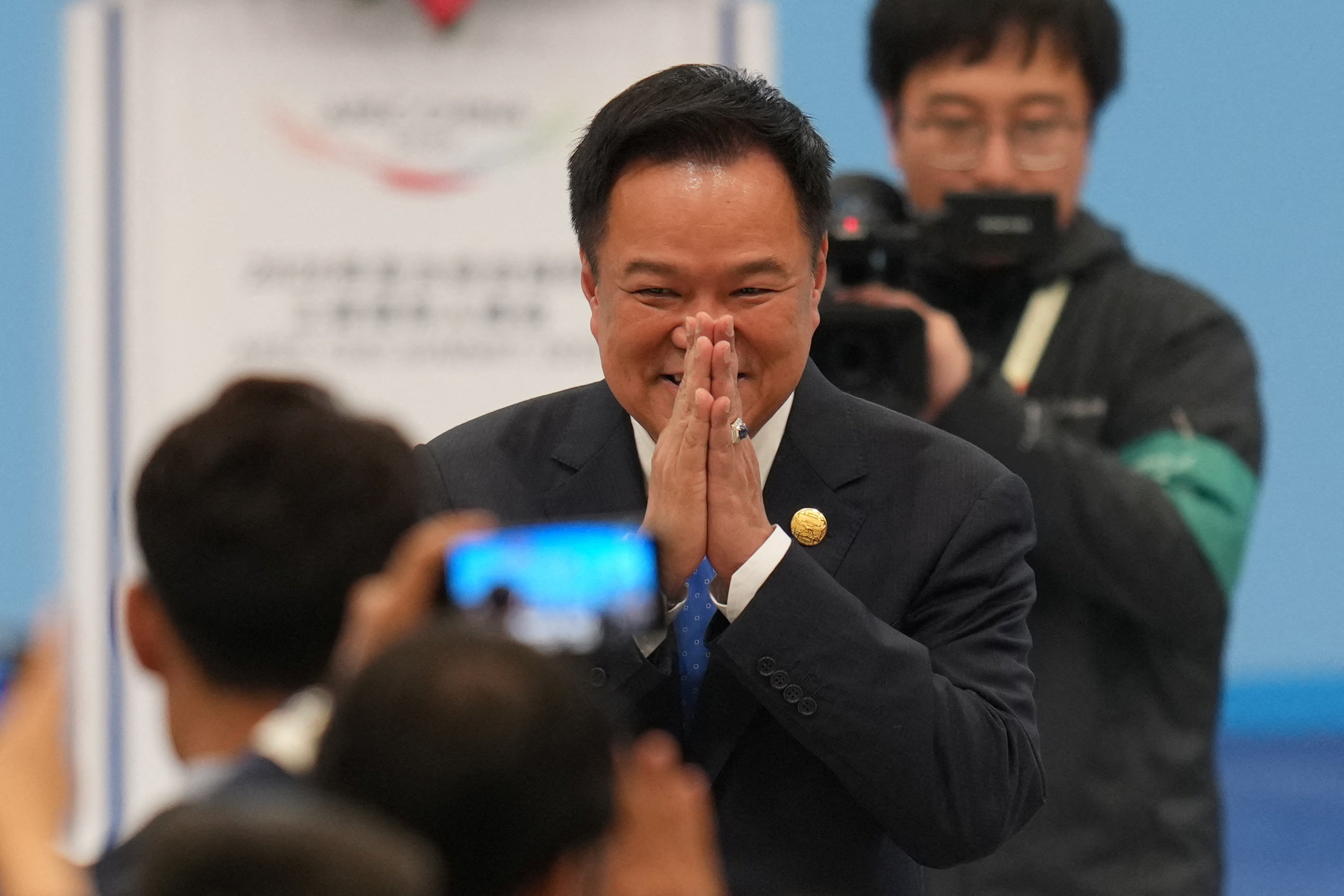
Thailand will maintain diplomatic relations with Myanmar regardless of the International Court of Justice’s (ICJ) landmark ruling holding the country responsible for genocide against the Rohingya, Prime Minister Anutin Charnvirakul said on Saturday.
“Thailand must take the position that best serves the country,” Prime Minister Anutin told reporters at Government House in the capital Bangkok on Nov. 21.
He added that Thailand must preserve bilateral ties regardless of what the ICJ decided, noting that other nations are free to pursue their own approaches.
Prime Minister Anutin’s remarks reinforced comments made the previous day by Foreign Minister Sihasak Phuangketkeow, who argued that Thailand’s diplomatic approach is consistent with the spirit of the ICJ ruling.
“Re-engaging with Myanmar is constructive, because what we are asking through this process is a reduction and ultimate cessation of violence, reconciliation among all parties and open space for humanitarian assistance,” said Sihasak Phuangketkeow, referencing the Association of Southeast Asian Nations (ASEAN) Five Point Consensus–the regional bloc’s peace plan for Myanmar adopted in 2021 after the military coup in Myanmar
Foreign Minister Sihasak said that Thailand contributes more than $1 million USD in humanitarian aid for Rohingya refugees every year. He visited Naypyidaw on Nov. 12—ahead of the ASEAN Summit in Manila, Philippines,—to press for de-escalation along the 1,501 mile (2,416 km) long Thai-Myanmar border and action on transboundary pollution.
Thailand’s stance contrasts sharply with Western allies such as the United Kingdom—which expelled Myanmar’s military attaché and summoned its London envoy following the Nov. 19 judgment—as well as warnings from international legal experts and rights groups that the Genocide Convention obligates signatory states to prevent genocide and avoid conferring legitimacy on perpetrators.