


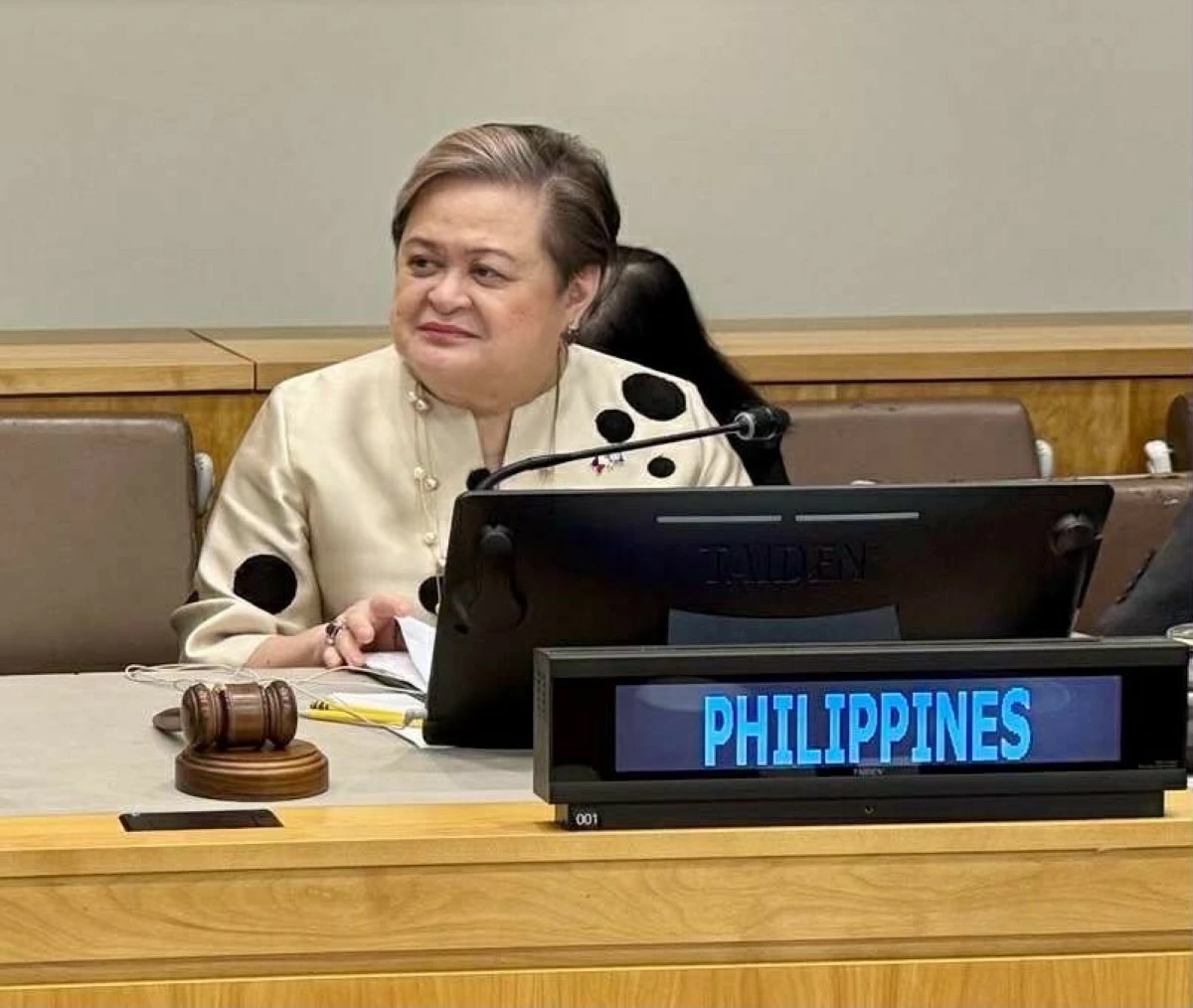
The incoming ASEAN chair, the Philippines, will continue with Malaysia’s strategy on the Myanmar crisis, as the regional bloc remains undecided on sending observers to the regime’s 2025-26 elections.
The Philippines will maintain the current approach to the Myanmar crisis when it assumes the chair of the Association of Southeast Asian Nations (ASEAN) on Jan. 1, 2026, according to its Department of Foreign Affairs.
“Malaysia had about 117 engagements, and we are of the view that we cannot do everything that was done by Malaysia, or even the past chairs, starting from that,” Foreign Affairs Secretary Theresa Lazaro told media in Manila on Nov. 17. “It is the Philippine position, that we can just be working on what has been established, and to continue.”
Lazaro added that a decision on whether ASEAN will officially send observers to the Myanmar regime’s 2025-26 elections, set to begin on Dec. 28 and continue into January 2026, is still under discussion. Any deployment of election observers would need a consensus decision from all ASEAN members.
Lazaro was appointed by President Ferdinand Marcos Jr. as the incoming ASEAN Special Envoy to Myanmar, replacing Malaysian diplomat Othman Hashim. ASEAN is considering the appointment of a long-term envoy for Myanmar, which has been called for by civil society groups, rather than rotating the post annually with each chairmanship.
“Perhaps all this will be discussed, particularly the possibility of having a longer-term special envoy during the chairship of the Philippines,” Lazaro said. These matters will be a focus of the ASEAN foreign ministers’ retreat in January.
While high-level political engagement with the regime in Naypyidaw at ASEAN remains limited, its representatives recently attended ASEAN legal meetings in Manila, regime media reported.
A delegation led by the regime’s Minister for Legal Affairs and Attorney-General, Dr. Thida Oo, participated in the 13th ASEAN Law Ministers’ Meeting in Manila from Nov. 13-15. A separate delegation attended the 24th ASEAN Senior Law Officials Meeting from Nov. 10-13.
During the meetings, the regime minister spoke about legal cooperation to promote regional stability and combat transnational crime like terrorism, money laundering, and online cyber scams, regime media reported.
The regime’s 2025-26 elections will not be held in 121 constituencies, which includes 56 townships, because of ongoing fighting with resistance forces.
Since the 2021 military coup, the regime’s Union Election Commission (UEC) has dissolved numerous political parties for not re-registering.
This includes Aung San Suu Kyi’s National League for Democracy (NLD), which was ousted from government during the coup. Both Suu Kyi and President Win Myint were arrested and have been held incommunicado ever since by the regime, which seized power.
A total of 29,977 political prisoners have been held by the regime since 2021, according to the Assistance Association for Political Prisoners (AAPP). The upcoming regime elections have been widely dismissed as a sham by pro-democracy groups in Myanmar, international organizations, and election monitors.