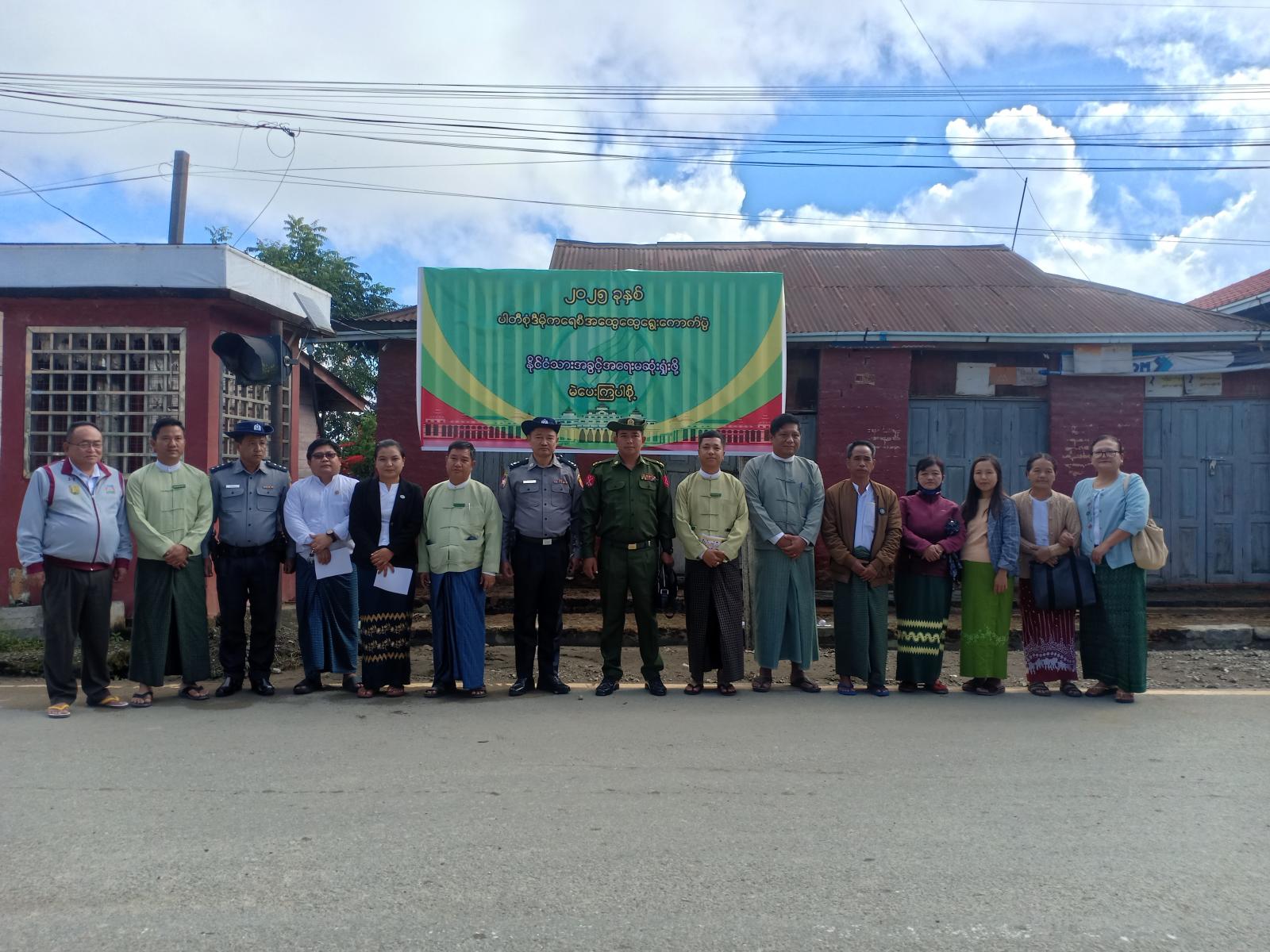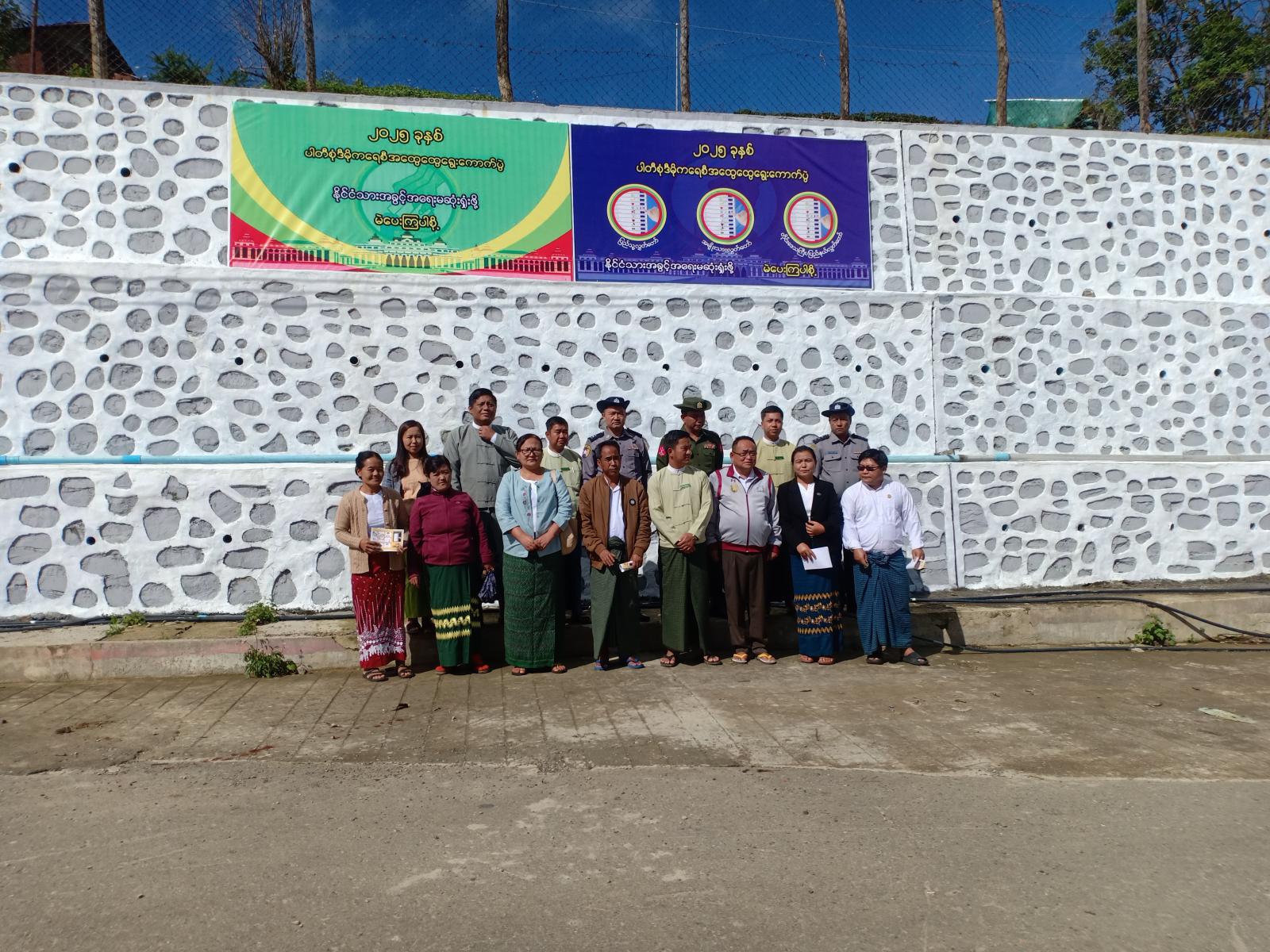



Chin resistance forces told DVB that the regime scheduled elections, set to begin on Dec. 28, are a “showcase” to be held in two out of the state’s total nine townships: Tedim and the state capital Hakha.
“It is safe to say that the regime can only hold the elections in the urban areas,” a political analyst in Chinland told DVB on the condition of anonymity.
Regime forces control the urban areas of Hakha and Thantlang, located 22 miles (35 km) west of Hakha, as well as Tedim located 117 miles (188 km) north of Hakha.
The regime Union Election Commission (UEC) states that a total of 83 candidates will contest 28 parliamentary seats across Chinland in the three-phased elections.
This includes 28 from the Union Solidarity and Development Party (USDP), 26 from the New Chinland Congress Party, 19 from the Zomi National Party, nine from the People’s Pioneer Party (PPP), and one from the Khumi (Khami) National Party.
Salai Htet Ni, the Chin National Army (CNA) spokesperson, told DVB that it is difficult to see how the regime could effectively conduct its elections given that resistance forces fully control six out of nine townships.
Kanpetlet, Mindat and Matupi townships in southern Chinland were seized by the Chin Brotherhood in June and December 2024. Paletwa Township was seized by the Arakan Army (AA) in January 2024. Kanpetlet, Mindat, Matupi, and Paletwa are 171-286 miles (275–461 km) south of Hakha.
The second phase of regime elections is scheduled to be held on Jan. 11 in Thantlang, Falam and Tonzang townships, which are all under Chin resistance control. Thantlang is 22 miles (35km) west of Hakha, Falam and Tonzang are 20-65 miles (32-105 km) north of Hakha.
Residents in Falam and Thantlang told DVB that thousands of civilians fled their homes after regime forces launched a counteroffensive against the Chin resistance in August.
“People are fleeing because of the fighting. So how the military plans to organize the locals, or to set up polling offices, is difficult to imagine,” Salai Htet Ni told DVB.
Three people were killed when the Myanmar Air Force carried out airstrikes on Kanpetlet town, located 120 miles (193 km) south of Hakha, on Oct. 24-25. At least 15 were injured and five homes and three other buildings were destroyed, according to local media.
Airstrikes have also been reported in Mindat, Matupi, Hakha, and Tonzang during the second week of October.
A political analyst in Chinland told DVB on condition of anonymity that the regime could force refugees whose biometric data has already been collected by the Indian government to vote, potentially in coordination with Indian authorities.
The Times of India reported that in Mizoram State authorities have gathered biographical information, including fingerprints and iris scans from 14,532 of roughly 31,265 Myanmar refugees, up to late October.
This data collection was being carried out under a central government directive to “systematically document” foreign nationals who entered India, citing national security concerns, border control, and demographic protection.
Human rights organizations and activists have warned that collecting biometric data from the refugees could expose their identities—especially those of political activists—to the regime, risking persecution or forced repatriation if the data is leaked or shared.
They also noted that refugees are often coerced into providing fingerprints and iris scans without informed consent or legal safeguards, raising fears of misuse and surveillance.
Mizoram hosts 32,000 Chin refugees along the 317 mile (510 km) portion of the 1,020 mile (1,643 km) long Myanmar-India border.
The U.N. High Commissioner for Refugees (UNHCR) has documented 236,768 refugees and asylum seekers in India, with the largest groups coming from Afghanistan and Myanmar.
The National Unity Government (NUG) and the National League for Democracy (NLD) party declared the regime elections a “sham” and called on Myanmar citizens to oppose it.
The political analyst in Chinland told DVB that the outcome of elections could benefit the people if these elected representatives could negotiate between regime and resistance forces.
Ethnic armed groups, along with the People’s Defence Force (PDF), have captured 103 towns in Myanmar since the uprising to the 2021 military coup began, according to DVB data.
At least 11 towns in northern Shan and Karen states, as well as Sagaing, Karenni, Mandalay regions have been recaptured by regime forces during a counteroffensive launched in June.
No towns in Chinland have been recaptured by regime forces.
“We cannot give the towns back. We will try our best to prevent it from holding elections [here],” said Salai Htet Ni. “We also urged the Chin people not to [vote].”