


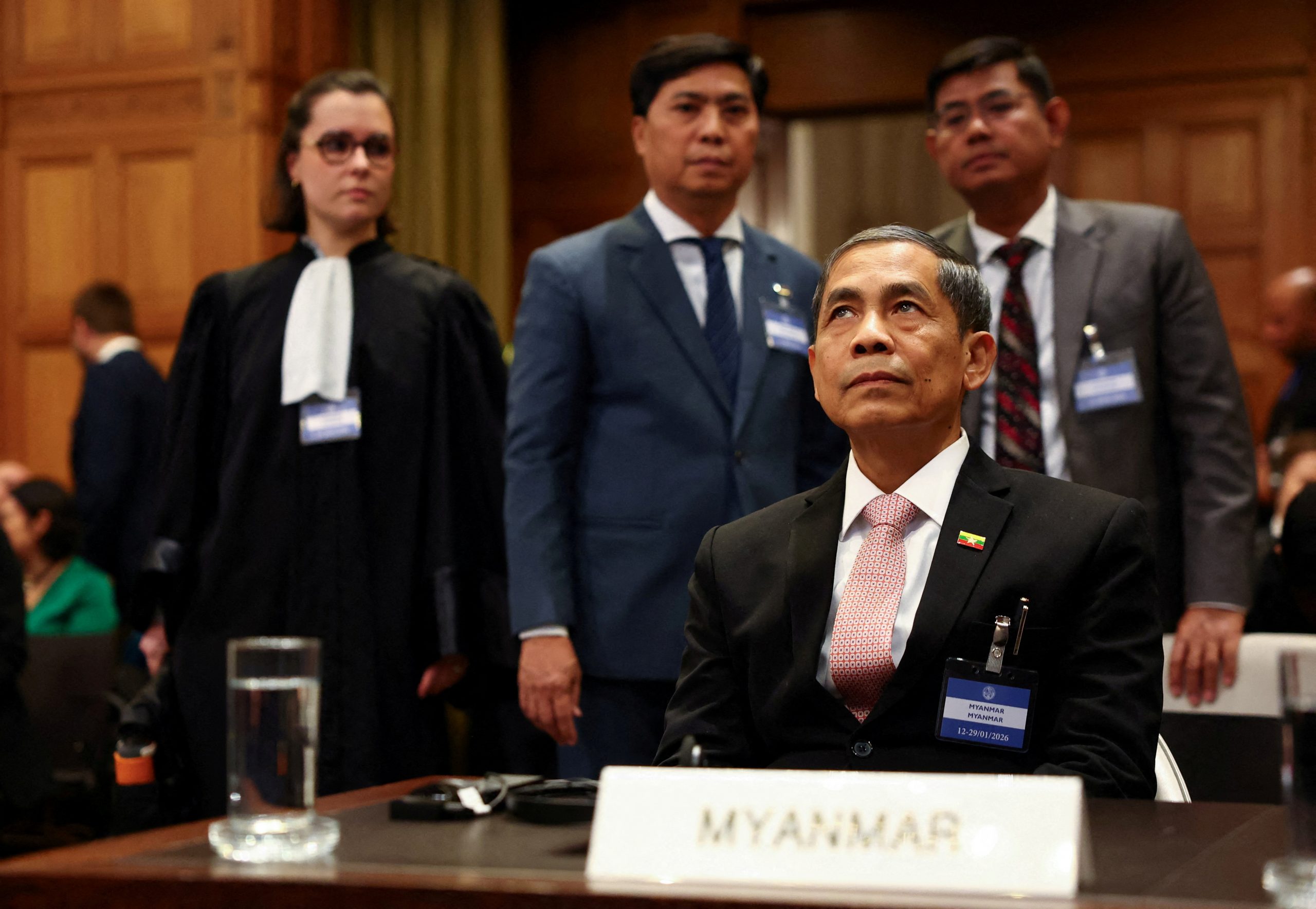
As the ICJ examines genocide, Myanmar fans anti-Rohingya rhetoric online and at home, leaving survivors trapped between impunity and fear.
Guest contributor
Yar Tin
The International Court of Justice (ICJ) is hearing a landmark case against Myanmar over alleged genocide against the Rohingya. Inside the country, the military junta is not mounting a legal defense—it is reigniting the hatred that fueled the 2016–2017 atrocities.
As a witness to the horrors in Rakhine State, I’ve been following the ICJ proceedings with fragile hope and deep dread.
The Gambia’s case, filed in 2019 under the Genocide Convention, holds the Myanmar military responsible for a campaign that drove over 700,000 Rohingya into exile amid killings, sexual violence, and burned villages.
The U.N. called these acts a “textbook example of ethnic cleansing,” labeling them ethnically targeted violence with clear genocidal intent. With the ICJ having rejected Myanmar’s jurisdictional objections, the world is finally confronting whether genocide occurred.
The Hague
The junta’s representatives opened an old book of denial, offering little accountability. They repeated familiar claims: Rohingya are “Bengalis,” intruders; the 2016-17 “security clearance” operations were legitimate counter-terrorism; U.N. reports are fabrications.
Junta spokesperson Ko Ko Hlaing dismissed the allegations as “unsubstantiated,” framing the ICJ as an attack on sovereignty. Yet for the Rohingya, the court remains a vital beacon of hope.
Bangladesh, hosting over one million Rohingya survivors, has taken serious exception to Myanmar’s submissions, warning that calling the Rohingya “Bengalis” risks framing them as illegal migrants and justifying past atrocities as counter-terrorism operations.
Domestic propaganda and hate speech
At home, the junta’s messaging is far more dangerous. Facing military losses, economic collapse, and international isolation, it has revived anti-Rohingya rhetoric as a survival strategy.
Junta media and allied influencers deny the Rohingya exist as a distinct ethnic group, brand them “illegal Bengalis,” and resurface conspiracy theories about “Muslim land grabs.” Every ICJ procedural moment is spun as a patriotic victory.
Ultra-nationalist networks long linked to violence have been reactivated. Firebrand monk Wirathu openly supported the junta, turning the courtroom into a domestic rally and portraying the military as the nation’s sole defender against foreign interference and the “Bengali threat.”
Influential figures amplify the hate: military-aligned politician Nay Myo Wai has called for killing Rohingya; historians such as Dr. Myint Thin appear to erase Rohingya identity; former diplomat Win Lwin dismisses the case as “deliberate acts”; ex-Rakhine Colonel Maung Maung Ngyin brands it the “western gate problem”; and opposition-linked voices—such as National League for Democracy (NLD) youth co-founder Nyo Ohn Myint—frame the ICJ proceedings as a “foreign invasion.”
Social media—particularly Facebook, instrumental in spreading anti-Rohingya hate in 2016–2017, according to Amnesty International—continues to magnify the threat. Anti-Rohingya posts surge with every ICJ update.
Memes, conspiracy theories, and calls for expulsion fuel polarization precisely when global attention is highest. Much of this content echoes pre-2017 propaganda, normalizing persecution and reinforcing harmful stereotypes.
Rohingya face multiple threats
Even within Rakhine, conditions remain dire. The Arakan Army (AA) controls most territory but has been accused of ethnically motivated violence against Rohingya, echoing 2017 patterns.
Fortify Rights has called for an International Criminal Court (ICC) investigation, and U.N. reports describe “death, destruction, and desperation” mirroring past atrocities.
Pro-AA media and Rakhine nationalist figures, while opposing the junta, often echo the same anti-Rohingya rhetoric, rejecting the ICJ’s legitimacy and flooding social media with hateful content.
These dynamics leave Rohingya communities trapped between multiple persecutors who deny their rights and history.
The ICJ is a beacon of hope
The ICJ represents a vital beacon of hope for the Rohingya, offering a real possibility of justice. It is more than a legal proceeding—it tests the international community’s commitment to confront genocide, even as perpetrators continue to stoke hatred at home.
While the court cannot prevent every act of violence, its scrutiny affirms Rohingya rights and sends a clear message: accountability is not optional.
True justice requires more than court rulings. It demands sustained international action against those who fuel hatred and recognition that denial and incitement are ongoing crimes that continue to endanger the Rohingya and perpetuate persecution.
For the Rohingya, the stakes could not be higher. Safe return remains a distant dream. Displacement continues. Hope for justice flickers but is constantly threatened by the very forces who perpetrated the crimes.
Until the world treats the Myanmar military’s domestic mobilization as a continuation of genocidal intent, the most vulnerable will continue to pay the price.
Rohingya deserve more than hearings—they deserve justice that ends the cycle of hatred once and for all.
Yar Tin is a Rohingya who documents human rights violations in Rakhine State.
DVB publishes a diversity of opinions that does not reflect DVB editorial policy. We’d like to hear what you think about this or any of our stories: [email protected]