


Guest contributor
James Shwe
Myanmar’s military junta, battered by courageous civilian resistance and staggering territorial losses, is waging its most dangerous and sophisticated campaign for survival yet.
No longer relying on violence alone, the junta is combining sham elections, draconian laws—including the death penalty for dissent—with a multi-million-dollar foreign lobbying and legal strategy, all while systematically targeting civilians to prevent any demonstration of good governance by resistance forces.
This is not just a national crisis, it is a warning to the world about the erosion of democratic norms and the potential rollback of civilization itself.
Why sham elections matter to the junta
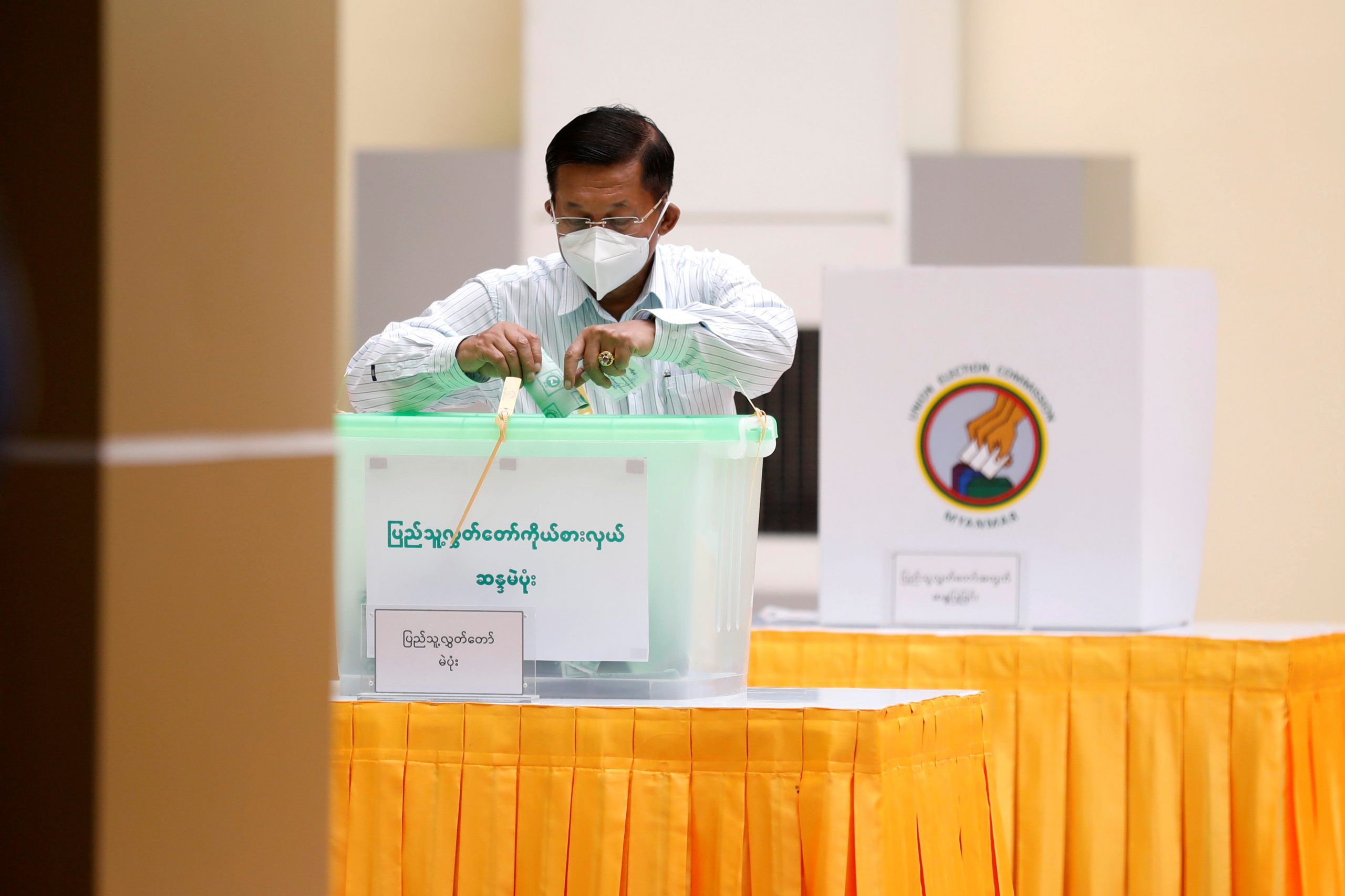
On July 30, the junta enacted sweeping “election interference” laws, making nearly any dissent or protest related to the electoral process a crime punishable by imprisonment, heavy fines, or even execution.
These laws ensure that the planned December 2025 elections will occur in an atmosphere of widespread fear, silencing almost all opposition voices.
The elections are crucial for the junta’s survival, not because they represent a genuine transfer of power, but because they offer a manufactured façade of legitimacy. By appearing to “restore” democracy, the junta hopes to:
- Intimidate remaining resistance and demoralize the public, using state violence and legal terror to shut down even peaceful opposition.
- Give diplomatic cover to supportive or pragmatic foreign actors (as seen in China’s and ASEAN’s post-coup engagement), paving the way for normalization even when elections are widely rejected as fraudulent.
- Buy time for sanctions relief and investment, banking on the idea that international condemnation will fade and economic or strategic interests will lead to renewed engagement—with or without full legitimacy.
Recent official contacts underscore this plan:
- Japan’s Foreign Minister IWAYA Takeshi issued a diplomatic statement after the lifting of the state of emergency, signaling strong concern while carefully leaving room for future engagement.
- China’s Ministry of Foreign Affairs hosted meetings with Myanmar’s ambassador, underscoring Beijing’s willingness to work with whatever authority can guarantee “stability” and access to critical resources.
The new face of international complicity
Even though most Western nations and the U.N. denounce these elections and refuse normalization, the junta invests millions in foreign legal and PR firms in hopes of chipping away at sanctions and hostile public opinion:
- Ferrari & Associates, a U.S. law firm, recently played a prominent role in securing the removal of several major junta-linked arms brokers, including Jonathan Myo Kyaw Thaung, Aung Hlaing Oo, Sit Taing Aung, Tin Latt Min, and Indian national Deepak Subhash Jadhav, from U.S. sanctions lists, a move that drew sharp criticism from rights organizations.
- The junta leverages humanitarian disasters and rare earth mineral opportunities to encourage business and diplomatic communities—especially across Asia—to call for sanction relief, develop investment plans, and ultimately press for normalization.
Some organizations and advocacy groups, while publicly focusing on democracy or relief, have been accused of advocating for pragmatic engagement or sanctions rollback under the pretext of humanitarian need, further muddying the international consensus.
Destroying civilian governance
Beyond legal and diplomatic maneuvers, the junta’s systematic attacks on schools, clinics, and community leaders in liberated areas are no accident. These acts of terror aim to stop resistance-led administrations from proving that Myanmar’s people, left to their own devices, can govern more justly, peacefully, and inclusively than any dictatorship ever could.
Even as the U.S., E.U., and other democracies strongly reject the electoral sham, the regime is betting on “normalization by attrition.” As seen in the rapid post-election contact by China, Japan, and regional actors, a steady trickle of engagement enables the junta to resist isolation. With time, investment and diplomatic fatigue, what begins as cautious, transactional engagement may lead—little by little—to full normalization:
- Economic interests, such as rare earths, and border security will drive some neighbors and businesses to engage, regardless of international principles.
- As some states break ranks, pressure will mount on others to follow, making complete isolation unsustainable.
- Gradually, attention will shift away from human rights and toward “stability,” investment, and regional competition with China.
This is precisely what the regime expects, and exactly why the fake elections and legal campaigns matter.
The courage of the Myanmar people
Despite everything, the people of Myanmar have resisted with astonishing courage and determination, often at unimaginable personal risk. Against all odds, they continue to demand a future free from military rule.
The world must not assume that repression and electoral theater will end the struggle; instead, there is every reason to expect resistance will continue—growing deeper and more disruptive, with potential to impact the whole region.
What must be done
- Unified action by the resistance: The National Unity Government (NUG), Ethnic Resistance Organizations (EROs), and the diaspora must continue to document atrocities, build inclusive administration, and provide real services in liberated areas, showing a real alternative to military rule.
- Relentless international advocacy: Diaspora and allies must expose lobbying, legal victories for regime cronies, and the risks of resource-driven normalization—keeping the world’s attention on the junta’s ongoing crimes.
- Principled, targeted policy: Western and democratic governments must maintain targeted sanctions, refuse normalization, and coordinate on resource governance and humanitarian access that supports the people—not the regime.
This is not merely Myanmar’s crossroads. The junta’s campaign to buy legitimacy—through terror, legal manipulation, and economic deals—is a global test of whether civilization is willing to be ruled by principle or sold for convenience.
Should the junta’s strategy succeed, it would mark a profound setback not just for democracy, but for civilization itself: a gesture to tyrants everywhere that might, money, and time can erase the rule of law.
The people of Myanmar have shown the world the true meaning of courage in the face of tyranny. Their fight will not end; if abandoned, it will expand and reverberate far beyond national borders.
The world must not watch in silence—the price of complicity is far higher than imagined, for Myanmar and for us all.
James Shwe is a Myanmar democracy activist in the U.S. and is a member of the advocacy groups Free Myanmar and the Los Angeles Myanmar Movement. He has been trying to organize and motivate the Myanmar diaspora to advocate for democracy in Myanmar.
DVB publishes a diversity of opinions that does not reflect DVB editorial policy. We’d like to hear what you think about this or any of our stories: [email protected]