


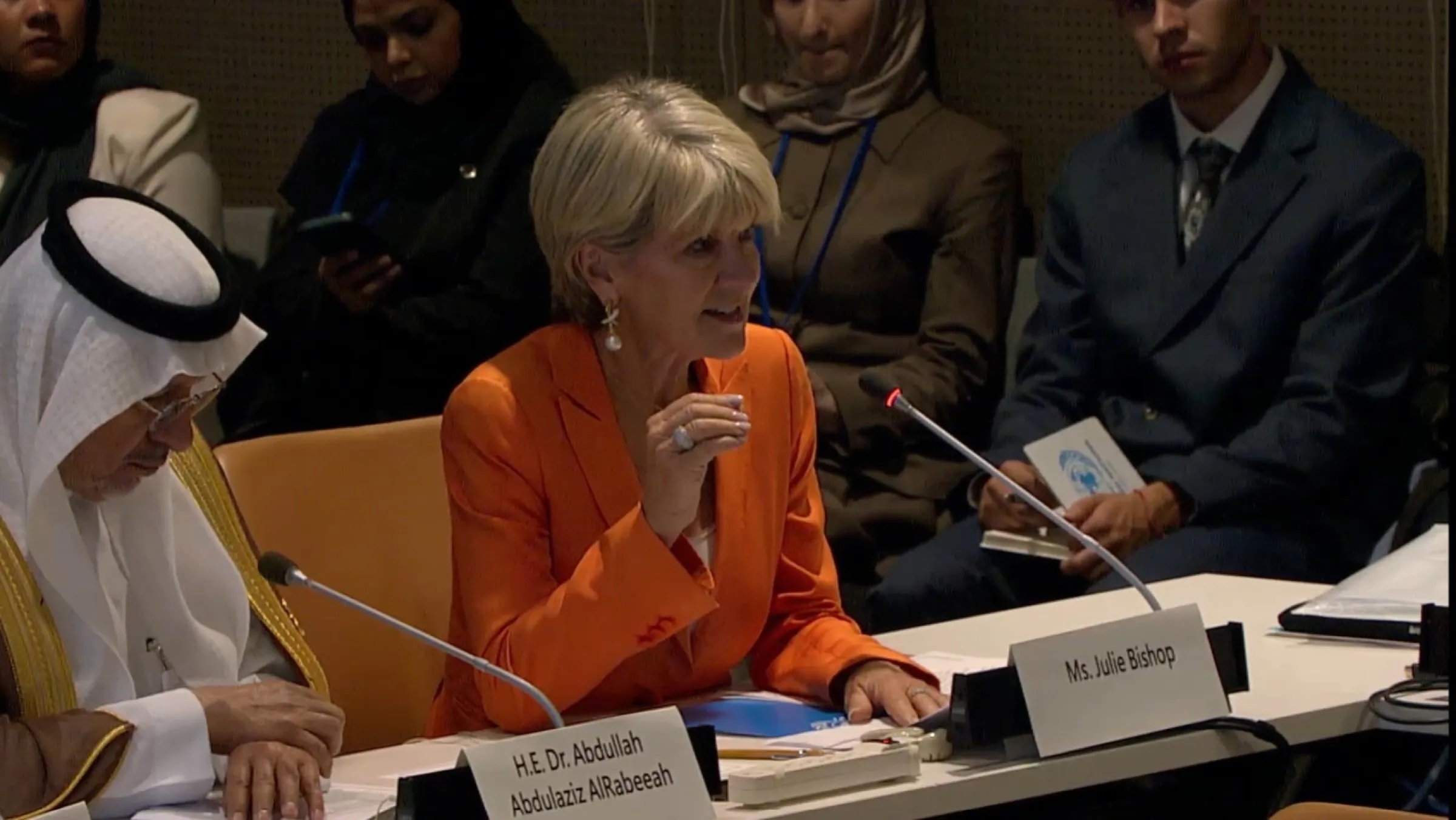
Addressing a high-level side event co-hosted by Bangladesh on the sidelines of the 81st session of the U.N. General Assembly in New York on Tuesday, U.N. Special Envoy on Myanmar Julie Bishop delivered an urgent call for international action on the Rohingya crisis.
Nearly a decade after the mass forced displacements of 2017, over 1.2 million Rohingya refugees remain stranded in Bangladesh, where the world’s largest refugee camp is located in Cox’s Bazar. An entire generation of children, with over 30,000 born annually, now only knows displacement as their reality.
“For a newly born refugee in 2017, displacement is now their entire childhood,” Bishop stated at the event The Rohingya Crisis: A Renewed Call for a Durable Solution from Protracted Displacement, with Justice and Accountability in New York on Sept. 22.
Bishop commended Bangladesh for carrying an “extraordinary responsibility” while warning that shrinking humanitarian funding threatens life-saving assistance, including food, healthcare, and protection services for women and girls facing gender-based violence, while emphasizing that humanitarian aid alone cannot resolve the crisis.
Addressing the regime in Naypyidaw’s assertions that it will resolve refugee repatriation bilaterally with Dhaka, Bishop raised critical practical concerns, noting that most of Arakan State is under the control of the ethnic armed group, the Arakan Army (AA).
Bishop cautioned that “the conditions for a voluntary, safe, dignified and sustainable return are not available – either in Arakan or elsewhere in Myanmar as violent armed conflict persists.”
Premature repatriation, she warned, ignores active dangers, emphasizing that “those who support immediate repatriation are ignoring the risks and could set dangerous precedents. No community should return to renewed danger.”
Bishop highlighted the alarming human toll of the ongoing stalemate, citing sharp increases in human trafficking, forced conscription, and perilous maritime migration attempts across the Bay of Bengal.
“I am deeply troubled by recent reports of a high number of recorded suicides and attempts in the camps, particularly among children,” Bishop told delegates at the high-level side event. “This is yet another desperate call for action.”
She reiterated that justice and accountability remain indispensable to any durable solution, noting that “sustainable peace cannot be built on impunity” as the International Court of Justice (ICJ) considers genocide proceedings brought by The Gambia.
Bishop laid out a roadmap for the international community: sustaining political attention, closing the humanitarian funding gap, and strengthening regional cooperation through the Association of Southeast Asian Nations (ASEAN) Five-Point Consensus, which is the bloc’s peace plan for Myanmar that was agreed to by regime leader Min Aung Hlaing but never implemented upon his return after the 2021 military coup.
“[Rohingya] should not bear the cost of international fatigue,” Bishop concluded. “This must not become a forgotten crisis.”
UN