


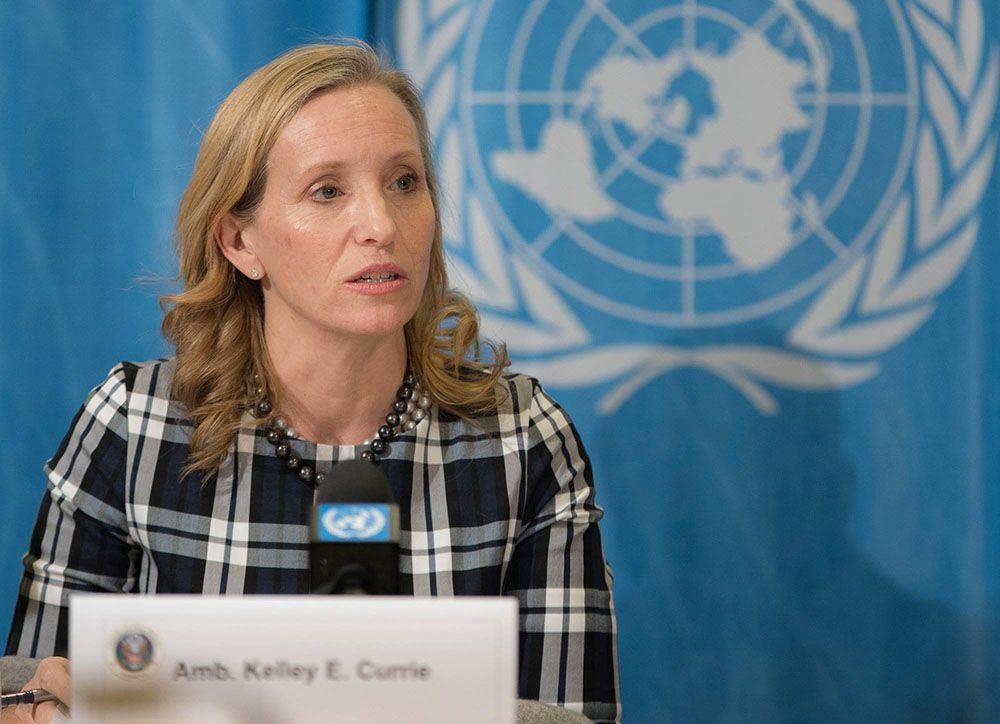
In her maiden public address since assuming the mandate on May 1 as U.N. Special Rapporteur on the situation of human rights in Myanmar, Kelley E. Currie delivered a candid assessment of the Rohingya refugee crisis on Tuesday.
Speaking at a high-level side event at the 81st session of the U.N. General Assembly in New York on Sept. 22, Currie expressed gratitude to Bangladesh for accepting her request to conduct an official country visit in November to evaluate the situation in refugee camps housing over 1.2 million Rohingya.
Echoing previous speakers, she emphasized that “the conditions for safe, voluntary, dignified, and sustainable return do not exist currently in Myanmar.”
Currie highlighted that resolving the long-standing Rohingya crisis requires addressing political dynamics far beyond Arakan State alone, warning that “it is not just the Naypyidaw-based authorities, but also other armed groups, including the Arakan Army, that are targeting the Rohingya people.”
She added that the solution to the problem that the Rohingya people face is not necessarily just in Arakan, but also in Naypyidaw and in towns along the Myanmar-Thailand border, where various armed groups and political actors are competing either to “build a new Myanmar that respects human rights or retain power in the old way… that denies human rights and oppresses the people.”
Currie urged all U.N. Member States to carry out their responsibilities under international law, specifically calling on host nations “not to [deport] Myanmar refugees who will face persecution and abuse if they are returned to a situation where their safety, dignity, and sustainable livelihood cannot be ensured.”
Urging Member States and U.N. agencies to engage in “creative and practical solutions that can reduce the level of violence directed against civilians on the ground,” Currie concluded that establishing “a true political solution that respects the rights… of all of the people of Myanmar, and guarantees the rights of full citizenship to Rohingya people is the only true path that will allow for a durable solution to this long-running crisis.”