


Guest contributor
James Shwe
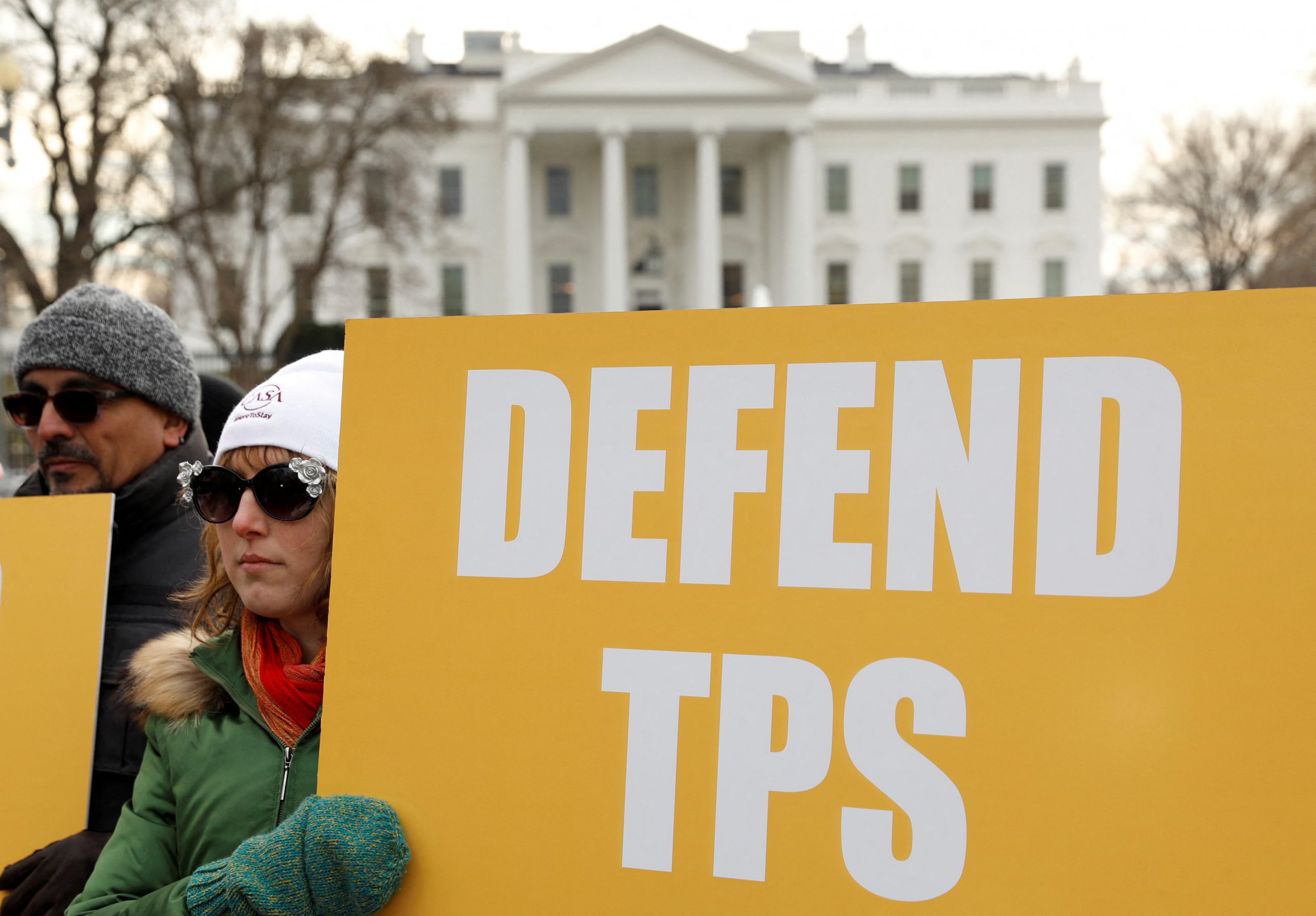
A federal judge’s January 23 order postponing the termination of Temporary Protected Status (TPS) for people from Myanmar offers urgently needed breathing room—but not a final victory.
What comes next will depend on the courts, Congress, and whether the Trump administration is willing to revisit a decision whose stated rationale has now been publicly questioned.
For Burmese readers, this case is also a civics lesson: in the United States, even powerful agencies can be required to explain themselves—and immigrant communities, if organized and disciplined, can insist on due process.
Why the community went to court
Many Burmese Americans did not want a confrontation with the Trump administration. The first instinct was to communicate respectfully with the Department of Homeland Security (DHS), point to the ongoing civil war and widespread violence, and ask for a fact-based review.
Advocates say DHS officials verbally acknowledged concerns and even indicated willingness to meet but later refused to follow through as the January 26 termination date approached.
At that point, there was a hard legal reality: there is no practical administrative appeal for a nationwide TPS termination once the Secretary acts, which means there is no “higher DHS desk” where a community can ask for reconsideration in time.
That is why six Burmese TPS holders became named plaintiffs in Doe v. Noem—a reluctant, last-resort move when normal channels failed.
Just as important, the community deliberately avoided turning this into a spectacle. Many Burmese advocates were initially hesitant to support litigation after seeing early publicity around the case that felt like a “media circus” more focused on self-promotion than on protecting families.
In the end, the community placed its trust in the Asian American Legal Defense and Education Fund (AALDEF), described by advocates as discreet, rigorous, and efficient lawyers who pursued a courtroom remedy because it was the only remaining remedy.
What the judge’s order actually says
Judge Matthew Kennelly’s order did not declare that the President lacks authority to manage immigration. Instead, it froze DHS’s termination of Burma TPS—treating the termination as “null, void, and of no legal effect” while the lawsuit proceeds—so that TPS holders keep protection from deportation and permission to work for now.
The case continues toward a fuller hearing scheduled for February 6, when the court will evaluate whether DHS acted lawfully under the TPS statute and the Administrative Procedure Act.
The part that matters most to Burmese readers is not only the pause, but the reasoning. The opinion raised concerns that DHS did not meaningfully conduct required consultations and appeared to disregard its own country-conditions reporting while relying on less relevant indicators.
The judge also addressed the community’s deepest concern: the justification that continued protection for Burma nationals was “contrary to the U.S. national interest,” suggesting the record did not reveal a convincing, genuine basis tied to real conditions in Myanmar. I
n careful judicial language, the court indicated it was more plausible that the decision served a broader political policy goal unrelated to conditions in Burma. to curtail immigration and dismantle TPS generally, rather than reflecting improved safety in Myanmar.
That matters beyond the courtroom. It undermines any attempt by the military junta to point to U.S. immigration actions as “proof” that Myanmar is now safe or politically normal.
Congress deserves public thanks
Burmese communities should be clear: Congress did not have to act—but many members did, and they did so in a tense political climate. In January 2026, Representative Bill Huizenga (R‑MI), a leader of the Congressional Burma Caucus, introduced H.R. 7014 to redesignate Burma for TPS, calling the termination a grave misreading of reality and warning against sending people back while the junta continues atrocities.
The bill is bipartisan, with Democratic co-leads and supporters reflecting on a coalition that treats Burma as both a human rights emergency and a strategic challenge.
In the Senate, advocates have pointed to sustained engagement by Senator Tammy Duckworth and others pressing the administration to reconsider.
And the top leaders of the foreign policy committees have publicly rejected the junta’s planned “elections” as a sham—an important reminder that Washington’s official view of the junta is not one of legitimacy or confidence.
These actions come with political risk—especially ahead of midterm elections, when immigration can be weaponized and misunderstood. For that, Burmese Americans and the broader Myanmar public should offer sincere appreciation: not for “taking our side,” but for insisting that U.S. policy match facts, law, and America’s long-term interests.
A respectful appeal to the administration
This op-ed is not an attack on the administration’s right to set immigration policy. It is a request for something narrower and more American: decisions grounded in reality, consistent with law, and aligned with U.S. foreign policy goals.
Myanmar remains a battlefield where an authoritarian junta increasingly depends on Beijing, while the pro-democracy movement seeks a future free of foreign domination.
Deporting Burmese families into that danger does not advance U.S. interests; it risks helping the junta, demoralizing a pro-democracy diaspora, and handing adversaries a propaganda victory.
The court has offered time. Congress has offered leadership. Now the administration can choose a constructive path: re-engage the Burmese community seriously, align DHS decisions with the same clear-eyed assessment that U.S. foreign policy leaders have voiced about the junta, and support a lawful, humane resolution for people who are sheltering in the U.S. while Myanmar burns and hopes to return to free and peaceful Myanmar.
James Shwe is a Myanmar democracy activist in the U.S. and is a member of the advocacy groups Free Myanmar and the Los Angeles Myanmar Movement. He has been trying to organize and motivate the Myanmar diaspora to advocate for democracy in Myanmar.
DVB publishes a diversity of opinions that does not reflect DVB editorial policy. We’d like to hear what you think about this or any of our stories: [email protected]