


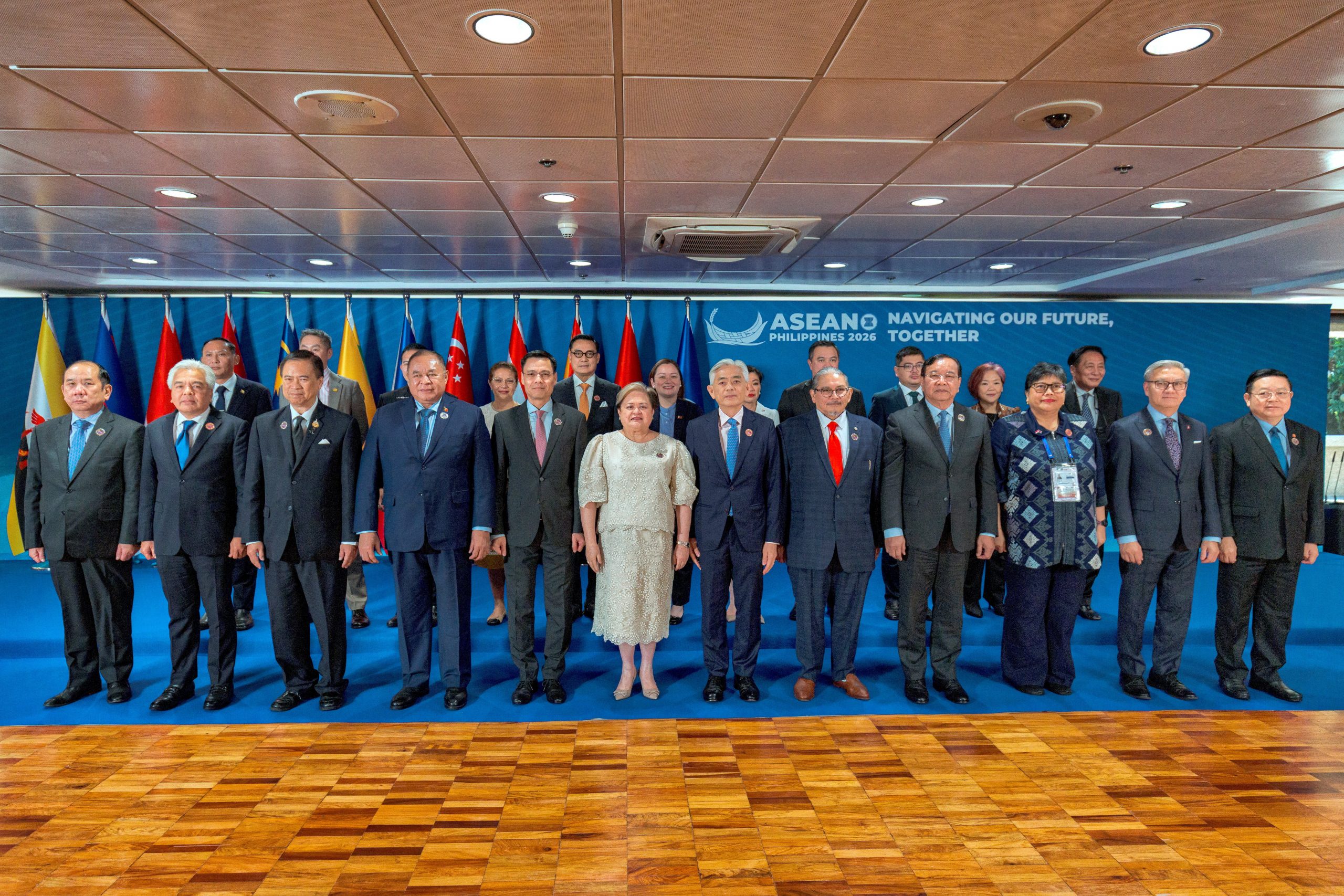
The Middle East crisis cast a shadow over a diplomatic gathering in Southeast Asia on Tuesday, where foreign ministers voiced serious concern over renewed hostilities that add to uncertainty in a region grappling to manage tensions and conflicts of its own.
Foreign ministers from the 11-member Association of Southeast Asian Nations (ASEAN) and major partners have meetings in Manila this week against a backdrop of instability since the U.S. and Iran resumed open conflict, raising fears about energy supplies through the Strait of Hormuz, as well as inflation and global growth.
Risks have increased in recent days, with Yemen’s Iran-aligned Houthis announcing a naval blockade on Saudi Arabia, opening a potential new front in the conflict and raising the threat to global energy supplies and trade beyond the Gulf.
“We are deeply concerned that these developments severely undermine the ongoing efforts of key mediators and diminish the prospects for a peaceful resolution through dialogue and diplomacy,” the ministers said in a statement after a closed-door meeting.
Southeast Asia, a major oil importer with a combined gross domestic product of $3.8 trillion USD, is highly exposed to the supply crunch and has sought to fast-track an ASEAN oil-sharing mechanism to mitigate the impact.
ASEAN has no shortage of challenges closer to home and will on Tuesday hold a consultation on the conflict in Myanmar, as the bloc’s peace initiative falters, five years after a military coup that plunged the country into a civil war that has killed an estimated 100,000 people.
Rubio takes aim at Beijing
Officials are also likely to discuss tensions in the South China Sea, with ASEAN and China still trying to conclude a code of conduct to prevent disputes from escalating after nearly 10 years.
Tensions between Manila and Beijing have intensified ahead of an expected meeting between Philippine Foreign Affairs Secretary Maria Theresa Lazaro and Chinese Foreign Minister Wang Yi on the sidelines of Wednesday’s ASEAN meetings.
A fresh war of words erupted after the Philippine military accused China’s Coast Guard personnel of aggressively striking one of its navy personnel on the head with a baton near the disputed Second Thomas Shoal in the South China Sea on Monday, prompting accusations of provocation and dangerous manoeuvres from both governments.
Philippine President Ferdinand Marcos Jr. will summon China’s ambassador in Manila, his office said on Tuesday, hours after Manila’s envoy in Beijing was similarly summoned.
As the diplomatic standoff deepened, the Chinese foreign ministry told a media briefing on Tuesday ASEAN was not a forum for discussing bilateral maritime disputes.
“The Philippines should earnestly fulfil its duties as ASEAN’s rotating chair, promote dialogue and cooperation, rather than placing its own political interests above regional peace and stability,” it said.
The U.S. State Department condemned what it described as China’s “dangerous and aggressive” actions, in what it called “China’s troubling pattern of provocation against lawful Philippine maritime operations”.
U.S. Secretary of State Marco Rubio and Wang will join the ASEAN-led meeting in the coming days and could meet on the sidelines. Also attending will be India, Japan, Australia, South Korea, Russia, Britain and the European Union, among others.
Without naming China, Rubio took a swipe at Beijing in an opinion piece published in Philippine newspapers on his arrival in Manila on Tuesday, reaffirming U.S. commitment to freedom of navigation, but warning such freedom was “by no means guaranteed”.
“If those waters fall under the control of a power willing to use commerce as a geopolitical weapon, both the United States and the ASEAN states would face dire new threats to their sovereignty, security and economic futures,” Rubio said in the piece.
Rubio reiterated a 2016 arbitral ruling that invalidated China’s sweeping sovereignty claims in the South China Sea was final and binding and said the U.S. would honour its obligations to the Philippines and other allies “as they confront new and coercive threats to our shared interests.”
China does not recognise the arbitration ruling, which went in favour of the Philippines.
REUTERS