


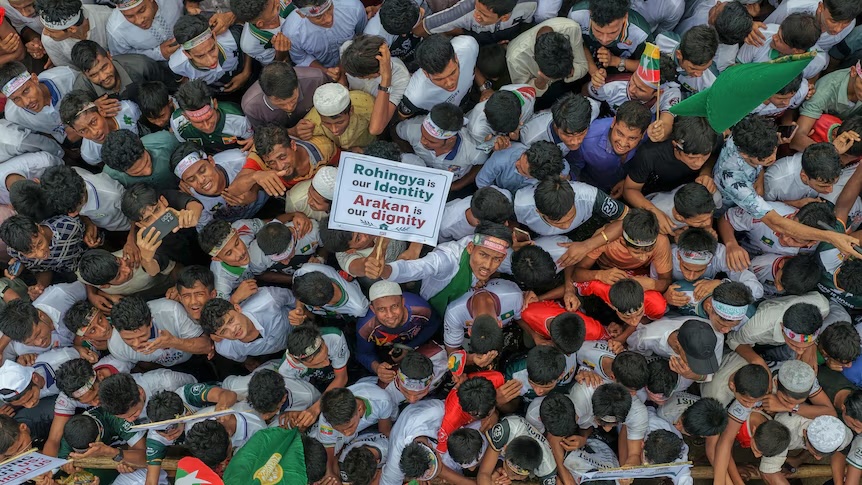
Bangladesh urged coordinated global diplomatic action on Wednesday to secure the safe, voluntary, and dignified repatriation of Rohingya refugees to Myanmar, warning that the displaced population sheltering within its borders has now surpassed 1.5 million.
The appeal came during a bilateral meeting at the Bangladesh Secretariat in Dhaka between Bangladeshi Home Minister Salahuddin Ahmed and Kelley E. Currie, the United Nations Special Rapporteur on the situation of human rights in Myanmar.
According to a Home Ministry statement, Ahmed informed Currie that although formal registration records reflect a lower baseline, more than 1.5 million Rohingya are currently residing in Bangladesh.
The vast majority remain concentrated in sprawling camps across the southeastern coastal district of Cox’s Bazar, where hundreds of thousands fled following the Myanmar military’s brutal clearance operations in August 2017.
Ahmed emphasized that hosting such an immense refugee population for nearly a decade has placed a severe, unsustainable strain on Bangladesh’s domestic economy and border security.
Insisting that sustainable return to Arakan State remains the only viable resolution to the crisis, the Home Minister called for a “safe, voluntary, and dignified repatriation of the Rohingya to their home country, Myanmar”.
Looking ahead to next week’s major international legal milestone, Ahmed urged the global community to act decisively and responsibly following the International Court of Justice’s (ICJ) scheduled Nov. 19 final ruling regarding Myanmar’s state responsibility for the alleged genocide of the Rohingya.
Both sides underscored the necessity of unified diplomatic pressure from major international stakeholders—specifically China, India, the United States, and the European Union—to compel the regime in Naypyidaw to establish conditions for return, alongside enhanced law enforcement support to combat cross-border arms, narcotics, and cybercrime syndicates operating around the camp perimeters.
Currie is conducting an official eight-day fact-finding mission to Bangladesh from Nov. 11-18 after the regime blocked her from entering Myanmar.
She commended Dhaka for sheltering the displaced population.
Highlighting the decades-long pattern of systematic human rights abuses committed against the Rohingya, Currie affirmed that the U.N. and its international partners are actively working to create a “conducive environment for repatriation, while also striving to ensure that the Rohingya are granted citizenship and fundamental rights in their home country”.
ANADOLU