


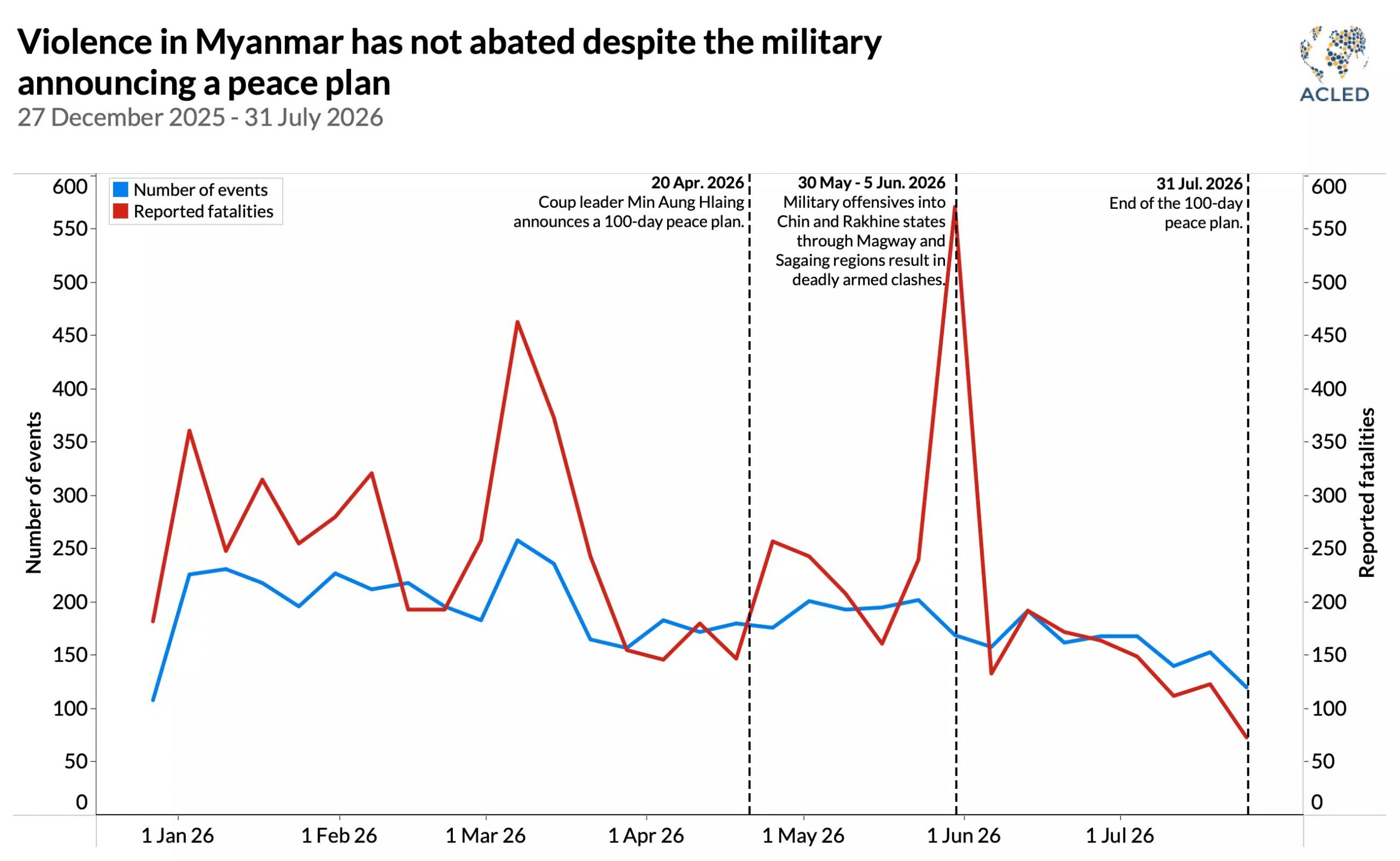
A report published by the Armed Conflict Location & Event Data (ACLED) Project today states that the Myanmar regime’s “100-day peace plan,” which ended on July 31, served as a tactical mechanism to manage conflict, fragment resistance forces, and project governance stability rather than a genuine effort toward political resolution.
ACLED’s assessment indicates that the regime continues to rely primarily on military offensives and economic containment to re-establish control.
1. Core Military Strategy: Resistance Fragmentation and Border Offensives
ACLED highlights that the regime’s military operations focus on isolating post-coup the People’s Defense Force (PDF) from established Ethnic Armed Organizations (EAOs):
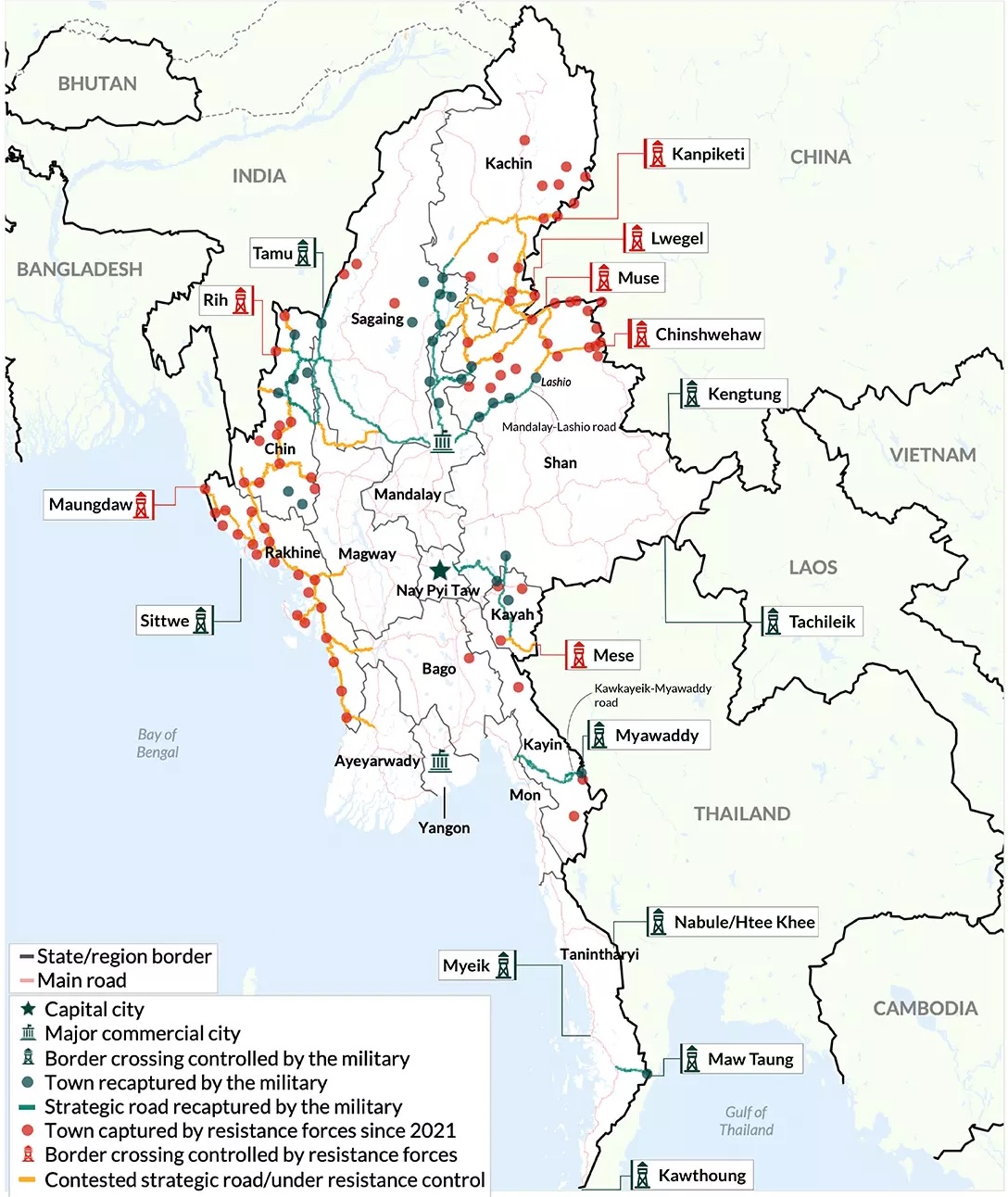
- Targeting Strategic Border Links: In early 2026, the military launched major offensives across Chin, Kachin, Kayin, and Rakhine states. These operations targeted critical transit roads and border crossings with Bangladesh, China, India, and Thailand to sever resistance supply lines to central Myanmar.
- Recapture of Key Infrastructure: The military regained control of approximately 27 towns and vital commercial corridors—such as the Mandalay-Lashio and Myawaddy-Kawkayeik highways. This forced many resistance groups to pivot from large-scale coordinated offensives back to defensive guerrilla tactics.
- Alignment with External Interests: ACLED notes that military offensives frequently intensified following diplomatic engagements with external partners like Russia, China, and India. Following agreements regarding Russian-backed projects in the Dawei Special Economic Zone (SEZ), a 700-soldier military column was deployed into Tanintharyi Region to clear surrounding resistance presence.
2. Escalation over Extractive Resource Control
ACLED identifies competition over natural resources as a primary driver of ongoing conflict, as both regime and resistance forces seek revenue to sustain prolonged operations:
- Kachin State: Military pushes toward Hpakant (jade) and Pangwa (rare earths) aim to disrupt the financial foundation of the Kachin Independence Army (KIA).
- Shan State: Ceasefire signatory groups (including the Myanmar National Democratic Alliance Army and Ta’ang National Liberation Army) expanded mining operations to cover post-Operation 1027 military expenses.
- Central Mining Hubs: In Sagaing and Magway regions, competition over crude oil wells (such as in Myaing and Pauk townships), gold, and copper mines continues to trigger intense localized fighting and resistance infighting.
3. Six-Month Conflict Forecast: Pivot to Central Myanmar
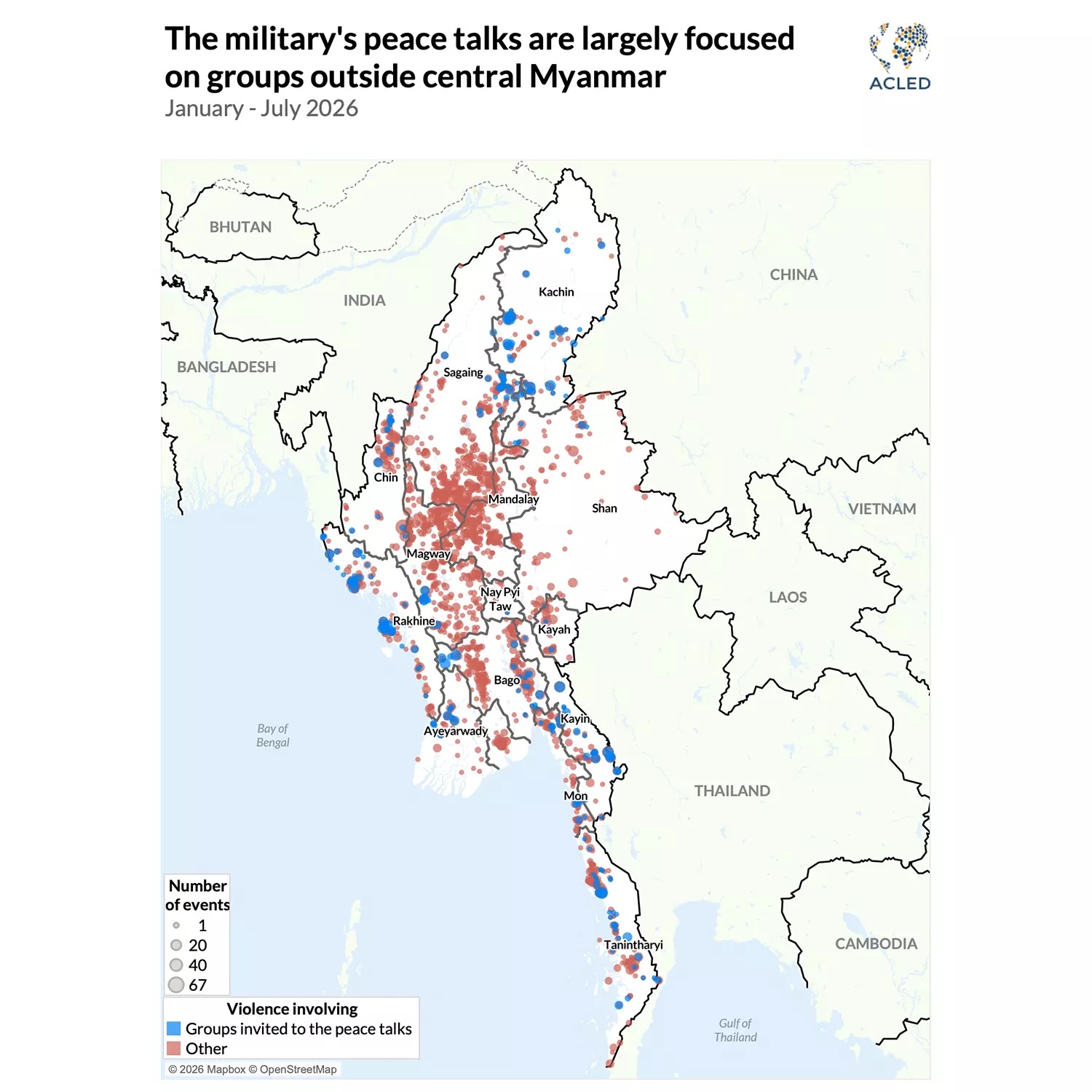
ACLED projects that over the next six months, the military will redeploy battalions freed by peripheral ceasefires to central Myanmar—specifically the Sagaing, Magway, and Mandalay regions:
ACLED Strategic Rebalancing Forecast
├── Peripheral Ethnic States (Chin, Kachin, Kayin, Rakhine, Shan)
│   └── Ceasefires & containment free up regular army units
└── Central Heartland (Sagaing, Magway, Mandalay)
    ├── Redeployment of regular battalions to densely populated plains
    ├── Intensification of aerial warfare (fighter jets, drones, paramotors, gyrocopters)
    └── Increased risk to crude oil sites, defense factories, and agricultural corridors
While the regime is expected to maintain overall military ascendancy in central areas, ACLED assesses that an existential or decisive victory against the broader resistance remains unlikely.
4. Structural Obstacles to Peace
ACLED emphasizes that the peace process excludes primary combatants:
- Exclusion of Parallel Authorities: The military refuses to engage the National Unity Government (NUG), Committee Representing Pyidaungsu Hluttaw (CRPH), or the PDF, excluding them from all formal dialogues.
- Resistance Position: Factions within the Steering Council for the Emergence of a Federal Democratic Union (SCEF)—including the KIA, Karen National Union, Chin National Front, and Karenni National Progresive Party—maintain that any meaningful peace dialogue must include the NUG and align with the 2020 electoral mandate.
5. Humanitarian and Economic Consequences
ACLED warns that prolonged attrition will worsen the national socio-economic crisis:
- Displacement and Economic Disruption: Escalating central offensives risk further severing trade routes, severely impacting agricultural output and regional food security.
- Workforce Migration: Forced military conscription for 18 to 35 year olds, surveillance, and economic stagnation are accelerating the exodus of young workers abroad, eroding Myanmar’s human capital base.
- Regime Attrition Limits: A shrinking tax base and manpower shortages will increasingly strain the military’s ability to sustain capital-intensive aerial and ground operations over the long term.