


Guest contributor
Nur Sadek
Anti-Rohingya hate speech is not merely influencing public opinion; it is helping shape the political environment in which Malaysia’s foreign policy towards refugees is being pursued.
As Rohingya people are increasingly portrayed as a burden and a threat, repatriation becomes easier to present as a solution to domestic pressure.
At the same time, diplomatic engagement with Myanmar’s military-backed leadership provides a practical pathway for returning people.
The connection is political: hate speech helps legitimise exclusion at home, while foreign policy can turn that exclusion into action across borders.
The hostility directed at Rohingya refugees in Malaysia is no longer merely an online problem.
It is becoming part of a broader political environment in which a persecuted community is increasingly portrayed as a burden to be removed rather than a population entitled to protection.
Hate speech is not separate from foreign policy. It can help create the political conditions in which exclusion, deportation and repatriation become acceptable responses to displacement.
In recent months, false claims, dehumanising narratives and calls for the Rohingya community’s removal have circulated widely on social media.
The consequences have extended beyond screens. Reuters reported in July that online hostility had contributed to threats against Rohingya children and the closure of community schools.
When a community is repeatedly portrayed as dangerous, demanding or incompatible with society, public attention shifts away from the persecution that forced its members to flee.
The debate changes from how refugees should be protected to whether they should be allowed to remain at all.
Government rhetoric can reinforce this shift. When officials describe refugees primarily through the language of security threats, financial burdens and social problems, they lend institutional weight to narratives already circulating in public.
Online hostility and official messaging can reinforce one another, normalising the idea that removing refugees is a reasonable response to domestic concerns.
This is where hate speech begins to intersect with foreign policy. Public hostility creates pressure for governments to demonstrate control over migration, while diplomatic arrangements provide the means to carry out removals.
A coordinated plan is not necessary for this relationship to have political consequences. Different actors can pursue different objectives while contributing to an environment in which restrictive policies become easier to justify and implement.
From domestic hostility to diplomatic action
Malaysia’s recent repatriation programme illustrates why this connection deserves scrutiny.
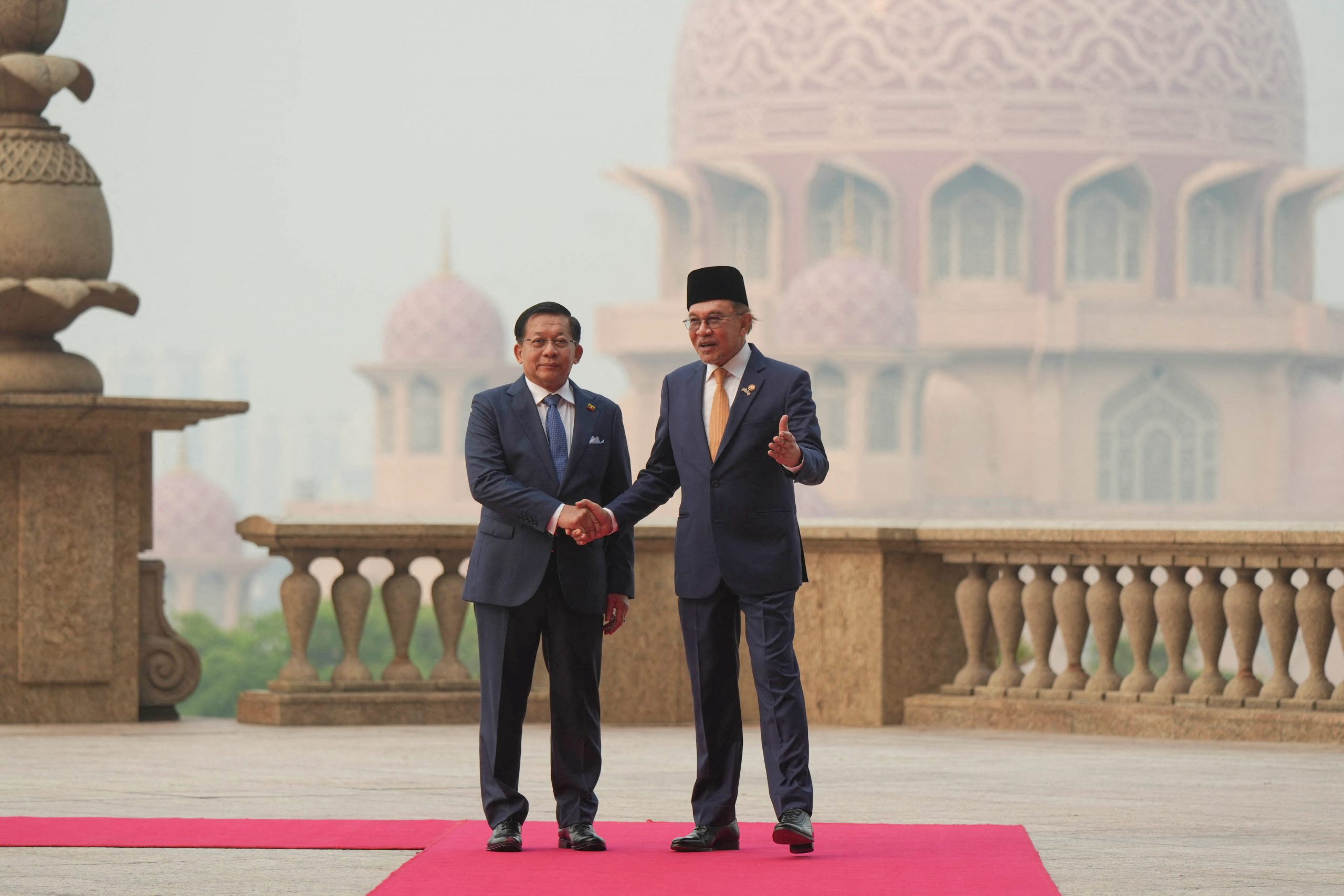
On 29 September, Malaysia returned 1,476 Myanmar nationals. In October, Prime Minister Anwar Ibrahim met Myanmar’s Min Aung Hlaing, and the two countries discussed bilateral cooperation and the return of Myanmar nationals.
Anwar also expressed support for Myanmar’s reintegration into the Association of Southeast Asian Nations (ASEAN).
These developments have their own immigration and diplomatic explanations. However, they are unfolding amid growing hostility towards refugees and demands for their removal.
When refugees are portrayed as a burden at home, repatriation can be presented as a practical solution. When Myanmar agrees to receive returnees, that objective becomes easier to implement.
The significance lies in how these developments reinforce one another. Foreign policy does not emerge in isolation from domestic politics. Public attitudes influence political priorities, and diplomatic agreements can turn those priorities into action.
When the public is encouraged to view refugees as a threat, policies aimed at removing them may become more politically acceptable, even when the reasons for their displacement remain unresolved.
The contradiction is particularly troubling for the Rohingya. Myanmar’s military crackdown in 2017 drove more than 750,000 Rohingya into Bangladesh.
The community has endured decades of discrimination, denial of citizenship and restrictions on movement, education and access to basic services.
Myanmar’s military has faced extensive international scrutiny over atrocities committed against the Rohingya.
Malaysia’s engagement with Myanmar does not, by itself, prove that the government endorses the military’s actions. Diplomacy can be necessary to address regional problems and negotiate practical arrangements.
But engagement should be judged not only by the agreements it produces, but also by whether it helps secure the rights and safety of the people affected.
If cooperation is measured primarily by the number of people returned, rather than by the conditions awaiting them, regional diplomacy risks prioritising the management of displacement over its resolution.
Repatriation without rights is not a solution
For the Rohingya, the central issue is not simply whether Myanmar will accept their return. It is whether they can return safely, with recognised rights and without facing renewed persecution.
UNHCR has warned about the risks of returning people to Myanmar amid continuing conflict and serious human rights concerns. Repatriation cannot be considered a durable solution merely because a government agrees to receive people across a border.
For Rohingya refugees, meaningful return requires citizenship or secure legal status, freedom of movement, protection from persecution and access to education and healthcare.
It is important to distinguish between different repatriation processes. The 1,476 people returned from Malaysia in September were reported as Myanmar nationals, but publicly available reporting has not established how many, if any, were Rohingya.
The separate question of returning displaced Rohingya from Bangladesh involves longstanding obstacles and unresolved questions about safety, citizenship and rights.
Malaysia has legitimate responsibilities to manage immigration and protect its citizens. But those responsibilities do not justify collective punishment or returning people to circumstances in which they face serious harm.
Nor should public hostility determine whether a person deserves protection. When refugees are portrayed as a threat, their removal can be presented as a solution.
If diplomatic agreements facilitate their return without guaranteeing their rights, the crisis is transferred across borders rather than resolved.
For decades, the Rohingya have been told they do not belong in Myanmar. Increasingly, they are being told they do not belong in Malaysia either.
The community is caught between a country that has denied its rights and a country where hostility towards its presence is growing.
Malaysia and its regional partners must look beyond the immediate objective of moving people across borders.
Hate speech can shape public expectations, legitimise exclusion and narrow the space for humanitarian protection.
Any return must be safe, genuinely voluntary and consistent with international protection standards, addressing the persecution and statelessness that forced the Rohingya to flee.
For the Rohingya, a return without rights is not a homecoming. It is the risk of being sent back to the very conditions from which they escaped.
Nur Sadek is a Rohingya human rights advocate, writer, author, and Executive Director of Rohingya Rights Response.
DVB publishes a diversity of opinions that does not reflect DVB editorial policy. We’d like to hear what you think about this or any of our stories: [email protected]