


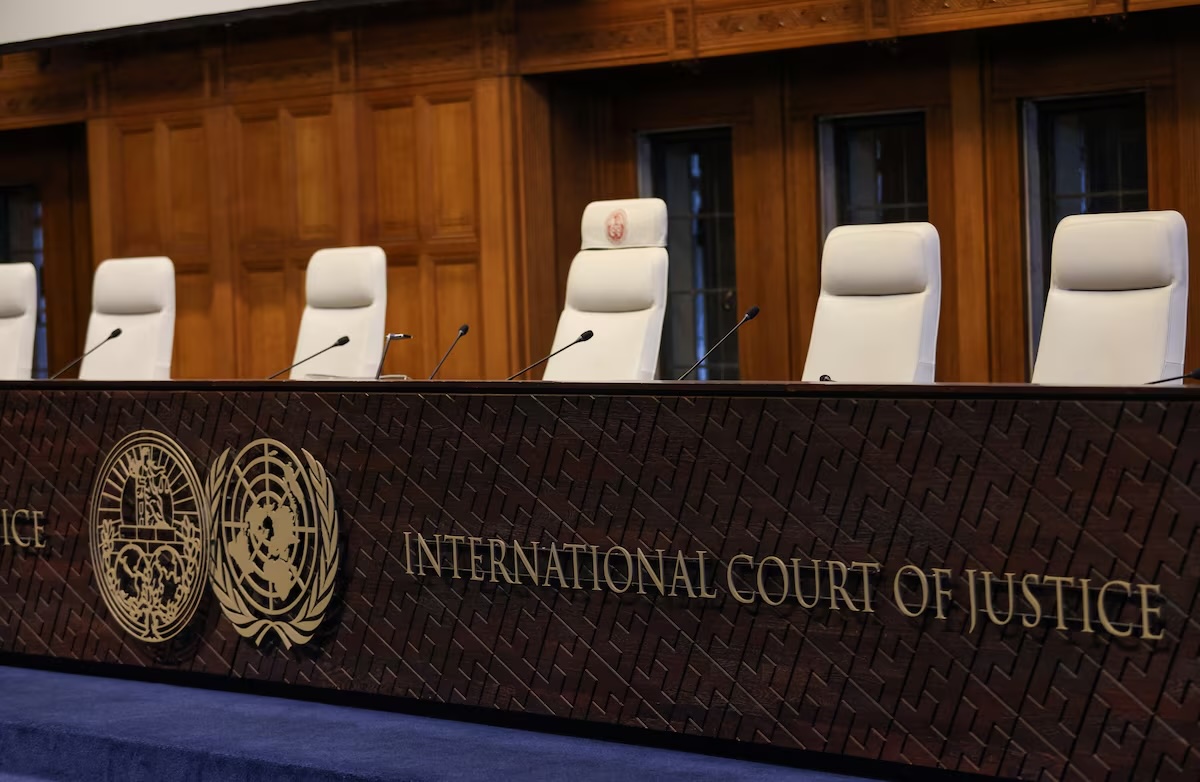
The International Court of Justice (ICJ) announced on Tuesday that it will deliver its final, legally binding judgment on Nov. 19 in the landmark genocide case brought against the state of Myanmar over its military’s 2017 scorched-earth campaign against the Rohingya minority.
The 15-judge bench of the United Nations’ principal judicial organ will commence reading the verdict at the Peace Palace in The Hague at 08:00 GMT.
The historic case was formally instituted in November 2019 by The Gambia, a predominantly Muslim West African nation acting with the backing of the 57-member Organisation of Islamic Cooperation (OIC).
The Gambia alleged that Myanmar’s military clearance operations in northern Arakan State—which drove at least 730,000 Rohingya into neighboring Bangladesh amid widespread summary executions, gang rapes, village burnings, and systematic atrocities—breached state obligations under the 1948 Convention on the Prevention and Punishment of the Crime of Genocide.
A landmark 2018 United Nations Independent International Fact-Finding Mission previously concluded that military operations in Arakan occurred with clear “genocidal intent” and recommended senior generals, led by Min Aung Hlaing, face prosecution.
Myanmar’s defense has maintained a blanket denial of genocidal actions, framing the 2017 military offensive as a legitimate counter-terrorism operation responding to coordinated insurgent raids on border police outposts by the Arakan Rohingya Salvation Army (ARSA).
Although jailed leader Aung San Suu Kyi personally defended the military before the court in December 2019, the post-2021 regime retained legal counsel to contest the proceedings, repeatedly seeking to dismiss the suit on preliminary objections before the ICJ confirmed its jurisdiction in July 2022.
The upcoming ruling represents only the third time in the 80-year history of the World Court—and the first time in more than a decade—that the tribunal will deliver a final judgment on the merits of a state-level genocide complaint, following rulings in cases involving Bosnia and Herzegovina, Serbia, and Croatia.
Because genocide carries the rigorous legal requirement of establishing dolus specialis—the specific intent to destroy, in whole or in part, a protected national, ethnic, racial, or religious group—the verdict will establish critical international legal jurisprudence.
The judgment is expected to directly influence subsequent state-responsibility litigation, notably South Africa’s ongoing case accusing Israel of genocide in the Gaza Strip.
Under the ICJ Statute, judgments on the merits are definitive, binding on the parties, and not subject to appeal, setting the stage for direct referral to the U.N. Security Council for international enforcement.
REUTERS