


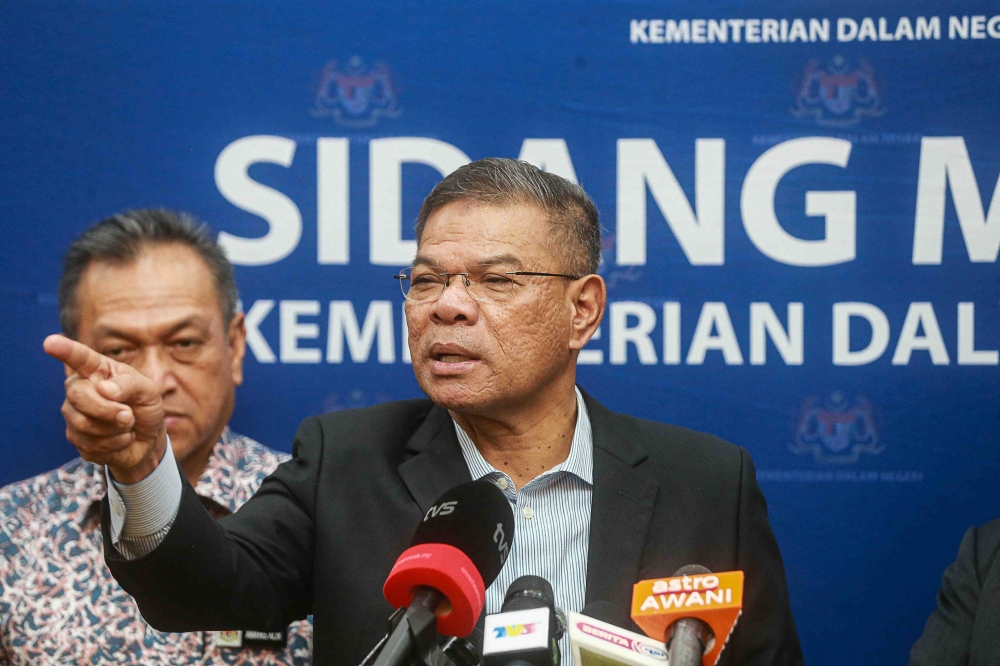
Malaysia will continue with the repatriation of 3,500 Myanmar refugees and asylum seekers through established diplomatic channels with the regime in Naypyidaw, Malaysian Home Minister Saifuddin Nasution Ismail announced on Thursday.
The decision follows a High Court ruling dismissing an application by the Malaysian Bar for an interim stay to halt the deportations pending judicial review.
“Until there is a [legal] decision to the contrary, we will continue with the repatriation. For now, the Malaysian Bar’s application for a stay has been dismissed, so we will proceed. The judicial review has been fixed for December 8,” said Saifuddin at the Home Ministry’s monthly assembly and Innovation Day celebration on Oct. 29.
He confirmed that the Home Ministry and the Foreign Ministry will continue active negotiations with regime authorities in Naypyidaw to deport a second contingent of 3,500 Myanmar nationals.
High Court Judge Norliza Othman ruled that an interim stay could not be granted before the court decides on granting leave for judicial review, though the Malaysian Bar retains the right to renew its application once the leave stage is heard.
The expedited deportation program of 5,000 Myanmar nationals has drawn intense scrutiny from the U.N. High Commissioner for Refugees (UNHCR) in Malaysia, as well as human rights groups, particularly following reports that more than 400 ethnic Rakhine returnees deported on Sept. 29 were still being detained by the military after their arrival in Yangon earlier this month.
Addressing the international backlash, Prime Minister Anwar Ibrahim defended his government’s position on Oct. 29, stating that Malaysia chose a pragmatic diplomatic path despite international condemnation.
Anwar confirmed that following high-level discussions with Myanmar regime leader Min Aung Hlaing earlier this month, he agreed to repatriate Myanmar nationals at Naypyidaw’s expense using chartered air and naval transport.
To date, approximately 10,300 Myanmar nationals have been deported from Malaysia, with an additional 3,500 scheduled for return by November.
“Their arrival has caused economic, political and social problems in certain communities, prompting some members of the public to take matters into their own hands, such as attacking their homes or forcing them out of their villages. The police are carrying out their duties and are urging the public not to take the law into their own hands. Leave it to the authorities and immigration enforcement agencies, which are conducting continuous operations,” added Saifuddin.
His remarks come as social media influencers and self-styled enforcement groups face mounting condemnation for filming, doxxing, and intimidating informal refugee schools and residential enclaves in Kuala Lumpur.
BERNAMA