


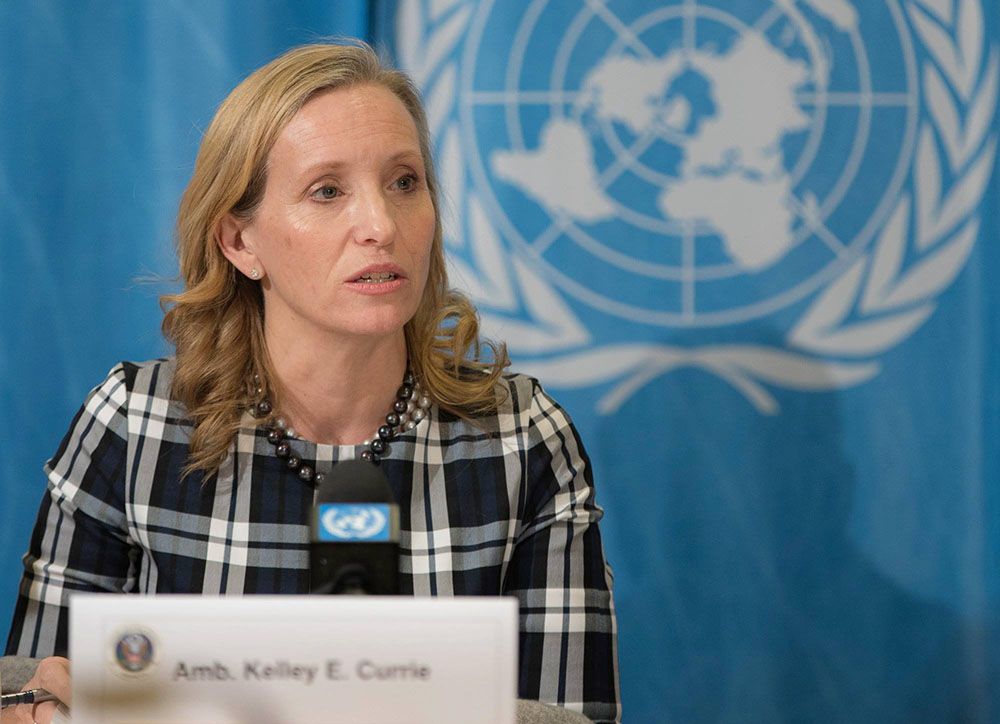
The United Nations Special Rapporteur on the situation of human rights in Myanmar, Kelley E. Currie, has warned the international community that pursuing unconditional diplomatic engagement with the regime in Naypyidaw risks legitimizing military rule while civilian bloodshed and systemic abuses continue unabated.
Addressing the 81st session of the U.N. General Assembly Third Committee Interactive Dialogue on Tuesday, Currie cautioned member states against entertaining overtures from regime leader Min Aung Hlaing.
“[Min Aung Hlaing] and his regime remain the greatest source of civilian death and suffering, instability, impoverishment, corruption, and gross violations of human rights in Myanmar. Whatever you are pursuing, it’s not going to happen with this regime,” she told the U.N. committee on Oct. 27.
Currie expressed profound disappointment that regional capitals are moving to normalize relations with the regime in Naypyidaw even as judges at the International Criminal Court (ICC) actively review an arrest warrant application against him for crimes against humanity committed against the Rohingya.
Currie called out the growing regional push to reintegrate the regime, noting that Min Aung Hlaing has conducted official visits across Association of Southeast Asian Nations (ASEAN) member states—including Laos, Thailand, Cambodia, Vietnam, and Malaysia—with Indonesia and Brunei reportedly preparing to roll out the red carpet.
The U.N. human rights expert underscored that rather than moderating its behavior, the military sharply escalated aerial bombardments, heavy artillery shelling, and scorched-earth arson against civilian infrastructure throughout the first 100 days following Min Aung Hlaing’s inauguration as president on April 10 by a pro-military parliament elected through “sham” 2025–26 polls.
She highlighted that Myanmar has now crossed a “grim milestone” of more than 100,000 conflict-related fatalities since the 2021 coup, emphasizing that the vast majority of those killed were non-combatants.
Addressing the plight of displaced populations, Currie commended Bangladesh for continuing to provide sanctuary to 1.2 million Rohingya refugees who fled military clearance operations—atrocities currently under examination in The Gambia’s genocide suit at the International Court of Justice (ICJ).
She urged international donors to sustain critical humanitarian funding to halt deteriorating living conditions across refugee camps in Cox’s Bazar and on Bhasan Char island.
Turning to domestic resistance and aid ecosystems, Currie issued an urgent appeal to reverse the steep funding shortfalls crippling Myanmar’s civil society and community-based organizations, which suffered severe cutbacks following the 2025 withdrawal of the United States Agency for International Development (USAID).
“Those organisations are doing incredible work with very little resources,” Currie stressed, urging the donor community to prioritize grassroots women’s organizations providing frontline care to survivors of conflict-related sexual violence.
Currie, a former U.S. diplomat, was appointed Special Rapporteur on human rights in Myanmar in April, succeeding Tom Andrews before formally assuming the mandate on May 1.