


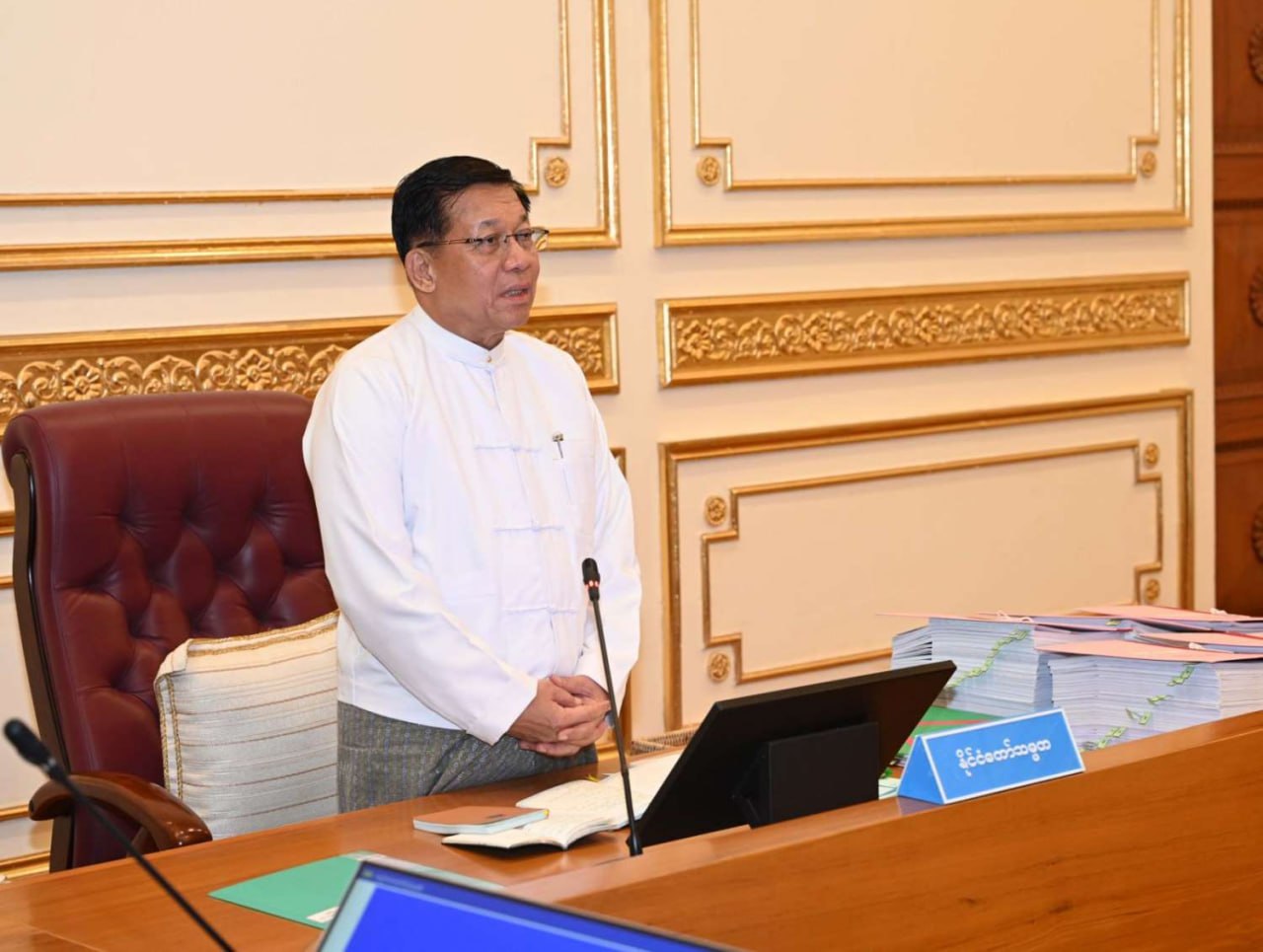
regime leader Min Aung Hlaing blamed international sanctions for Myanmar’s sluggish economic growth, stating that his administration would focus on internal solutions rather than relying on foreign grants or loans, in an address to his cabinet in Naypyidaw on Aug. 25.
The address comes as the regime attempts to manage compounding economic strain following the conclusion of its 2025–2026 election cycle.
Macroeconomic indicators and financial strain
Myanmar’s domestic economy continues to face structural vulnerabilities, supply chain bottlenecks, and severe foreign currency shortages.
| Economic Metric | Pre-Coup (2020 / Early 2021) | Current Status (2026) | Primary Catalysts |
| MMK–USD Exchange Rate | ~1,300 MMK per USD | ~4,400 MMK per USD | Foreign currency flight, central bank controls, and structural trade deficits. |
| Annual Inflation Rate | ~5.0% | 24.6% (Recorded April 2026) | Soaring transport costs, logistics bottlenecks, and energy price spikes. |
| Real GDP Growth | ~6.0% historical average | 2.0% (Projected FY2026/27) | Growth markdown by the World Bank citing Middle East fuel shocks. |
To circumvent Western sanctions targeting military-owned conglomerates—such as Myanmar Economic Holdings Limited (MEHL) and Myanma Economic Corporation (MEC)—the administration has pivoted toward alternative payment networks:
- Bilateral Currency Integration: The Central Bank of Russia integrated the Myanmar kyat (MMK) into its foreign exchange registry in August 2025, enabling direct ruble-kyat transactions.
- Regional Currency Settlement: Direct trade settlements in Chinese yuan, Thai baht, and Indian rupee have been authorized to bypass USD clearinghouses.
- Geopolitical Alliances: Establishing trade and logistics networks with non-sanctioning partners—including Russia, China, Iran, and North Korea—to maintain essential imports and equipment flows.
Expert evaluation on sanction efficacy
Economists remain divided on the long-term impact of Western sanctions against Naypyidaw:
Conversely, development economist Jared Bissinger argues that while Western sanctions cause temporary operational disruptions to the regime’s banking operations, military conglomerates continuously adapt by shifting transactions to informal channels, regional trade partners, and non-Western financial institutions.