
Thursday, July 23, 2026
Home Blog Page 10

ASEAN Special Envoy meets Myanmar ethnic armed groups in Thailand

0
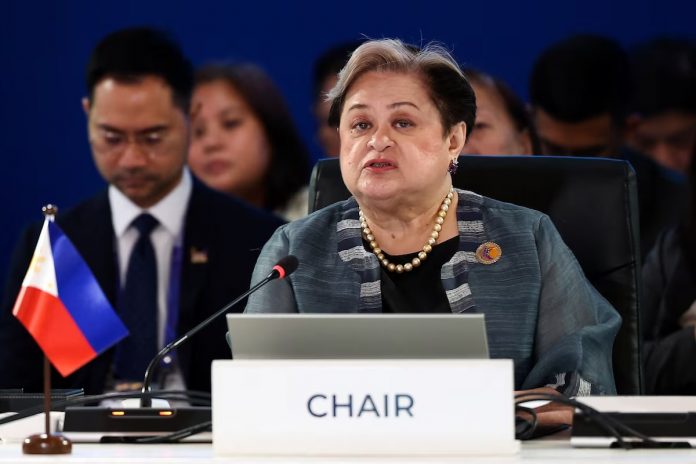
Philippine Foreign Affairs Secretary Theresa Lazaro delivers an opening statement during the Association of Southeast Asian Nations Foreign Ministers' Meeting ahead of the 48th ASEAN Summit and Related Meetings in Cebu, Philippines, on May 7. (Credit: Reuters)

ASEAN’s special envoy on Myanmar held talks with ethnic armed groups and ​a regime-backed negotiation committee in an effort to tackle a civil war, with both ‌sides expressing openness to dialogue, the Philippines said on Tuesday.

The talks took place in Thailand on Monday and followed a separate meeting a day earlier between foreign ministers of the 11-member Association of Southeast Asian Nations (ASEAN) and their Myanmar counterpart, ​their first face-to-face talks since a 2021 military coup in Myanmar that triggered nationwide conflict.

Myanmar’s regime, which seized power during a military coup on Feb. 1, 2021, has been barred from top-level ASEAN meetings over their failure to ⁠comply with its “Five-Point Consensus” peace initiative, but some members of the bloc hope Sunday’s meeting ​can lead to progress.

But some analysts have said that re-engaging with Myanmar’s pro-military administration, led by regime leader Min Aung Hlaing, could weaken ASEAN’s leverage.

Way forward on dialogue’

ASEAN 2026 Chair the Philippines Special Envoy on Myanmar Ma. Theresa P. Lazaro, the foreign minister of the Philippines, met “to discuss the way forward on an inclusive national political dialogue” with representatives of ​some of Myanmar ethnic armed groups and the regime’s National Solidarity and Peacemaking Negotiation Committee (NSPNC), according to ​a Philippine foreign ministry statement.

“All sides expressed openness to the dialogue process and emphasised the importance of constructive dialogue,” ‌it said.

Several ⁠ethnic armed groups contacted by Reuters declined to comment.

The National Unity Government (NUG), a parallel administration in exile formed by remnants of Aung San Suu Kyi’s National League for Democracy (NLD) party administration, which was ousted from government in the 2021 coup, said it was not invited and expressed concern over the talks.

“We have major questions about ​whether this meeting is ​intended to implement the ⁠ASEAN Five-Point Consensus, or if it is based on the military junta’s 100-day project and their own peace plan,” Zin Mar ​Aung, the NUG Foreign Minister, told Reuters.

After it took office in April, Myanmar’s new pro-military administration announced it ​was seeking peace ⁠talks with opposition armed groups within 100 days.

The 2021 coup led to nationwide protests against military rule that morphed into a civil war fought on multiple fronts between the armed forces and various ethnic nationality and ⁠militia groups. ​An estimated 100,000 people have been killed 3.6 million displaced.

Min ​Aung Hlaing assumed the presidency on April 10 after being appointed by a parliament dominated by a pro-military party following a one-sided election earlier in the year ​that human rights groups and Western governments called a sham.

REUTERS
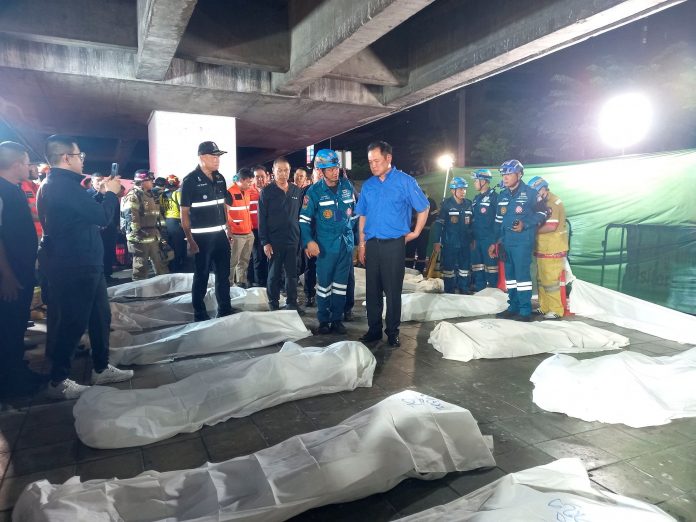
Death toll from a Bangkok bar blaze rises to 30, dozens remain in hospital

0
Thailand's Prime Minister Anutin Charnvirakul stands near covered bodies at the site of a deadly fire at a pub in Bangkok, Thailand, on July 13, 2026. (Credit: Reuters)

The death toll from a huge fire in a Bangkok music bar has increased to 30, officials said Tuesday, as the investigation into the blaze proceeded while relatives of the victims took on the grim task of identifying their loved ones and retrieving their bodies.

More than 70 people were injured in the Sunday night tragedy, with 24 of them still in critical condition, according to a statement by the Bangkok Metropolitan Administration.

Initial details about the victims, which have not been updated since Monday, said 18 of the dead were women and nine were men, all Thai except one bar employee from Laos. The injured included 41 women and 34 men.

The blaze at the Rong Beer Na Ladprao bar, the city’s deadliest in 17 years, broke out shortly before midnight in a northern part of the Thai capital. Firefighters needed half an hour to bring it under control.

The bar, which in Thai calls itself a brewery or beer hall, claimed to accommodate as many as 600 customers. It was not clear how many were present Sunday night.

An investigation into the cause of the fire and whether the bar was following safety regulations is ongoing. Most of the people who were killed were found trapped in windowless bathrooms where they may have sought to escape the flames, police said.

Bangkok governor orders safety survey and better enforcement

Bangkok Governor Chadchart Sittipunt said Tuesday he has ordered the city’s administration to conduct a sweeping survey of such establishments to assess risks. The city will also step up enforcement of existing laws to improve safety standards, he said.

Former patrons of the bar and other mourners visited the site Tuesday, adding to the growing pile of flowers leaning on the guardrails cordoning off the location of the blaze.

Handwritten messages in Thai and other languages, including Korean, were left alongside white flowers, expressing condolences to the victims.

Debris from the bar, including melted musical instruments and blackened chairs, lay scattered along the sidewalk, moved there Monday by officials investigating the cause of the fire.

University student Thanakon Phoklang said he was passing by and wanted to pay his respects.

“It was regrettable,” he said. “It’s impossible to feel anything else.”

The public clamor for answers and action concerning the tragedy has included relatives of the dead who went to Bangkok’s Institute of Forensic Medicine to collect their bodies on Tuesday.

Families weep as they retrieve bodies

Gathering at a loading area for vehicles, family members wept as they walked with coffins that were then loaded into an ambulance and taken away.

Namthip Tubsuk, a mother of two and teacher nicknamed “Ice,” died in the fire, according to her aunt Jittiya Phaiklaw, who focused on reports alleging exit doors had been locked.

“They shouldn’t have locked the doors,” Jittiya said. “If they were afraid the customers would get away, they could have had the security guard staff minding them away.

Jutatip Surakumhang, a friend of Namthip, said an apology was owed.

“I feel there must be someone coming out to apologize to everyone who died. There were deaths deserving an apology. It was heartbreaking,” Jutatip said.

The bar issued an apology and condolences Monday on Facebook and vowed to cooperate with investigations into the fire.

The relatives and friends of another deceased victim, 35-year-old Bangkok native Top Sarobol, also came to the forensic institute to accompany his body. They wept as his coffin was brought out and loaded into the van to be returned home.

“For his family, it is hard to accept it. His grandmother is old. She always said let her grandson cremate her,” his friend Nuttakarn Sevoy said. “But the reality is opposite of what we wanted.”

Speculation about the causes of the tragedy has been rampant but mostly unconfirmed, while experts have drawn general conclusions about fire safety in Thailand.

Engineering expert suggests problems should be probed

On Monday, the president of the Thailand Structural Engineers Association, Amorn Pimanmas, told reporters outside the bar that, while he had not inspected the venue, he observed some risk factors that could worsen fire hazards.

He said the building is enclosed, has low ceilings and may have used foam as decorative materials, without adequate flame-retardant treatment.

Combined with limited air ventilation, smoke would accumulate quickly, he said, creating toxic air that could be the main cause of death for many victims.

He also noted that officials said the bar was licensed as a restaurant with a live music venue rather than an entertainment venue because it was located outside the designated zoning for such businesses.

Amorn said that would exclude it from the stricter fire safety requirements for entertainment venues.

“There must be some kind of revolution regarding fire safety procedures, and I think law enforcement is also very important,” he said.

“It’s not that we don’t have the law, but it’s the problem of how the law could be strictly enforced from now on. I think the government should answer this question.”

AP

Myanmar filmmaker Aung Phyoe wins top prize at 60th Karlovy Vary Film Festival for ‘Fruit Gathering’

0
Myanmar film director Aung Phyoe on stage with co-producers of his award-winning film Fruit Gathering, which won a Crystal Globe Award at the 60th Karlovy Vary International Film Festival in Czech Republic, on July 11. (Credit: Karlovy Vary International Film Festival)

Myanmar filmmaker Aung Phyoe has made cinematic history, capturing the prestigious Grand Prix – Crystal Globe for Best Film at the 60th Karlovy Vary International Film Festival (KVIFF) for his debut feature, Fruit Gathering (Thit-thee Khu).

The award, which carries a $25,000 USD cash prize shared equally between the director and producers, was presented during the festival’s closing ceremony on July 11. The milestone marks the first time a film from Myanmar has ever competed in—let alone won—the top category at the historic European festival.

A quiet tale of queer longing

Fruit Gathering is a 97-minute romantic drama set against the backdrop of contemporary Yangon’s industrial zone. The film explores a subtle, slow-burning, same-sex relationship between two young female garment workers navigating grueling workdays and societal repression.

Starring Nandar Myat Aung as the reserved San Kyi and Nandar Myint Lwin as the pragmatic Theint Theint Oo, the film abandons conventional dramatic structures in favor of quiet observation.

The jury praised the film, noting that it “begins as a lush and meditative portrait of work and friendship before morphing, unexpectedly and organically, into a harrowing drama of obsession and queer desire.”

Accepting the award, writer-director Aung Phyoe expressed humble gratitude. “It’s my first film, my first major festival, and my first award,” he told the audience. “I don’t have much confidence in myself, but my producers believed in me; I’d like to thank them and the entire crew.”

The journey to the Crystal Globe

The film is a co-production between Myanmar, the Czech Republic, and France. It was spearheaded by producers Thu Thu Shein and Thaiddhi—founders of the Yangon-based Third Floor Productions.

Thaiddhi also served as the film’s director of photography. The European co-producers include Czech filmmakers Vít Janeček and Michal Mocňák, alongside France’s Claire Marquet.

Aung Phyoe, who previously directed three acclaimed short films (Evening Clouds, Cobalt Blue, and Seasonal Rain), has spent years developing Fruit Gathering.

The project first gained traction by winning a Jury Award at the Myanmar Script Fund in 2017 and was later showcased at the 2020 Locarno Film Festival’s Open Doors Co-Production platform in Switzerland.

A historic festival edition

Founded in 1946, the Karlovy Vary International Film Festival is one of the world’s longest-running and most revered cinema events. The 60th edition, held July 3-11, featured over 130 feature-length films from around the globe.

While Fruit Gathering took the top prize, other notable winners included Denmark’s The Guest (Special Jury Prize and Best Director for Mads Mengel) and Swiss actress Anna Schinz, who took home the Best Actress award for A Happy Family.

The 61st edition of KVIFF is scheduled to take place from July 2 to 10, 2027.

ASEAN Special Envoy meets with Myanmar armed groups after regime Foreign Minister

0
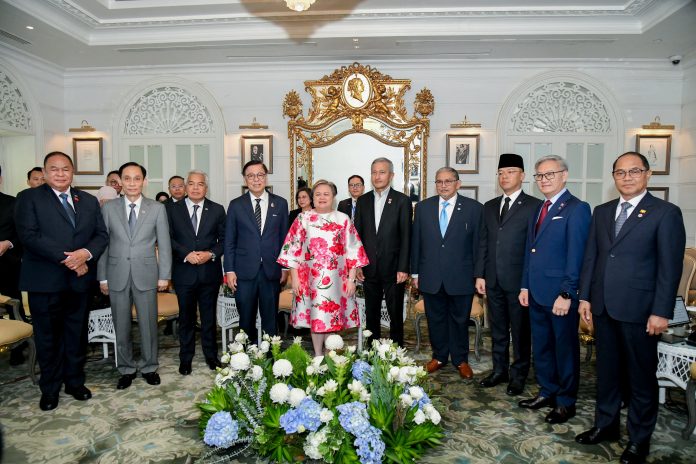
ASEAN 2026 Chair the Philippines’ Special Envoy on Myanmar Ma. Theresa P. Lazaro with ASEAN Foreign Ministers, including Myanmar’s regime Foreign Minister Tin Maung Swe, at a meeting in Bangkok, Thailand, on July 12. (Credit: Thailand Ministry of Foreign Affairs)

The Philippines’ Special Envoy on Myanmar, Ma. Theresa P. Lazaro, has held undisclosed talks with several of Myanmar’s Ethnic Armed Organizations (EAOs) and the military regime’s peacemaking body.

The meetings, held in Thailand, follow a highly controversial decision by the Association of Southeast Asian Nations (ASEAN) to break a five-year diplomatic freeze and re-engage directly with a senior regime official.

Secret talks in Chon Buri

On July 13, Lazaro—acting as the representative for the ASEAN 2026 Chair—met with delegates from the regime’s National Solidarity and Peacemaking Negotiation Committee (NSPNC) and various EAOs in Chon Buri, located 126 km (78 miles) southeast of Bangkok.

She was joined by Thailand’s Foreign Minister Sihasak Phuangketkeow. While neither official publicly disclosed the participating groups, anonymous sources confirmed to DVB that delegates from several prominent armed organizations attended, including:

  • Karen National Union (KNU)
  • Karenni National Progressive Party (KNPP)
  • Chin National Front (CNF)
  • Restoration Council of Shan State (RCSS)
  • New Mon State Party (NMSP)

The KNU and CNF notably withdrew from the regime’s Nationwide Ceasefire Agreement (NCA) following the February 2021 military coup, while the KNPP has never signed the pact.

Both the Restoration Council of Shan State (RCSS) and the New Mon State Party (NMSP) are pro-regime armed groups that abide by the NCA.

Breaking the diplomatic freeze

The Chon Buri talks occurred just one day after a polarizing informal summit in Bangkok. On July 12, 10 ASEAN foreign ministers sat down with the Myanmar regime’s Foreign Affairs Minister, Tin Maung Swe.

The Bangkok meeting marked the first face-to-face, high-level engagement between ASEAN and the regime since April 2021.

International and regional human rights experts have heavily criticized the meeting, warning it risks legitimizing the junta despite its complete failure to implement the ASEAN Five-Point Consensus.

Regime leader Min Aung Hlaing agreed to the peace plan in 2021, which mandates an immediate end to violence, the release of political prisoners, and inclusive dialogue among all stakeholders.

The status of Aung San Suu Kyi

A core tenet of the Five-Point Consensus is inclusive dialogue, yet the regime continues to isolate ousted civilian leaders.

On June 30, Naypyidaw formally rejected Lazaro’s request to meet with jailed State Counsellor Aung San Suu Kyi.

During a press briefing following the Bangkok summit, Lazaro revealed that Tin Maung Swe dismissed the denial by claiming the regime views Suu Kyi as “a sister and therefore we will take care of her.”

Thai Foreign Minister Sihasak countered the regime’s narrative, stating that granting the ASEAN Special Envoy direct access to Suu Kyi is essential to verify the regime’s claims regarding her health and safety.

The diplomatic progress and findings from these meetings are expected to be reported at the upcoming ASEAN summit in Manila this November.

Bangladesh forms security-heavy committee to tackle Rohingya repatriation within 90 days

0
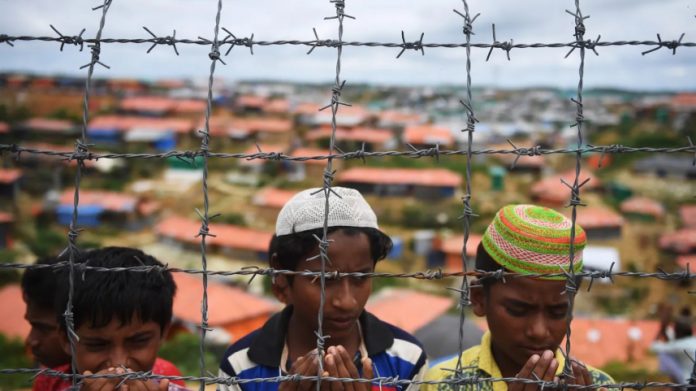
Three Rohingya males pray near the fence at the edge of the Kutupalong refugee camp in Cox's Bazar, Bangladesh, in an undated photo. (Credit: AFP)

Bangladesh has established an 11-member national committee headed by newly-elected Prime Minister Tarique Rahman to formulate a comprehensive strategy for Rohingya repatriation, the Cabinet Division announced on Sunday.

The committee must prepare a national action plan within 90 days, setting priorities and coordinating activities across ministries, law enforcement and intelligence agencies, the Daily Times of Bangladesh reported.

The body’s composition, dominated by military, police and intelligence officials, signals a shift towards prioritising security concerns over purely humanitarian approaches, analysts say.

The announcement came less than two weeks after Rahman’s visit to Beijing, where discussions with Chinese leaders prominently featured the Rohingya crisis.

The Principal Staff Officer of the Armed Forces Division will serve as chief coordinator, while the director general of the Directorate General of Forces Intelligence (DGFI) has been appointed member-secretary.

Other members include the home and foreign affairs ministers, advisers for finance, planning and defence, the inspector general of police, and the directors general of National Security Intelligence (NSI), Border Guard Bangladesh (BGB) and the Bangladesh Coast Guard.

The DGFI will provide secretarial and administrative support to the committee.

The foreign secretary’s absence from the committee has drawn attention, though some observers suggest the government will likely create separate mechanisms to ensure diplomatic coordination.

The committee’s security-heavy makeup reflects concerns about instability in Myanmar’s Arakan State spilling into Bangladesh, particularly Cox’s Bazar district.

Security agencies are monitoring risks of extremism within refugee camps, cross-border infiltration, arms smuggling, drug trafficking and human trafficking.

Officials note that narcotics and illegal weapons flows have become increasingly intertwined with the conflict in Myanmar, creating additional challenges for Bangladesh’s border security.

Analysts identify two broad areas of concern driving the approach: domestic security and regional stability, with the prolonged nature of the refugee crisis requiring enhanced state capacity alongside continued diplomatic efforts.

Former principal staff officer of the Armed Forces Division Mahfuzur Rahman described the committee’s formation as demonstrating the government’s top priority accorded to the Rohingya crisis.

“The appointment of the Principal Staff Officer as chief coordinator will improve coordination among government agencies. On many occasions, actors from Myanmar side were unsure whom to engage with. This arrangement should remove that ambiguity,” he told the Daily Times of Bangladesh.

He argued that economic considerations should also feature in Bangladesh’s long-term strategy, noting that improved livelihoods in Arakan State would increase prospects for voluntary refugee returns.

Mahfuzur Rahman also recommended including civil society and academic experts involved in the Rohingya crisis studies to add inclusive dimensions to government efforts.

HRW demands urgent action as monsoon landslides kill 17 Rohingya in Bangladesh camps

0
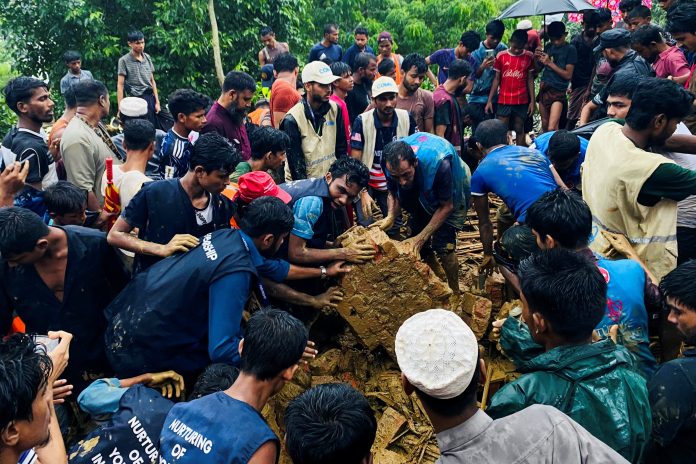
Rohingya refugees works to rescue victims from a landslide spot at a Rohingya Refugee Camp following continuous torrential rain, in Cox’s Bazar, Bangladesh, on July 8. (Credit: Reuters)

Human Rights Watch (HRW) has demanded immediate action following deadly landslides in Bangladesh’s Cox’s Bazar refugee camps that claimed at least 17 Rohingya lives and forced more than 3,000 from their homes in July.

Bangladesh has sheltered over one million Rohingya refugees for nearly a decade, with growing families packed into bamboo and tarpaulin structures on steep, deforested slopes that become death traps during monsoon season, HRW stated.

The U.N. High Commissioner for Refugees (UNHCR) has repeatedly cautioned about fatalities and injuries in the overcrowded settlements from cyclones, flooding, and earth movements.

HRW called on Bangladesh authorities, the U.N., and international donors to address severe overcrowding and restore funding for embankments, drainage systems, access roads, and emergency relocation sites.

“Every monsoon is becoming increasingly deadly for Rohingya refugees in Bangladesh, with denuded hills sliding away under makeshift structures, as the funding to buttress the camps has dried up,” said Meenakshi Ganguly, deputy Asia director at HRW.

“These are not simply natural disasters, but a predictable outcome of policies that put refugees’ lives at risk,” she said.

HRW conducted interviews with nine individuals, including five Rohingya refugees affected by the landslides and four humanitarian workers engaged in emergency response efforts.

A water, sanitation, and hygiene civil engineer told HRW the settlement design was flawed from the beginning, with camps constructed by cutting into hillsides without proper drainage systems. Funding reductions have prevented sustainable landslide prevention measures, while Bangladesh prohibits permanent construction in the camps.

The Rohingya Coordination Platform reported 286 weather-related incidents across Cox’s Bazar camps between 4 and 9 July, affecting 26,119 refugees.

These incidents included 95 landslides that displaced 4,307 people, partially damaged 2,809 shelters, and completely destroyed 13 structures.

Learning centres, toilet facilities, tap-water points, retaining walls, pathways, stairways, bridges, and roads also sustained damage.

Bangladesh authorities relocated more than 1,000 refugees from high-risk zones, though many refused to abandon their homes.

Refugees fear leaving their shelters due to intense demand for housing, aid workers reported. Emergency relocation remains difficult because camps lack adequate space, and temporary sites such as learning centres often provide insufficient privacy and services.

At least 152,000 Rohingya refugees have reached Cox’s Bazar since fighting between the Myanmar military and the Arakan Army (AA) resumed in November 2023.

The Shelter and Camp Coordination and Camp Management appeal stands at just 42 per cent funded, with $73.9 USD million still required, while the disaster risk management plan faces a $23.2 million USD shortfall.

Newly arrived refugees are unable to receive formal shelter allocations and must rent or purchase unsafe spaces, HRW stated.

One man who arrived in Bangladesh in August 2024 lost two daughters and two grandchildren on July 6 when the hillside collapsed beneath the makeshift shelter he had built after being denied housing by aid organisations.

“I didn’t know the hill would collapse like this,” he said.

The initial 2025 Joint Response Plan anticipated 50,000 new arrivals, but three times that number have now entered the camps, rendering planning figures inadequate.

Contact