
Thursday, July 23, 2026
Home Blog Page 67

Aung San Suu Kyi to meet with her legal team this weekend

0
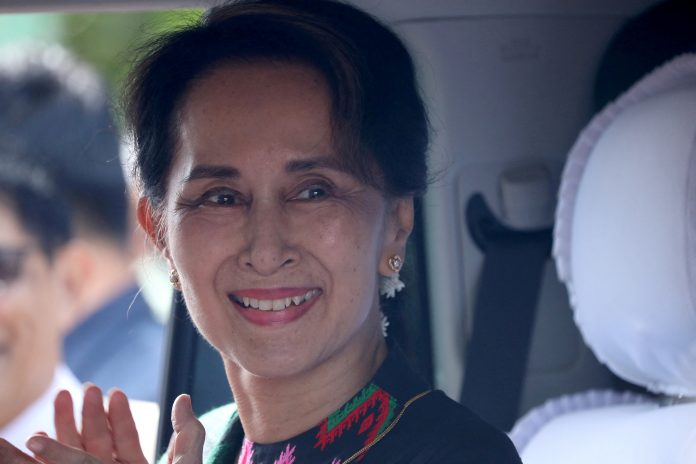
Myanmar's State Counsellor Aung San Suu Kyi arrives at a school in Kawhmu Township, Yangon Region, on July 18, 2019. (Credit: Reuters)

The legal team ​of jailed Myanmar State Counsellor Aung San Suu Kyi plans to meet with her this weekend ‌after she was transferred to house arrest in the capital Naypyidaw by the military-backed administration, a representative said on Friday.

Nobel laureate Aung San Suu Kyi has been detained since the military ousted her civilian government in a coup in February 2021. The coup triggered a deadly ​civil war that has engulfed much of the impoverished Southeast Asian nation, and her whereabouts had been ​unclear.

“Daw Aung San Suu Kyi is currently still in Naypyidaw,” a member of her legal ⁠team told Reuters, using an honorific for the veteran politician, and confirming that she had been moved to ​house arrest on April 30.

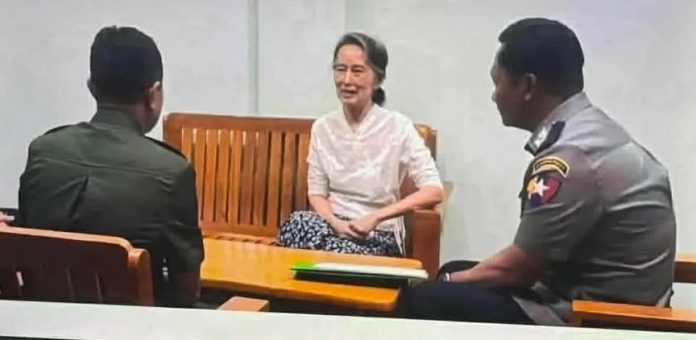
Regime media reported she would be moved to house arrest, but did not say ​where. It also broadcast a photograph of Aung San Suu Kyi, seated on a wooden bench with two uniformed personnel, the first public image of her in years.

Suu Kyi’s legal team planned to meet the 80-year-old on Sunday to discuss her position and bring ​her some supplies.

“The situation has shifted. I think it will no longer be just a standard prison visit, but ​rather a meeting where the legal team will go and discuss matters with her,” the legal representative said.

After a marathon run ‌of secret trials ⁠following the 2021 coup, Suu Kyi was sentenced to 33 years after she was convicted of charges ranging from corruption and inciting election fraud to violating state secrecy rules.

Her allies maintain the charges were politically motivated and aimed at sidelining her.

The sentence was later reduced to 27 years, and then by a sixth in a Myanmar New Year ​amnesty on April 17 ​that freed her ally and ⁠co-defendant President Win Myint.

Her sentence was reduced by a further one-sixth on April 30 as part of a wider amnesty of prisoners in Myanmar’s jails, before the ​move to house arrest was announced.

Min Aung Hlaing, who led the coup and was inaugurated as Myanmar’s president on April 10, has ​faced persistent international ⁠pressure to release political detainees since a recent election, including from the Association of Southeast Asian Nations (ASEAN).

He is seeking to reengage with the 11-member ASEAN regional bloc after it banned Myanmar’s senior generals from its summits as a result of the coup.

Suu Kyi, the daughter of the country’s ⁠independence hero ​General Aung San, was held under house arrest for a total ​of 15 years under a previous junta at her family residence on Yangon’s Inya Lake, where she famously gave impassioned speeches to crowds of ​supporters over the metal gates of the property.

REUTERS
Understanding Myanmar’s Energy Crisis [AUDIO]

0
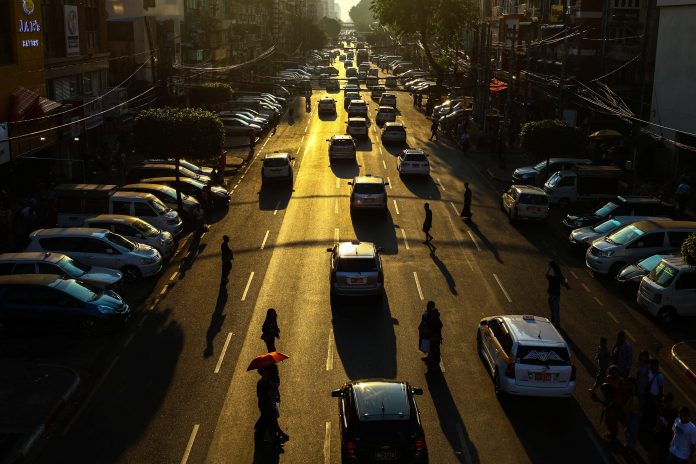
People and cars along a street at dusk in Yangon on March 27. (Credit: Reuters)

Jared Bissinger, a development economist and visiting fellow with the Myanmar Studies Programme at the ISEAS – Yusof Ishak Institute, joins us in the DVB Newsroom to discuss how the global energy crisis is impacting Myanmar. Read more.

Understanding Myanmar’s Energy Crisis [VIDEO]

0
Jared Bissinger, a development economist and visiting fellow with the Myanmar Studies Programme at the ISEAS – Yusof Ishak Institute, joined us in the DVB Newsroom on April 21. (Credit: Fulcrum)

Jared Bissinger, a development economist and visiting fellow with the Myanmar Studies Programme at the ISEAS – Yusof Ishak Institute, joins us in the DVB Newsroom to discuss how the global energy crisis is impacting Myanmar. Read more.

Myanmar junta revokes licenses of 3 media outlets in martial law clampdown

0
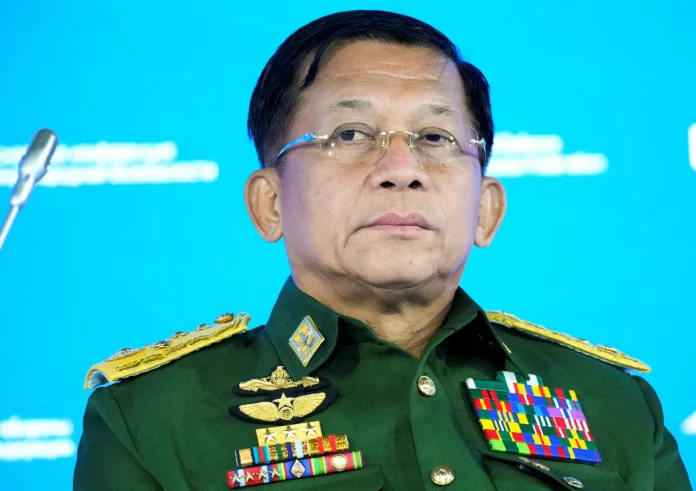
Myanmar President and former military chief Min Aung Hlaing in Moscow on June 23, 2021. The junta has revoked the publication licenses of three more local news outlets. (Credit: AFP)

Bangkok, April 30, 2026—Myanmar’s junta must restore the recently revoked publication licenses of three local news agencies — the Khonumthung Media Group, Chin World, and Myatmaukkhit News Agency — and cease its persecution of independent media groups, the Committee to Protect Journalists said Thursday.

The military bans, effective on April 9 and formally announced on April 24, were issued for violations of Section 8(b) of the Printing and Publishing Enterprise Law, with authorities claiming the outlets published content harmful to national security, the rule of law, and public peace, according to news reports.

The bans, imposed coincident with the declaration of a state of emergency and martial law across 60 townships, including in Chin state, prohibit the news outlets from publishing or broadcasting on any media platform or technology, the reports said.

“Revoking the licenses of outlets serving Chin state, one of Myanmar’s most conflict-affected regions, shows the junta’s contempt for both press freedom and the public’s right to information,” said Shawn Crispin, CPJ’s senior Southeast Asia representative.

“Myanmar’s military cannot begin to claim a democratic transition while systematically shutting down and harassing the free press.”

Several journalists associated with the three banned outlets have gone into hiding to avoid possible arrest or harassment, according to the Independent Myanmar Journalists Association, an independent press group that communicated with CPJ via messaging app.

Myanmar’s junta has revoked the licenses of several independent news outlets since seizing power and suspending democracy in a 2021 coup. The crackdown has driven many media groups to move their news operations into exile while relying on underground reporters who have been targeted for harassment and imprisonment.

Myanmar currently holds at least 18 journalists behind bars, according to CPJ data, and ranked second worldwide on CPJ’s annual prison census conducted on December 1, 2025.

The Ministry of Information did not reply to CPJ’s emailed request for comment.

CPJ

Aung San Suu Kyi moved to house arrest following sentence reduction in Myanmar amnesty, regime reports

0
An image shared by regime media on April 30 purportedly showing jailed State Counsellor Aung San Suu Kyi, marking only the second time Naypyidaw has released an image of her since she was detained during the military coup on Feb. 1, 2021. No further details were provided. (Credit: Regime media)

Aung San Suu Kyi moved to house arrest after sentence reduced

Regime media reported on Thursday that jailed State Counsellor Aung San Suu Kyi will be transferred from Naypyidaw Prison to house arrest—at an undisclosed location–to serve the remainder of her 18-year sentence to mark the Full Moon Day of Kason. Her 22-year sentence was reduced by one-sixth to 18 years in an amnesty announced for 1,519 prisoners, including 11 foreigners, on April 30.

“This is not a human rights improvement. Reducing her sentence is not freeing her. She remains a hostage. If she is alive, show proof of life,” Kim Aris, Aung San Suu Kyi’s son, stated in a press release on April 30. Aris is demanding that Min Aung Hlaing, who was inaugurated as Burma’s president by a pro-military parliament on April 10, provide independent verification that Aung San Suu Kyi is alive and well

Global “Proof of Life” rallies were held in Tokyo, Japan on Wednesday, in London, U.K., on Tuesday, in Melbourne, Australia, and Ulsan, South Korea, on Sunday, as well as in Vancouver, Canada on April 25. Min Aung Hlaing announced on April 30 that all remaining prison sentences would be reduced by one-sixth. He reduced Aung San Suu Kyi’s sentence by one-sixth on April 17 after releasing President Win Myint from prison. Read more

Military counteroffensive reaches Sagaing Region’s Indaw

The People’s Defence Force (PDF) in Sagaing Region’s Indaw Township told DVB that regime forces entered the town on Thursday after regaining control of Nabar village, four miles (6 km) east of Indaw, and the road leading into Indaw on Wednesday. Indaw, located 209 miles (336 km) north of the Sagaing Region capital Monywa, was seized by the Kachin Independence Army (KIA) and the PDF on April 7, 2025.

An Indaw resident told DVB that regime forces didn’t harm any civilians or burn down any homes upon entering the town after departing from the Light Infantry Battalion (LIB) 309 in Katha Township on April 21. Regime forces recaptured Tigyaing Township from resistance forces on March 26, according to the PDF. Sagaing Region’s Katha and Tigyaing are located 16-42 miles (25-67 km) east and south of Indaw.

Indaw sits at a road and rail junction connecting to the Kachin State capital Myitkyina, where the regime’s Northern Regional Military Command (RMC) headquarters is located. Zin Yaw, a former soldier who joined the Civil Disobedience Movement (CDM) after the 2021 coup, told DVB that Indaw is a “vital” logistics hub to Kachin’s Mohnyin, Mogaung and Myitkyina towns, which are under regime control. 

Chinese Foreign Minister Wang Yi meets Min Aung Hlaing, on the last leg of his regional tour, in Naypyidaw on April 25. (Credit: Regime)

Regime regains more territory lost to resistance since 2021

A little more than a year ago, the military was on the back foot in the civil war, pushed out of great swaths of the country’s north in Shan and Kachin states by an alliance of ethnic armed groups, and forced into defensive action around the rest of the country by other armed groups and resistance forces. Today the picture has changed.

With its ranks swollen by an estimated 110,000 new military conscripts since the regime enforced the conscription law on Feb. 10, 2024, the military has reversed some of its losses and appears poised to continue with its counteroffensive, while some resistance groups have left the fight and infighting and supply issues have weakened others.

“I think we’re nearing a crescendo here where the [military] is going to reassert itself and the resistance movement is going to peter out,” said Morgan Michaels, a Singapore-based analyst with the International Institute of Strategic Studies (IISS) Myanmar Conflict Map project, adding that if the resistance to the 2021 coup stumbles, the conflict is not close to being over. Read more

News by Region

CHIN—Residents of Kanpelet Township told DVB that nine civilians were killed by airstrikes carried out by the Burma Air Force near Monechaung bridge in Kyindwe town on Wednesday. Kanpelet, located 160 miles (257 km) south of the state capital Hakha, was seized by the Chin Brotherhood on Dec. 22

An unknown number of civilians were injured during the airstrikes, residents told DVB. Regime forces launched a counteroffensive in Kyindwe following the recapture of Falam Township on April 25. Falam is located 233 miles (375 km) south of Kanpelet and 41 miles (66 km) north of the state capital Hakha. 

KAREN—Residents of Myawaddy Township told DVB that the regime warned that its Infantry Battalion 275 will disarm and prosecute anyone under the Weapons Law, which was enacted in 2023, and carries a 5-10 year sentence. Myawaddy is located 81 miles (130 km) east of the state capital Hpa-An.

Residents told DVB that the pro-regime Border Guard Force (BGF) and Democratic Karen Benevolent Army (DKBA) have not been seen carrying firearms in public since the warning was issued on April 23. The KNU/KNLA PC told DVB that the warning was issued for security reasons.

SAGAING—Residents of Pale, Yinmabin, Salingyi, and Kani townships told DVB that thousands fled their homes in anticipation of a regime counteroffensive which arrived in Kani on Tuesday. The four towns are located 27-39 (43-62 km) southwest, west and north of the region’s capital Monywa.

A Kani resident told DVB that she had to cross the Chindwin River to escape attacks by four regime columns arriving from the Northwestern RMC headquarters in Monywa. Residents of Yinmabin told DVB that regime forces have detained six civilians for unknown reasons this month.

(Exchange rate: $1 USD = 4,240 MMK) 

Stay up-to-date with the latest on #WhatsHappeninginMyanmar by subscribing for free to the DVB English News Daily Briefing newsletter.

Myanmar’s detained leader Aung San Suu Kyi moved to house arrest

0
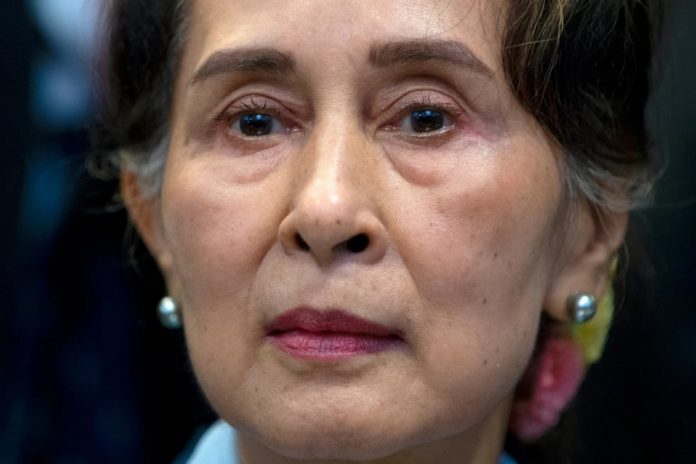
Aung San Suu Kyi represents Myanmar at the International Court of Justice in The Hague, Netherlands, on Dec. 11, 2019. (Credit: AP)

Myanmar’s jailed State Counsellor Aung San Suu Kyi has been moved from prison to house arrest, regime media reported on Thursday.

Myanmar’s military information office confirmed the news through a text message to the press.

Accompanying the announcement was a photo of the 80-year-old leader dressed in a traditional white blouse and skirt.

She is seen sitting on a wooden bench, behind a low table facing two unidentified men, one in a police uniform and the other wearing another kind of uniform. The photo was also displayed on regime TV broadcast, but it is not clear when or where it was taken.

Suu Kyi has been in detention since Feb. 1, 2021, when the army seized power from her elected government. She has not been seen publicly since then, and the last official photo showing her was released on May 24, 2021, showing her in court.

Earlier Thursday, authorities had announced her prison sentence was being reduced as part of a prisoner amnesty marking a Buddhist religious holiday, the Full Moon day of “Kason,” known as Buddha’s Birthday and Demise.

It covered 1,519 prisoners, including 11 foreigners, with the sentences of convicts remaining in prison cut by one-sixth.

Suu Kyi was originally sentenced to 33 years in prison in late 2022 for several offenses that her supporters and rights groups described as attempts to discredit her and legitimize the army takeover that removed her from office, as well as to prevent her return to politics.

Thursday’s amnesty, the second applied to her in recent weeks, would bring her sentence down to 18 years, with more than 13 years left to serve according to the calculation.

The message announcing her transfer says she was moved from the main prison in Myanmar’s capital Naypyidaw to house arrest, with the action “made to celebrate Buddha Day, to show humanitarian concern, and to demonstrate the kindness of the state.”

It does not specify her exact location but says that according to the law on designating a place of imprisonment “she will now serve the remainder of her sentence at a specific home instead of in prison.”

The amnesties come after Min Aung Hlaing was sworn into office as president on April 10 following an election that critics say was neither free nor fair and was orchestrated to maintain the military’s tight grip on power.

In his inauguration speech, he said his pro-military administration would grant amnesties aimed at promoting social reconciliation, justice and peace. Actions including the amnesties and Suu Kyi’s transfer are widely seen as an effort to burnish his image.

U.N. Secretary-General António Guterres appreciates Suu Kyi’s movement from prison to house arrest, calling it “a meaningful step toward conditions conducive to a credible political process,” his spokesperson said on April 30.

The U.N. chief reiterates his call for the swift release of all political prisoners, U.N. spokesperson Stéphane Dujarric said, stressing that this is “a fundamental step” toward a political process and solution that “must be based on an immediate cessation of violence and a genuine commitment to inclusive dialogue.”

Information about Suu Kyi’s condition has been tightly controlled. Reports in 2024 and 2025 indicated declining health, including low blood pressure, dizziness and heart problems, but these claims could not be independently verified.

Her legal team was allowed to meet her in person after December 2022.

Kim Aris, her younger son living in London, and Myanmar democracy activists launched an international online campaign named “Proof of Life” to demand for evidence that she is still alive and well-being, following the last mass amnesty on April 17.

The 2021 army takeover triggered massive public resistance that was brutally suppressed, triggering a bloody civil war that has killed thousands of people.

According to the Assistance Association for Political Prisoners (AAPP), a rights monitoring organization, 22,047 people had been detained for political reasons since the army takeover.

Suu Kyi, the daughter of Myanmar’s martyred independence hero General Aung San, spent almost 15 years as a political prisoner under house arrest between 1989 and 2010.

Her tough stand against military rule in Myanmar turned her into a symbol of nonviolent struggle for democracy, and won her the 1991 Nobel Peace Prize.

AP

Contact