

Dr. Moe, a mental health practitioner and counsellor whose work focuses on trauma-informed care, joins us in the DVB Newsroom to discuss mental health for conflict-affected people in Myanmar, as well as psycho-education for adolescents, youths, and the wider public.
Myanmar’s Hidden Crisis: Surviving War and Trauma
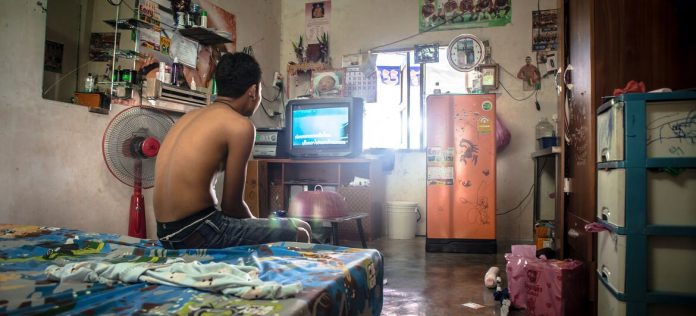
Over 500 Rohingya feared dead in dual boat tragedies; Rights group blames Arakan Army
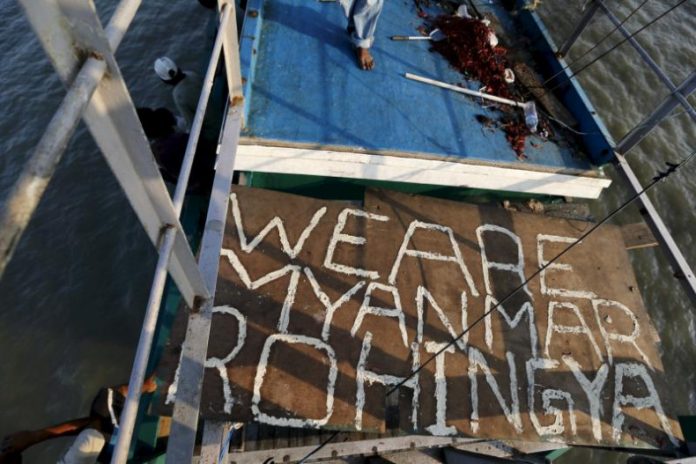
More than 500 Rohingya men, women, and children are feared dead after two boats capsized off the coast of Myanmar, a catastrophic loss of life that a prominent rights organization says was entirely preventable and tied directly to the region’s ongoing crisis.
The Burmese Rohingya Organisation UK (BROUK) reported that the victims were fleeing persecution and violence in Arakan State, making a desperate bid for safety despite the perilous monsoon season.
According to BROUK sources, both vessels departed from areas controlled by the Arakan Army (AA), an ethnic armed group that has seized 14 out of 17 townships in Arakan.
The rights group has leveled severe accusations against the AA, alleging that the group is deeply involved in human trafficking networks, profiting from the exodus, and actively facilitating the boarding of both doomed vessels.
Timeline of the tragedies
The first boat, carrying an estimated 280 people, departed from Pauktaw Township on June 29. BROUK alleges that traffickers requested permission from the AA to delay the departure due to severe weather forecasts, which predicted torrential rain, thunderstorms, 30 mph squalls, and nine-foot waves.
The AA reportedly refused the delay, stating that more Rohingya were arriving and the boat needed to depart. The vessel is believed to have sunk around July 7.
A second boat, carrying approximately 250 passengers, reportedly left Ponnagyun Township on July 4 and is believed to have capsized around July 11. BROUK is currently working to verify the exact departure details and the date the vessel went down.
Both boats were believed to be navigating the treacherous Andaman Sea en route to Malaysia or Indonesia.
‘No Safe Place Left to Go
Advocates emphasize that the timing of the journeys underscores the sheer desperation of the passengers.
“No family would risk crossing the Andaman Sea during the height of the monsoon unless remaining in Rakhine was even more dangerous,” BROUK said in a statement. “These boats were not carrying people seeking a better life. They were carrying people who had nowhere safe left to go.”
The rights group warned that the systematic erasure of the Rohingya did not end with the Myanmar military’s genocidal campaign in 2017. BROUK asserts that the same policies of persecution, dispossession, and sexual violence have intensified under the AA’s control of Arakan.
Tun Khin, President of BROUK, condemned the forces driving the exodus.
“These Rohingya did not die because of dangerous weather at sea. They died because of the policies of the Arakan Army, which tries to force Rohingya to flee and then profits through its involvement in human trafficking when Rohingya do flee,” Tun Khin said.
Calls for International Action
The Andaman Sea has frequently been described by the U.N. High Commissioner for Refugees (UNHCR) as an “unmarked grave” for the Rohingya. However, advocates argue that the international community’s inaction is exacerbating the crisis.
Tun Khin warned that global governments are repeating past mistakes by maintaining a policy of “quiet private engagement” with the AA, similar to the approach taken with the Myanmar military prior to the 2017 atrocities, which have been labeled a genocide by the U.S. government.
“Their silence is creating a sense of impunity that encourages the Arakan Army to continue escalating human rights violations against Rohingya,” he stated, adding that the Rohingya are continually forced to choose between “genocide in their homeland and misery, hunger and slow death in refugee camps in Bangladesh.”
In the wake of the tragedies, BROUK is urgently calling on the international community to abandon its current diplomatic approach and instead impose targeted sanctions and other forms of pressure against the AA for its violations of international law and its role in human trafficking.
Yangon residents boycott military-linked World Cup fan festival amid conscription fears and FIFA backlash

A major public viewing event for the 2026 FIFA World Cup organized by the military-linked telecommunications company Mytel is facing a widespread boycott from Yangon residents. Locals cite severe security concerns, including the threat of forced military conscription, and a staunch refusal to financially support the ruling regime.
The “World Cup 26 Fan Festival Myanmar” is being held at Yangon’s Thuwunna Stadium from July 14 to 19, encompassing the semi-finals, the third-place playoff, and the final match.
Conscription fears keep fans away
Despite promises of a festive atmosphere—featuring a massive LED screen, food stalls, and performances by prominent Myanmar vocalists like Phyo Gyi, Ni Ni Khin Zaw, and Sandi Myint Lwin—many young people are actively avoiding the venue.
“Most of the people who probably go are young people. So it’s really just a way to get young people out of their homes and make possible arrests,” a resident of Yangon’s South Okkalapa Township told DVB.
Another resident from Thaketa Township echoed this sentiment, emphasizing the security risks of being out late at night. “As for us, we won’t go even if we have to pay, and we won’t go even if it’s free… I’d rather just watch it on my phone at home.”
The FIFA broadcasting controversy
The fan festival has also reignited international outrage over the Fédération Internationale de Football Association’s (FIFA) decision to grant exclusive 2026 World Cup broadcasting rights in Myanmar to Mytel.
Mytel is a joint venture between the Myanmar military and Vietnam’s Viettel, which is administered by its Ministry of National Defence. The company has been a major target of consumer boycotts since the 2021 coup and was sanctioned by the U.S. in 2025 for providing surveillance services and financial support to the regime.
On June 12, international rights organizations, including Burma Campaign UK and Justice For Myanmar, fiercely condemned FIFA’s broadcasting deal. The groups argue that the agreement forces local football fans to financially support the junta if they want to legally watch the tournament.
- Funding the Regime: Rights groups warn that subscription fees and advertising revenues from Mytel’s TV360 platform flow directly into the military’s coffers, effectively subsidizing the purchase of lethal weapons used against civilians.
- Surveillance Risks: Justice For Myanmar accused FIFA of demonstrating an “unacceptable lack of due diligence,” highlighting that Mytel facilitates digital surveillance that endangers human rights activists.
“FIFA has chosen to take money from the Burmese military instead of ensuring football fans in Burma can enjoy watching the World Cup,” stated Mark Farmaner, director of Burma Campaign UK.
Empty seats despite promotions
To draw crowds, Mytel arranged for Yangon Bus Service (YBS) to transport spectators and set ticket prices ranging from 30,000 kyat ($6.98 USD) for individual matches up to 150,000 kyat ($34.88 USD) for an all-match VIP pass.
However, local sources indicate that ticket sales have been abysmal. Reports suggest that organizers have had to resort to “buy one, get one free” promotions in a desperate attempt to fill the stadium.
As the World Cup reaches its climax, the empty seats at Thuwunna Stadium serve as a stark visual reminder of the ongoing resistance against the 2021 coup and the profound impact of the crisis on everyday life in Myanmar.
Beijing and New Delhi gamble against the humanity of Myanmar people
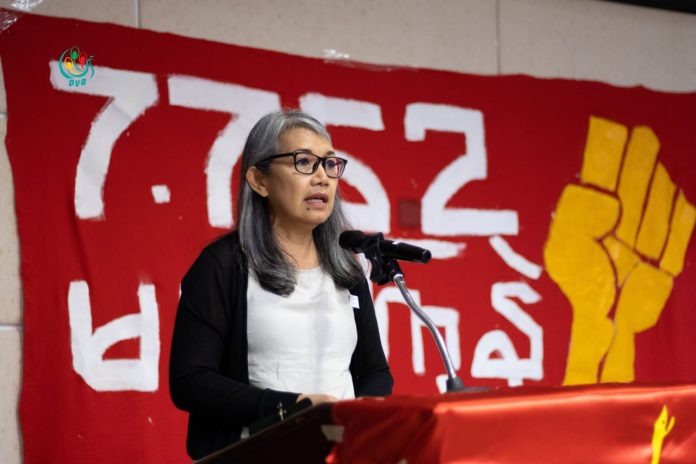
Guest contributor
Khin Ohmar
Five years into Myanmar’s Spring Revolution, international news services are beginning to coalesce around a story: the resistance is weakening.
A recent AFP dispatch, carried by outlets from France24 to Yahoo News, frames retreating fighters and a demoralized frontline as proof the movement is losing steam. It is a comfortable, if shallow, narrative.
The resistance, mainly led by the young generations of Myanmar’s, has fought for five years with no state behind it—no government arming the People’s Defence Forces (PDF), no foreign treasury bankrolling the National Unity Government (NUG). Meanwhile the junta has formed many illicit revenue streams worth billions each year and enjoys the economic and military support of Myanmar’s next-door neighbors and two major world powers: China and India.
Frontline fighters are exhausted. That is not in dispute. Who would not be? But, that the resistance is still standing despite this staggering imbalance in arms and funds—indeed, that it has at times pushed the military junta to the very brink of collapse—is a testament to the strength of the Spring Revolution.
This is a story about foreign intervention
The junta didn’t out-fight the resistance in Sagaing. Beijing bought two ethnic armed organizations out of the war, brokered the truces that stripped the PDF of their most capable allies, and threw its full diplomatic weight behind Min Aung Hlaing’s sham elections.
This isn’t a story about a flagging resistance. And yet it is the story the world is telling itself again and looking as naïve as it did in February 2021.
Back then, the prediction was that the military had restored order. Then, when that failed, the prediction shifted: the resistance would splinter under the weight of its own contradictions. There were too many armed groups, too many competing goals, and no unified command.
Five years of the most brutal systematic campaign of war, waged with airstrikes on hospitals and schools, and still that fracture hasn’t come.
Tactical illusions and a strategic stalemate
Instead, as Sai Wansai provided analysis in SHAN News, the junta’s momentum is a tactical illusion resting on a strategic stalemate: it has recaptured towns, but the resistance controls the countryside, the border regions, and “the narrative of the future.”
The Arakan Army holds nearly all of Rakhine State. The Kachin Independence Army has not been dislodged from the jade mines of Hpakant and rare earth mines in Kachin State. Karenni’s Loikaw remains under siege, not under junta control. Independent conflict analysts have been documenting this for months.
So if the resistance hasn’t broken on its own terms, what actually shifted the ground? Look at who is arming, financing, and legitimizing this war, and on whose side.
China and India are threats to the Myanmar people
China and India have made their priorities unmistakable. With their unflagging political, economic, and military support for this criminal junta, they put their own national interests over Myanmar people’s lives, every time.
Min Aung Hlaing has spent recent weeks receiving official diplomatic welcomes in Beijing, New Delhi, and Vientiane. It is a tour of legitimacy conferred by neighbors who know exactly who he is and what his junta is.
China brokered the ceasefires that saved the junta’s northern flank. Both countries kept the money, the equipment, and the diplomatic cover flowing through an illegal and illegitimate coup, a mass-atrocity campaign, and a fraudulent election.
This is not neutral. It is not “balancing relations.” China and India are not bystanders to Myanmar’s catastrophe. They are major threats to the existence of Myanmar’s peoples.
It is also not new. It is the same failure the international community made from 2011 to 2020, when donor engagement propped up a military-run “transition” in the name of so-called peace instead of confronting the power imbalance underneath it and supporting Myanmar people to address the root causes of their generations-long suffering.
Myanmar will only achieve stability when the resistance succeeds
The world keeps mistaking the military’s ability to buy time for the people’s failure to resist their illegality and cruelty. It keeps outsourcing its analysis to the same governments who benefit from Myanmar’s continued subjugation. But Beijing and New Delhi are betting on a stability this junta cannot deliver. In doing so, they are aiding and abetting the junta’s atrocity crimes.
Myanmar’s people have said, unmistakably, for five years: they will not accept this military back in power, in any form, under any name. There is no status quo to return to. There is no genuine peace process this junta can host, because the people it claims to govern have already rejected it.
China and India can keep buying ceasefires and red-carpet summits, but they are financing a war that gambles against the humanity of Myanmar’s peoples. Myanmar will only achieve long-term stability when the people get what they have fought and died for: human rights, democracy, inclusivity, and self-determination guaranteed in the form of federal democracy.
So my question for Beijing and New Delhi is this: how many more billions, how many more summits, how many more years of a war without end, before you accept there is no peace to buy here in Myanmar? Only a debt to the Myanmar’s peoples that keeps compounding.
Khin Ohmar is a Myanmar human rights activist who was involved in organizing the 8888 nationwide pro-democracy uprising. She is the founder and chairperson of Progressive Voice, a Myanmar human rights organization. She also developed the Women Peacebuilding Program for the Women’s League of Burma and served as its program coordinator from 2000 to 2006.
DVB publishes a diversity of opinions that do not reflect DVB’s editorial policy. We’d like to hear what you think about this or any of our stories: [email protected]
Over 500 Rohingya feared dead as reports of boats capsizing; Russian forces training Myanmar military
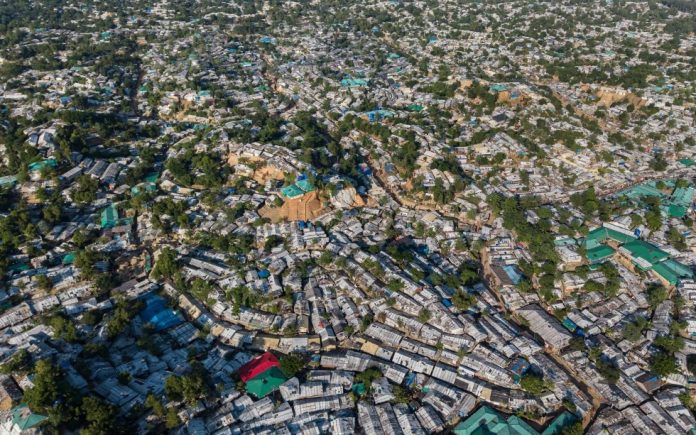
Over 500 Rohingya feared dead as reports of boats capsizing
More than 500 people are feared dead after reports that two boats carrying Rohingya from Burma have capsized in the Bay of Bengal, officials said Thursday. According to preliminary information, the two boats left Arakan State in late June carrying mostly Rohingya passengers, including some who had traveled from refugee camps across the border in Bangladesh.
“While the incidents and casualty figures have yet to be officially confirmed, UNHCR and IOM are gravely concerned by the potentially devastating loss of life,” the International Organization for Migration (IOM) and the United Nations High Commissioner for Refugees (UNHCR) said in a statement released on July 16.
One boat, believed to have been carrying around 250 people, lost contact shortly after departure. A second boat, reportedly carrying 280 people, is believed to have sunk off the coast of Ayeyarwady Region on July 8. The UNHCR and IOM noted this in their statement, saying that recent torrential rain and flooding across the region would have made such journeys especially risky. Read more on our website
Regime escalates surveillance ahead of Martyrs’ Day
The regime in Naypyidaw has ordered heightened surveillance and a crackdown on public commemorations ahead of Burma’s 79th Martyrs’ Day on July 19. According to sources within the regime’s General Administration Department (GAD) under the Ministry of Home Affairs, officials have been instructed to tightly monitor public spaces and online activity to prevent any demonstrations or flash mob protests.
The date holds immense historical weight in Burma, marking the July 19, 1947 assassination of independence hero General Aung San—the father of jailed State Counsellor Aung San Suu Kyi—alongside seven other pre-independence cabinet members and a security guard. For decades, the public holiday has been a focal point for national mourning and, increasingly, pro-democracy sentiment.
In response, the regime is deploying an array of tactics to suppress any public displays of reverence. “Soldiers, police and administration officials will be deployed at public spaces and road junctions in plainclothes,” an official inside Yangon Region’s Mingalardon Township administration told DVB on the condition of anonymity, adding that social media will also be monitored. Read more on our website

Russian forces training Myanmar military in Naypyidaw
Russian soldiers have been actively training Burma’s special operations forces in the capital Naypyidaw, marking a significant escalation in the military alliance between Moscow and the regime. The joint exercise, dubbed “Tropical Storm,” is taking place at the National Defence College in Naypyidaw from July 6 to 17.
The training operation follows the signing of a pivotal five-year military cooperation agreement between Moscow and Naypyidaw earlier this year on Feb. 3. Pyae Sone Lin, chief of the regime’s Military Training Directorate, described the exercises in a video released on July 14.
He stated that the training represents the “next stage” in an “intensively strengthening” relationship between the two militaries that has deepened since the military coup on February 1, 2021. Russia has become an indispensable lifeline for the Myanmar regime as it battles widespread armed resistance across the country. Read more on our website
News by Region
ARAKAN—Residents of the state capital Sittwe told DVB that the regime’s Police Battalion 12 launched artillery attacks on Ponnagyun Township on Monday, ending a two-week hiatus of fighting against the Arakan Army (AA). Ponnagyun, located 20 miles (32 km) northeast of Sittwe, was seized by the AA in March 2024.
A Sittwe resident told DVB on the condition of anonymity that AA forces reached Narikan village, five miles (8 km) north of Sittwe, in June. The AA has been contesting regime forces over control of Sittwe and Kyaukphyu, 317 miles (510 km) south of Sittwe, since 2025. It has seized control of 14 out of 17 townships.
MANDALAY—The People’s Defense Force (PDF) in Madaya Township announced that it has launched attacks against regime forces since the last week of June. A total of 15 military personnel and one PDF member were killed during fighting in Madaya’s Shinhla Taung and Thaeinn villages on June 27.
Two civilians were also injured by retaliatory airstrikes carried out by the Burma Air Force in Madaya. The PDF in Mandalay, which is fighting in Madaya, also stated on July 7 that it will resume operations in collaboration with allied resistance forces. Madaya is located 24 miles (38 km) north of Mandalay.
SHAN—The Myanmar National Democratic Alliance Army (MNDAA) has officially begun establishing “civilian-led administrations” across four newly designated districts and its capital within its controlled territory in northern Shan. It clarified that the move is not an attempt to secede from Burma.
Instead, the group asserts it is “reforming” under Special Region 1, which was established in January with Laukkai as its capital and the four districts of Laukkai, Kutkai, Hsenwi, and Monekoe, located 31-124 miles (49-200 km) north of the regional capital Lashio. Read more on our website
(Exchange rate: $1 USD = 4,310 MMK)

ASEAN Special Envoy to engage all Myanmar stakeholders at Manila meeting next week
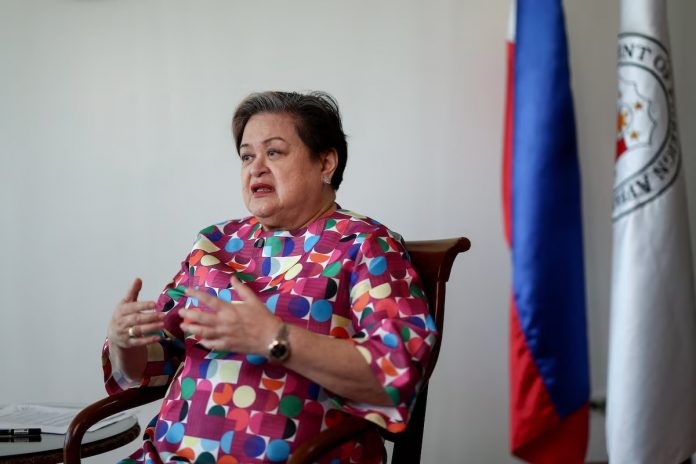
ASEAN’s special envoy on Myanmar will keep talking to all stakeholders in the war-torn country, including ethnic armed groups, the Philippines said on Thursday as it prepares to host a meeting of ASEAN foreign ministers next week.
Manila, this year’s ASEAN chair, is expecting U.S. Secretary of State Marco Rubio, Chinese Foreign Minister Wang Yi and Russian Foreign Minister Sergei Lavrov to attend next week’s summit, along with ministers from Japan, Australia, Canada and the United Kingdom.
Myanmar is expected to be among the key issues at the talks in the Philippine capital, along with ASEAN’s planned code of conduct for the South China Sea against a backdrop of geopolitical tensions in the Indo-Pacific and the disruption to global trade and markets caused by the Iran war.
Last weekend, ASEAN foreign ministers held informal talks with the Myanmar regime’s foreign minister in Bangkok, the first such face-to-face talks since the 2021 coup in Myanmar that led to ASEAN barring senior regime officials from its meetings.
Philippine Foreign Secretary Ma. Theresa Lazaro, who is ASEAN’s special envoy on Myanmar, also held talks with ethnic armed groups, representatives of the National Unity Government (NUG) and other stakeholders, and will brief her counterparts on the discussions next week.
Foreign Affairs spokesperson Dominic Xavier Imperial said Lazaro’s talks with the armed groups were “candid” and “productive”, noting they would be important in any dialogue on Myanmar’s future.
“We are not limiting these engagements to certain groups, but it’s actually an open invitation to be able to engage with everyone,” he added.
The ASEAN summit comes shortly after the 10th anniversary of a landmark 2016 arbitral ruling that invalidated the legal basis of China’s sweeping South China Sea claims, a decision Beijing rejects.
Imperial said ASEAN and China remained committed to negotiating a “substantive and effective” code of conduct and expressed confidence that progress toward concluding talks could still be achieved this year.
“We see the commitment from all parties to really come up with a substantive and effective COC,” he said.
REUTERS