
Thursday, July 23, 2026
Home Blog Page 80

At least 250 still missing after boat carrying Rohingya sinks in Andaman Sea

0
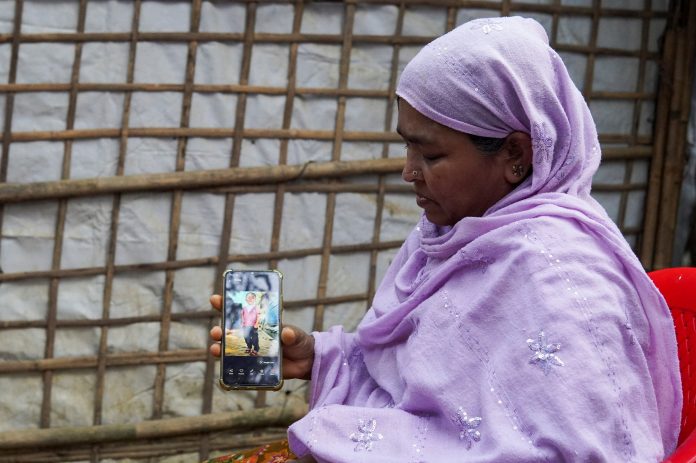
Ummi Tara Begum shows a photo of her grandson, Mohammad Salman, on a mobile phone, after losing her daughter and grandson when a boat carrying refugees and Bangladeshi nationals capsized in the Andaman Sea, at a refugee camp in Cox's Bazar, Bangladesh, on April 15. (Credit: Reuters)

At least 250 people, including Rohingya refugees and Bangladeshi nationals, were either feared dead or missing after a boat capsized in the Andaman Sea recently on the way to Malaysia, according to the U.N. refugee and migration agencies.

While details remained sketchy, Bangladesh Coast Guard spokesperson Sabbir Alam Suzan told AP on Wednesday that nine people, including three Rohingya and six Bangladeshis, were rescued on April 9.

Suzan said that the Bangladesh flag carrier M.T. Meghna Pride rescued the nine people when the crew found them floating at sea after the capsizing.

The status of any search on Wednesday or when the boat sank weren’t immediately clear.

The U.N. refugee agency, and the International Organization for Migration (IOM) said in a joint statement on Tuesday that the trawler departed from Teknaf in the southern Bangladeshi district of Cox’s Bazar carrying a large number of passengers to Malaysia.

The IOM said Wednesday in a new statement that the boat reportedly sank on April 9. Overcrowding, strong winds and rough seas caused the vessel to lose control and sink, the agencies said.

A Rohingya woman who survived the capsizing and was rescued narrated her ordeal on Wednesday. The survivor said that she set out for Malaysia on April 4, and about 20 women were on board when the boat sank.

“I drifted in the sea for two days and one night,” said Rahela Begum, who was brought to a refugee camp. “There were many people on the trawler, but after it sank, I have no idea what happened to them or where they went.”

“After drifting in the sea for two days and one night, the piece of wood I was holding onto also flipped over and I lost it. At that point, I lost consciousness. When I regained consciousness, I saw that Allah had sent a ship. The ship rescued me,” Begum added.

Shari Nijman, a U.N. refugee agency communications officer in Cox’s Bazar, said Wednesday that the agency had no other updates.

Another coast guard media official told the AP by phone Wednesday that the rescued people, eight men and one woman, were all safe, after being handed over to the coast guard, which brought them to the police in Teknaf.

The official said that the rescue wasn’t part of any official search operation, because the area is outside Bangladeshi territory, and that the crew of the M.T. Meghna Pride saved the people while it was on its way to Indonesia from Bangladesh’s Chittagong.

The official spoke by phone on condition of anonymity in line with official policy. The U.N. and IOM said that the disappearance reflected the protracted displacement of Rohingya people and the absence of durable solutions.

They said that ongoing violence in Myanmar’s Rakhine State has made the Rohingya’s safe return to Myanmar uncertain, while limited humanitarian assistance, as well as restricted access to education and employment in refugee camps, continue to push vulnerable Rohingya refugees to choose risky sea journeys, often based on false promises of higher wages and better opportunities abroad.

“This incident is a stark reminder of the grave risks people continue to face when undertaking dangerous sea journeys in search of safety and better opportunities,” Mohammedali Abunajela, the IOM spokesperson, said in a statement on Wednesday.

“No one should have to choose between remaining in situations of profound hardship or embarking on a journey that may cost them their lives,” he added.

The U.N. refugee agency and IOM urged the international community to strengthen funding and solidarity to ensure lifesaving assistance for Rohingya refugees in Bangladesh, which has sheltered more than one million Rohingya from Myanmar.

In 2025, more than 6,500 Rohingya refugees embarked on dangerous maritime journeys from Bangladesh and Myanmar, almost 900 of whom lost their lives, the IOM said.

On the Andaman Sea and the Bay of Bengal specifically, deaths and disappearances increased by more than 40 per cent compared with 2024 figures, the U.N. organization said.

AP
Rohingya survivor recounts ordeal as 250 missing in Andaman sea tragedy

0
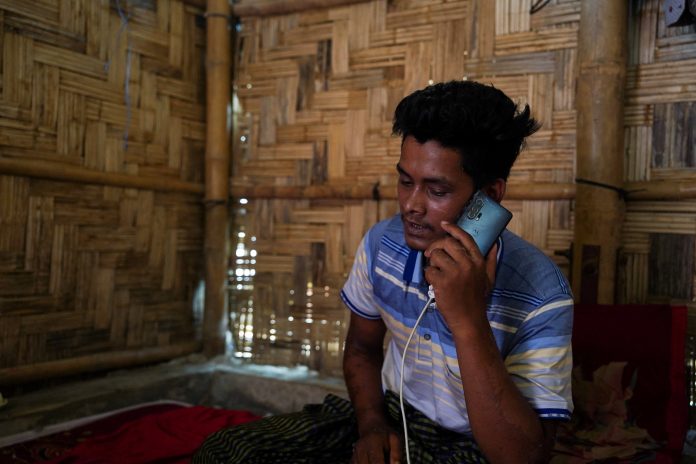
Mohammed Rofique, a survivor from the boat that capsized in the Andaman Sea while carrying refugees and Bangladeshi nationals, speaks on the phone with relatives at a refugee camp in Cox's Bazar, Bangladesh, on April 15. (Credit: Reuters)

A Rohingya survivor has recounted a harrowing journey at sea after an overcrowded boat carrying refugees and Bangladeshi nationals capsized in the Andaman Sea, leaving around 250 people missing.

The boat, ​which departed from Teknaf in southern Bangladesh and was bound for Malaysia, sank in the ‌second week of April amid rough seas, strong winds and severe overcrowding, the United Nations’ refugee and migration agencies said.

Bangladesh hosts around 1.2 million Rohingya refugees in camps in the south, most of whom fled violence in Myanmar in 2017. Many continue ​to attempt dangerous sea journeys in search of safety and livelihoods abroad.

Survivors said nearly 300 people were ​packed onboard, including women, children, crew members and suspected traffickers.

Rafiqul Islam, one of the ⁠survivors, said passengers endured four days and nights at sea as conditions rapidly deteriorated. In an attempt ​to avoid patrols, traffickers forced passengers into cramped storage compartments meant for fish and nets.

“There was hardly any ​oxygen,” he told Reuters, adding that at least 30 people died from suffocation before the boat capsized. “We could not breathe.”

When the boat overturned, hundreds were thrown into the sea. Islam estimated that around 240 people were still onboard at the time, including ​about 20 women and several children. Only a handful survived.

Islam was among a small group who initially made ​it out alive. A passing Bangladeshi oil vessel rescued four survivors, who then alerted the crew to others still in ‌the ⁠water.

“They later found five more people,” he said.

He described a dangerous, multi-stage journey that began on April 4, when passengers first left on a small fishing boat before being transferred to a larger trawler near Myanmar waters. At one point, they were forced to hide in bushes to avoid detection by patrols.

The tragedy highlights ​the desperation of Rohingya refugees, ​many of whom continue ⁠to risk perilous sea journeys to countries such as Malaysia, Indonesia and Thailand.

Aid agencies warn the situation is worsening as humanitarian support declines. A recent report by ​the International Rescue Committee (IRC), based on a survey of 500 households in Cox’s ​Bazar, found ⁠just 2 per cent of Rohingya parents feel hopeful about their children’s future, compared with 84 per cent among host communities.

With food rations reduced to as little as $7 USD per person per month, many families are resorting to extreme coping measures. Nearly 69 per cent of ⁠refugee households ​report children dropping out of school, while half say their ​children have been forced into labour.

The IRC urged donors and authorities to shift from emergency aid to long-term solutions, warning that without sustained ​support, both refugees and host communities face deepening poverty and vulnerability.

REUTERS

Boat carrying 250 Rohingya and Bangladeshis sinks in Andaman Sea

0
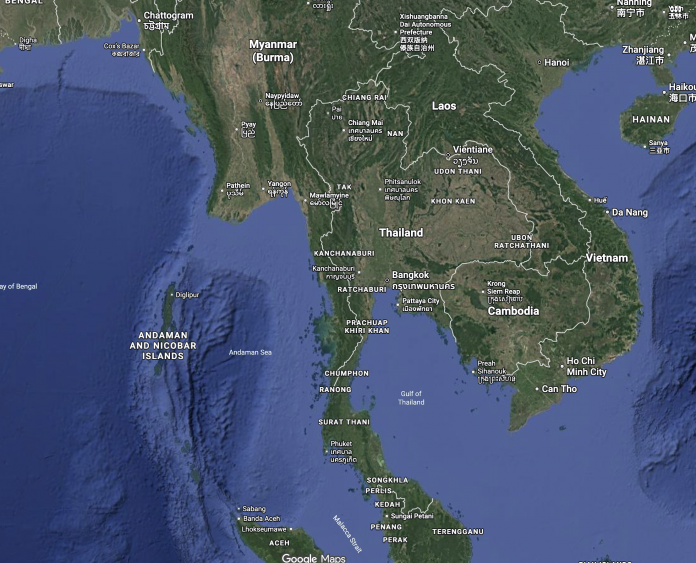
The Andaman Sea is a body of water in the northeastern Indian Ocean, located west of Thailand, south of Myanmar, and east of the Andaman Islands. (Google Maps)

At least 250 people, including Rohingya refugees from Myanmar and Bangladeshi nationals, were missing after a boat capsized in the Andaman Sea recently on the way Malaysia, according to the United Nations’ refugee and migration agencies.

When the boat sank and the status of any search Wednesday were unclear.

The U.N. High Commissioner for Refugees (UNHCR) and the International Organization for Migration (IOM) in a joint statement said Tuesday that the trawler departed from Teknaf in the southern Bangladeshi district of Cox’s Bazar carrying a large number of passengers to Malaysia.

Overcrowding, strong winds and rough seas caused the vessel to lose control and sink, the agencies said. UNHCR and IOM said the disappearance reflected the protracted displacement of Rohingya people and the absence of durable solutions.

They said ongoing violence in Myanmar’s Rakhine State has made the Rohingyas’ safe return to Myanmar uncertain, and limited humanitarian assistance, restricted access to education and employment in refugee camps, continue to push vulnerable Rohingya refugees to choose risky sea journeys, often based on false promises of higher wages and better opportunities abroad.

UNHCR and IOM urged the international community to strengthen funding and solidarity to ensure lifesaving assistance for Rohingya refugees in Bangladesh, which has sheltered more than one million Rohingya from Myanmar.

AP

Rising fuel prices impacting Sagaing Region’s weaving industry 

0
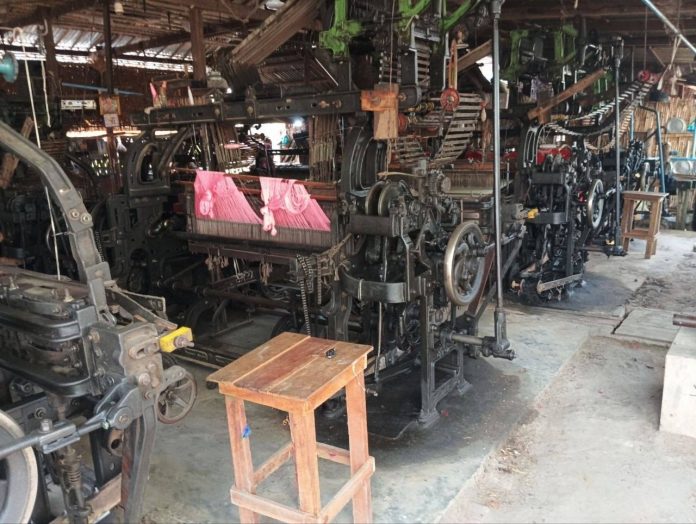
A weaving factory shut down in Shwebo Township, Sagaing Region, in April. (Credit: DVB)

Weaving business owners in Sagaing Region’s Shwebo Township told DVB that rising fuel prices and shortages caused by the energy crisis due to the war in Iran since Feb. 28 have forced small-scale weaving businesses to halt operations. Shwebo, located 57 miles (91 km) northeast of the Sagaing Region capital Monywa, is contested between regime forces and the People’s Defence Force (PDF).

A business owner in Shwebo told DVB on the condition of anonymity that the weaving machines run on diesel generators as the regime’s Ministry of Electric Power cut off electricity to Shwebo in 2022. She added that businesses with more than five weaving machines are now operating at a “very low” profit margin due to a spike in diesel prices.

Diesel prices rose from 5,680-6,485 MMK ($1.30-1.50 USD) per liter for regular and 6,805-7,755 MMK ($1.60-1.80 USD) for premium April 9-15, according to the regime-controlled Petroleum Products Regulatory Department, which also set prices for one litre of 92-octane gasoline at 4,735 MMK ($1.12 USD) and 95-octane gasoline at 4,945 MMK ($1.17 USD) on April 15.

A weaving industry worker in Shwebo told DVB on the condition of anonymity that he is paid 13,000 MMK ($3.09 USD) per day and his motorcycle consumes one liter of gasoline every two days commuting to and from work, which makes him unable to earn enough income due to the rising fuel prices. 

The business owner in Shwebo added that the price of a bundle of yarn—containing 200 hanks and weighing 10 lbs (4.5 kg)—to make unisex cotton longyi, a cylindrical piece of cloth worn in Myanmar wrapped around the waist like a sarong, is priced between 13,000-19,000 MMK ($3.09-4.50 USD).

The cost per longyi in Myanmar rose from 180,000–205,000 MMK ($42-48 USD) in March due to higher transportation costs. The regime’s Ministry of Energy claimed on April 6 that it has 40 days of gasoline and 50 days of diesel in reserve, adding that 36 shiploads of fuel will be imported in April.

Myanmar’s fate now rests solely with its Generation Z

0
A protester holds a placard reading "Let us be the last generation under dictatorship" during a protest on the day of the anniversary of the '8888 Uprising' in front of the Myanmar embassy in Berlin, Germany, on Aug. 8, 2022. (Credit: EPA)

Guest contributor

Dr. Nyi Nyi

Myanmar’s Generation Z, born in the years between 1997 and 2012, is shaping the country’s future since Senior General Min Aung Hlaing seized power in a military coup on February 1, 2021. 

He overthrew the democratically-elected National League for Democracy (NLD) government, which governed Myanmar from 2016-2021, believing that street protests against the coup would dissipate within weeks like was so after previous coups in 1962 and 1988. 

But in 2021, the generals miscalculated. They were no longer confronting an isolated and tightly controlled population. 

They were confronting a digitally savvy generation of youth who grew up during a rare window of relative openness during the country’s touted “transition to democracy” from 2012-2021. 

Cheap SIM cards and relatively inexpensive smartphones connected them to the world. 

They learned about democracy and experienced freedoms their parents had never known. For them, freedom was not an abstract aspiration; it was reality. 

The Myanmar economy grew rapidly with foreign investments providing work and educational opportunities for youth. 

So, when the tanks rolled on to the streets of Naypyidaw and Yangon in 2021, Myanmar youth did not remain silent. 

They flooded the streets, organized anti-coup protests, launched digital fundraising campaigns, and mobilized within the Civil Disobedience Movement (CDM), launched by civil servants refusing to work under the military. 

The military responded with characteristic brutality. Young protesters were shot and killed by soldiers on the streets of towns and cities.

Some youth fled home, leaving behind their families, jobs, studies, to receive military training from long-established ethnic armed groups located in Myanmar’s borderlands.

They formed the People’s Defense Force (PDF), the armed wing of the National Unity Government (NUG), an administration opposed to military rule and composed of elected lawmakers ousted in the 2021 coup. 

The militarization of a new generation

What distinguishes the 2021 uprising and resistance to the coup from earlier episodes of youth-led resistance — such as those already mentioned in 1962 and 1988 — is its generational clarity. 

Myanmar youth have openly declared their determination to be the last generation to live under Myanmar military rule, which came only 14 years after independence, in 1948.

In 2024, the military activated a long-dormant conscription law requiring men, aged 18 to 35, and women, aged 18 to 27, to serve in the military. 

This measure, they hoped, would replenish the number of soldiers killed on the frontline by resistance forces like the PDF, and prolong the military’s grip on power. 

At least 100,000 young males have been conscripted into the military – most unwillingly – and taken away from their families and freedom by the military’s security apparatus over the last two years. 

Twenty intakes of forced conscripts have received military training across the country. They have been deployed to the frontline to fight against other youth in the PDF. 

Five years since the military coup, and Myanmar’s courageous Gen Z fights on both sides of the battlefield. Although one side is fighting for the bright future of the country, the other side is forced to defend the military and prolong its oppressive rule.

Myanmar’s future will not be decided in Naypyidaw or diplomatic corridors. It will be determined by the conviction, endurance, and choices of its youth, who have already shown ingenuity and resilience over the last five years to free the country for once and all of military rule. 


Dr. Nyi Nyi (Ph.D.) is a retired engineer living in the U.S. for the last four decades. 

DVB publishes a diversity of opinions that does not reflect DVB editorial policy. We’d like to hear what you think about this or any of our stories: [email protected]

Boat carrying Rohingya capsizes in Andaman Sea, UN agencies say

0
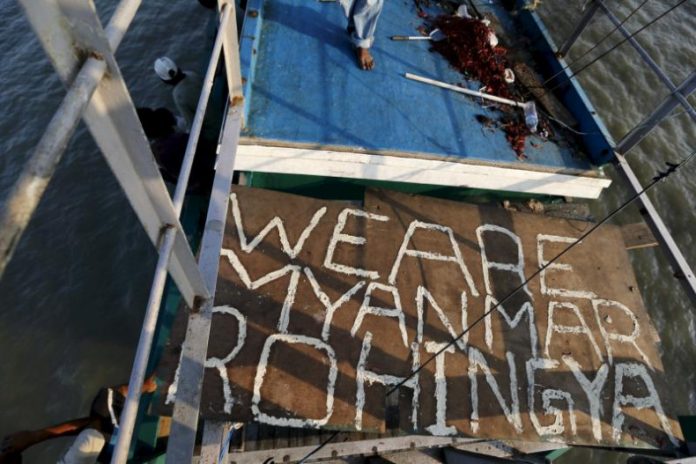
"We are Myanmar Rohingya" written on an abandoned boat found off the coast of Indonesia. (Credit: Reuters)

Around 250 people were missing after a boat carrying Rohingya refugees and Bangladeshi nationals capsized in the ​Andaman Sea, the United Nations’ refugee and migration ‌agencies said in a joint statement on Tuesday.

The U.N. agencies said the trawler carrying around 250 men, women and children reportedly ​sank due to heavy winds, rough seas and overcrowding. ​It had departed from Teknaf in southern Bangladesh ⁠and was bound for Malaysia.

“This tragedy highlights the devastating ​human cost of protracted displacement and the continued absence ​of durable solutions for the Rohingya,” said the U.N. High Commissioner for Refugees (UNHCR), and the International Organization for Migration (IOM).

For years, many ​of Myanmar’s ethnic Rohingya Muslim minority have embarked on rickety wooden ​boats to try to reach neighbouring countries, including Malaysia, Indonesia and Thailand, ‌in ⁠a bid to flee persecution in Myanmar or overcrowded refugee camps in Bangladesh.

The agencies called on the international community to step up and sustain funding for lifesaving assistance for ​Rohingya refugees in ​Bangladesh as ⁠well as support for Bangladeshi host communities.

In 2017, Myanmar’s military, under the command of Senior General Min Aung Hlaing, launched an offensive that ​forced at least 730,000 Rohingya from their ​homes and ⁠into neighbouring Bangladesh, where they recounted killings, mass rape and arson.

A U.N. fact-finding mission concluded the 2017 military ⁠offensive ​had included “genocidal acts”.

Buddhist-majority Myanmar has denied ​genocide, and says the U.N. fact-finding mission was not objective or reliable.

REUTERS

Contact