


Guest contributor
Dr. Chin
When a university honors a general who destroyed its students’ future, it dishonors education itself
The day I heard that Min Aung Hlaing had been awarded an honorary doctorate by Yangon University, something inside me collapsed.
I did not cry. I did not speak. I simply stared at the news, unable to reconcile what I was seeing with the institution I once loved.
Yangon University was not just where I studied. It was where I became who I am.
I earned my doctorate there through years of sacrifice. I remember the exhaustion, the long nights surrounded by books, the quiet belief that education could shape not only my life, but the future of our country.
I believed knowledge was sacred. I believed universities were sanctuaries of truth.
I believed education could protect us from darkness. I was wrong.
When the military seized power in February 2021, everything I had built—and everything I believed in—was shattered overnight.
At the time, I was serving as a civil servant in Myanmar’s education system. I had dedicated my life to teaching.
My students were not just names on a list. They were young people full of intelligence, curiosity, and hope. They trusted us to prepare them for a future that was theirs to claim.
When the coup happened, I faced a choice.
To continue teaching under a regime built on violence and lies—or to refuse.
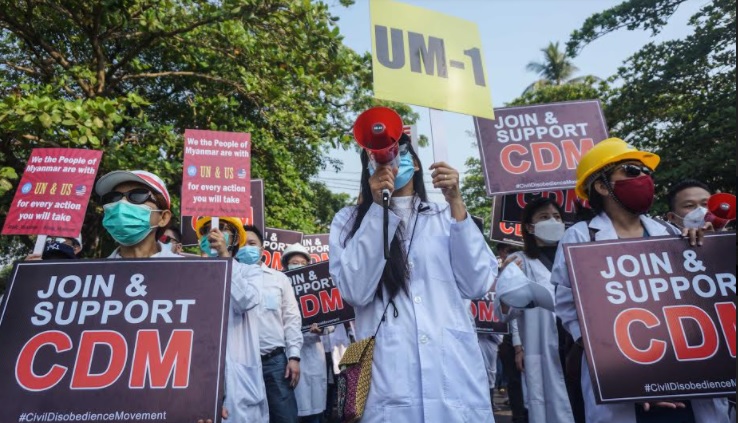
I joined the Civil Disobedience Movement, knowing full well what it would cost me. I lost my job. I lost my stability. I lost the life I had spent decades building.
But I could not lose my conscience.
Since then, I have lived in hiding inside Myanmar. I exist in the shadows of the country I once served openly. I move carefully. I speak cautiously. Fear has become part of daily life.
Not because I committed a crime—but because I refused to accept injustice.
Yet what haunts me most is not what I lost.
It is what my students lost.
They were young. Brilliant. Full of promise. They came to my classroom with dreams of becoming teachers, doctors, writers—builders of a better Myanmar.
Many of them joined the resistance after the coup.
Some were killed.
Some were forced into exile.
Some disappeared into prisons.
Some are still fighting.
And some will never return.
At night, their faces come back to me.
I see them as they were—alive, hopeful, smiling. Then I remember what was taken from them. I remember that the future they deserved was stolen before it could begin.
There is no greater pain for a teacher than to see her students’ lives cut short.
And now, the man responsible for their suffering stands in academic robes, receiving honors from the very institution that once stood for truth.
He presents himself as a patron of education.
But his army has bombed schools. His orders have turned campuses into places of fear.
His power has driven teachers into hiding and students into graves.
He did not build education. He destroyed it.
When I saw him receive that honorary degree, I felt something I never expected to feel toward Yangon University.
Shame. Not shame for myself—but shame for what the institution had become.
I looked at my own doctorate certificate, something I once treasured, and felt its meaning dissolve in my hands.
What does a degree represent when it can also honor a destroyer of lives?
What does academic recognition mean when it is given to legitimize oppression?
For the first time, I wondered whether my degree still held the dignity I believed it did.
Many of my colleagues feel the same.
We speak quietly, remembering the lives we once had. The classrooms we once filled. The future we once believed was within reach.
It feels like remembering another country.
The military wants us to accept this reality. They want us to believe that resistance is futile. That their authority is permanent.
But I refuse to accept that. Because education is stronger than fear.
Because truth is stronger than propaganda. Because the sacrifices of our students must mean something.
I continue to believe that one day, I will return to teaching—not in hiding, but in freedom.
I will stand in a classroom again, not under the shadow of violence, but under the protection of justice.
I will teach students who no longer have to choose between education and survival.
That day has not yet come.
The struggle continues. The cost is immense. Many of us carry grief that cannot be measured.
But we endure.
Because surrender would mean accepting the destruction of our nation’s future.
Min Aung Hlaing may hold an honorary degree.
But he will never hold legitimacy.
He may control universities.
But he cannot control the truth.
And one day, when Myanmar is free again, we will return—not in fear, but in dignity.
We will rebuild our classrooms.
We will honor those we lost.
And we will restore the meaning of education.
Dr. Chin is a pseudonym of an academic in Myanmar
DVB publishes a diversity of opinions that does not reflect DVB editorial policy. We’d like to hear what you think about this or any of our stories: [email protected]