


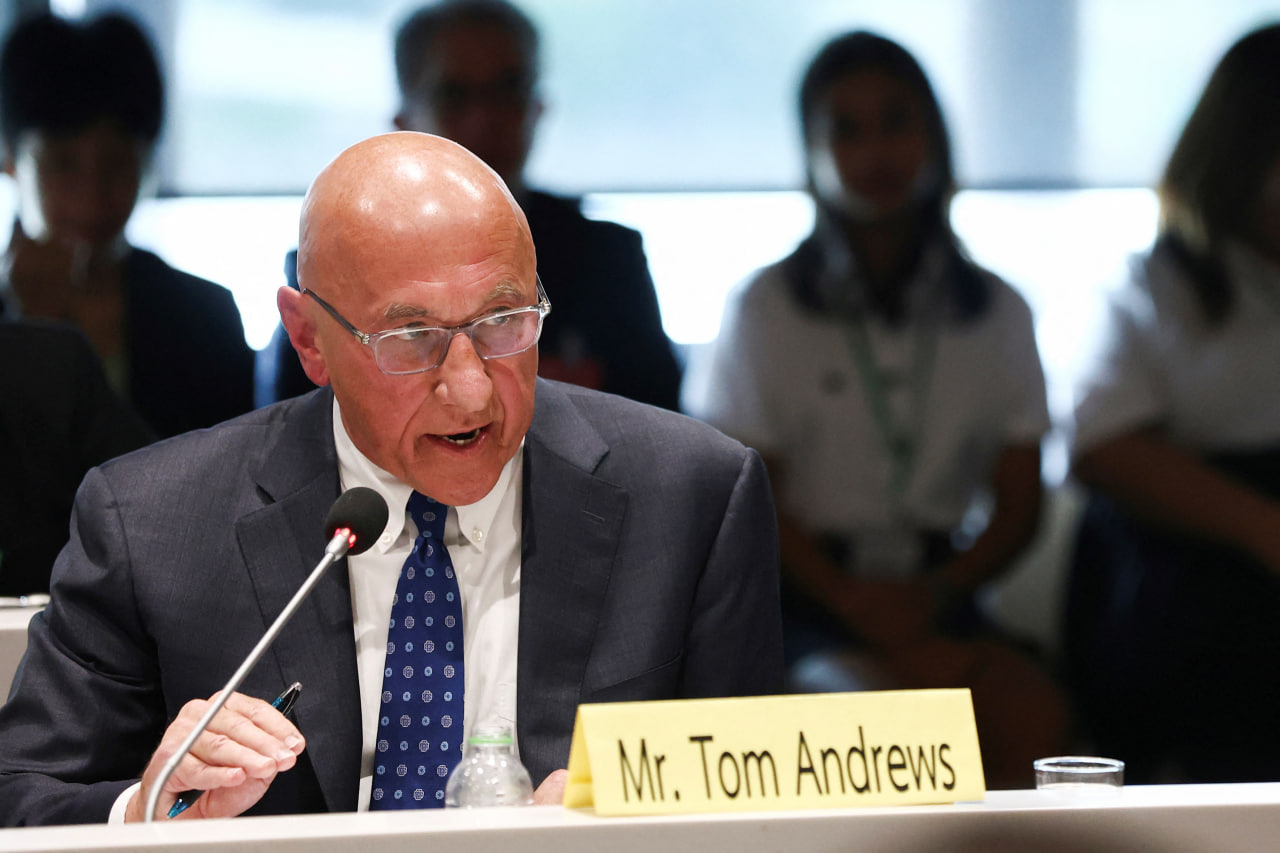
The international community has failed the people of Myanmar by allowing the cycle of military atrocities and impunity to go unpunished, a U.N. human rights expert warned in a scathing final report on April 27.
Tom Andrews, the U.N. Special Rapporteur on the situation of human rights in Myanmar, issued an urgent call for global leaders to step up accountability efforts in a report titled From Impunity to Justice.
He emphasized that ending the country’s crisis requires not only dismantling the military’s capacity to oppress its people, but actively prosecuting the architects of its worst crimes.
“The international community has done far too little to support those seeking justice and accountability,” said Andrews. “For the people of Myanmar, justice delayed is justice denied.”
A system of unchecked impunity
Despite international investigators and local civil society groups gathering abundant evidence of war crimes—including the systematic targeting of civilian populations, the persecution of ethnic minorities, and widespread sexual violence—Andrews noted that not a single senior military official has faced justice.
While cases before international tribunals and under universal jurisdiction in foreign countries offer victims a “glimmer of hope,” Andrews warned that these efforts remain too narrow in scope to break the systemic impunity shielding Myanmar’s generals from prosecution.
Andrews explicitly condemned the U.N. Security Council’s ongoing refusal to refer the Myanmar crisis to the International Criminal Court (ICC), calling the failure an “abdication of responsibility and an indictment of the world’s commitment to justice.”
A looming genocide verdict
The U.N. expert laid out concrete steps for the international community to take, urging nations to expand the application of universal jurisdiction, broaden ICC investigations, and establish a reparations fund for victims.
He also issued a stark warning ahead of a pending judgment by the International Court of Justice (ICJ) regarding the genocide committed against the Rohingya minority.
Andrews specifically called out the United Kingdom—the U.N. Security Council’s penholder on Myanmar—and the Association of Southeast Asian Nations (ASEAN) to lead the charge.
“They must lead a coordinated international effort to isolate the new military-controlled government and pressure Myanmar to comply with any Court orders,” Andrews stated.
“In the case of a ruling against Myanmar, States must act swiftly and decisively to make clear that genocide is an intolerable stain on humanity’s conscience.”
Supporting local champions of justice
Despite the international paralysis, Andrews praised the relentless work of Myanmar’s local activists, human rights defenders, lawyers, and revolutionary bodies who are actively developing new institutions to hold perpetrators accountable.
He called on global powers to provide the technical support and long-term financial resources necessary to rebuild judicial institutions that have been hollowed out by decades of military domination.
“Opportunities to break the cycle of impunity that has gripped Myanmar are available,” Andrews concluded. “What is missing is the political will to seize them.”
UN