


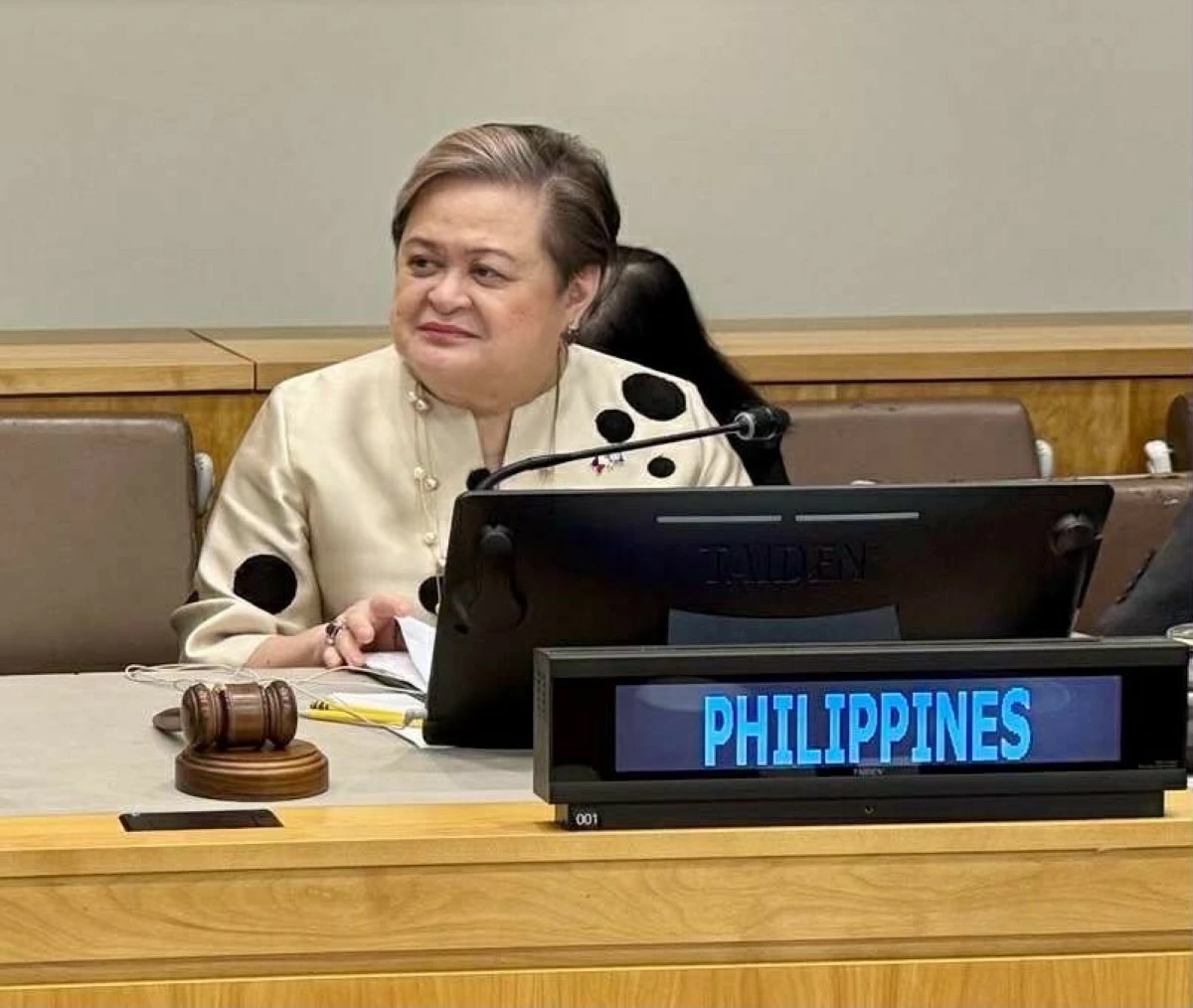
The Philippines is ready to contribute to a political process that is “ultimately Myanmar-led and Myanmar-owned,” its Department of Foreign Affairs stated on Friday.
DFA Secretary Theresa Lazaro was appointed the Association of Southeast Asian Nations (ASEAN) Special Envoy on Myanmar by President Ferdinand Marcos Jr. to facilitate a peaceful solution to the Myanmar crisis since the 2021 military coup, as the Philippines assumes chair of ASEAN on Jan. 1, 2026.
“Bearing in mind the continuous developments in and out of Myanmar, the Special Envoy will also remain ready and open to other means in which the Special Envoy can contribute to a political process that is ultimately Myanmar-led,” said Dominic Xavier Imperial, the DFA Deputy Assistant Secretary for ASEAN Affairs.
“The Special Envoy looks forward to grounding its work within the Five-Point Consensus, towards deliberate, pragmatic, and sustainable actions in the process,” added Imperial.
Regime leader Min Aung Hlaing agreed to the ASEAN Five Point Consensus, the regional bloc’s peace plan, in April 2021 but did not implement it upon his return to Myanmar. In an attempt to gain legitimacy for his regime, Min Aung Hlaing has scheduled elections to begin on Dec. 28 and continue into January 2026.
Lazaro told media in Manila on Nov. 17 that a decision on whether ASEAN will officially send observers to the regime’s 2025-26 elections is still under discussion. Any deployment of election observers would need a consensus decision from all ASEAN members.
A bipartisan group of U.S. lawmakers labelled the regime elections a “sham.” The U.N. has also expressed concerns that the vote would not be free and fair.
The U.S. lawmakers, who are Republican and Democratic leaders of foreign affairs committees in the House and Senate, issued a joint statement on Wednesday.
They described the polls as being “orchestrated by the military junta to deceive the international community” and intended to “manufacture legitimacy for the China-backed junta.”
The U.N. has also highlighted the fact that pro-democracy political parties, including the National League for Democracy (NLD), which was ousted in the 2021 coup, are banned and Aung San Suu Kyi remains imprisoned.
The U.S. decision to end legal protections for Myanmar nationals was announced on Monday, just days before the lawmakers’ condemnation of regime elections in Myanmar.
The Department of Homeland Security (DHS) stated it was terminating Temporary Protected Status (TPS) for citizens of Myanmar, citing the regime elections meets conditions that now permit their safe return home.
“Burma has made notable progress in governance and stability, including the end of its state of emergency, plans for free and fair elections, successful ceasefire agreements, and improved local governance contributing to enhanced public service delivery and national reconciliation,” said Kristi Noem, the DHS Secretary.
The legal status for approximately 4,000 affected Myanmar nationals in the U.S. will expire on January 26, 2026. Zaw Min Tun, the regime spokesperson in Naypyidaw, described the move as a “positive” development.
Tom Andrews, the U.N. Special Rapporteur on human rights in Myanmar, issued a statement on Thursday condemning the U.S. decision to end TPS. He stated that the move comes as the crisis since the 2021 coup continues to worsen with rising violence against civilians in the lead up to the regime elections.
“[It’s] an assault on human rights and human decency based on a cruel fiction that ignores overwhelming evidence of Myanmar’s spiralling crisis,” Andrews wrote on Nov. 27.
He added that the forced return of Myanmar nationals from the U.S. could breach the international legal principle of non-refoulement and urged the Trump administration to continue protecting them, most of which are journalists and pro-democracy activists.