


Guest contributor
Alan Clements
History does not always announce itself through treaties or speeches. Sometimes it breaks open through a single act that reorders the moral landscape and forces the world to confront what it has long tolerated.
Just days ago, such a moment arrived not as rhetoric but as resolve—when President Donald Trump authorized the capture of Nicolás Maduro, the long-entrenched narco-dictator of Venezuela, and ordered his transfer to New York to face criminal prosecution.
On January 5, Maduro and his wife, Cilia Flores, pleaded not guilty in a Manhattan federal court to charges of narco-terrorism, cocaine importation conspiracy, and corruption—allegations spanning two decades of collaboration with international drug cartels that flooded the United States with narcotics, killing tens of thousands.
With that decision, a regime built on drug trafficking, electoral fraud, mass displacement, and authoritarian spectacle was no longer treated as a sovereign inconvenience, but as what it has always been: a criminal enterprise masquerading as a state.
For years, Venezuela hemorrhaged its people. Millions fled hunger, repression, and the systematic dismantling of civic life, while narcotics produced and trafficked under Maduro’s protection flowed outward with ruthless efficiency.
These drugs did not appear by accident, nor did their consequences—overdoses, shattered communities, destabilized regions. Narco-states export misery as policy. Maduro perfected that model. His removal signals a profound shift: criminal governance, when brazen enough, may finally meet accountability.
That assessment crossed administrations; the Biden administration increased the bounty on Nicolás Maduro from $15 million to $25 million USD in January 2025, one of its final acts in office.
This action reverberated beyond Venezuela. President Trump swiftly placed Mexico, Cuba, and Colombia on notice, warning that failure to curb cartel violence and narcotics trafficking would carry consequences.
The message was unmistakable: narco-dictatorships and their enablers will no longer enjoy automatic impunity.
Yet history rarely permits moral clarity to exist in isolation.
The same week Maduro faced justice, Venezuela’s opposition leader María Corina Machado was celebrated internationally for her nonviolent resistance. At that same moment, another Nobel Peace Prize laureate—known intimately to the people of Myanmar—remains buried alive in prison.
Her name is Daw Aung San Suu Kyi.
She is 80-years-old. She is entering her fifth year of imprisonment. She has been erased from public life, denied adequate medical care, and silenced by a regime that fears her moral authority more than any army.
On January 4, Myanmar’s junta announced a mass amnesty releasing more than 6,000 prisoners to mark Independence Day—yet Suu Kyi remains imprisoned.
At the same time, the military presses ahead with sham, multi-phase elections, already claiming victory through its proxy party amid boycotts and widespread fraud. The people of Myanmar recognize this theater. They have lived it before.
Her jailer is Senior General Min Aung Hlaing, architect of the 2021 military coup and a narco-dictator every bit as criminal as Maduro—and in many respects more lethal.
Under his command, Myanmar has become a landscape of aerial bombardment, burned villages, mass displacement, and industrialized repression. Monasteries and schools have been bombed. Civilians incinerated. Entire communities erased.
Myanmar is now among the world’s largest producers of methamphetamines, fentanyl precursors, and transnational scam operations.
Shan State functions as a narco-hub, flooding global markets—including the United States—with synthetic opioids fueling an overdose epidemic that claims more than 100,000 lives annually.
These are not abstractions. The drugs killing children in America, Canada, Europe, Australia, and across Asia trace back to junta-controlled territory in Myanmar.
Min Aung Hlaing did not merely overthrow an elected government. He decapitated a democracy. In November 2020, more than 50 million people voted peacefully and decisively for civilian rule.
That mandate was erased at gunpoint. President Win Myint was imprisoned. Elected leaders were jailed or forced into hiding. More than 22,000 political prisoners now languish in Myanmar’s prisons.
This is not a civil war. It is a hostage state, maintained through terror and narcotics.
Like Maduro, Min Aung Hlaing hides behind lawfare, propaganda, and grotesque pageantry designed to simulate legitimacy. And like Maduro, he does not operate alone. He is aligned politically, economically, and militarily with China and Russia, embedded in a transnational ecosystem of weapons, surveillance technology, debt dependency, and geopolitical cover.
Myanmar’s strategic importance is unmistakable. Straddling India and China, it holds vast reserves of rare earth minerals, jade, oil, and natural gas.
Through Belt and Road infrastructure, Beijing is entrenching control via pipelines, ports, and security agreements. Unchecked, Myanmar risks becoming the next Tibet—not by invasion, but by silent contractual colonization, echoing Hong Kong’s erosion and threatening Indo-Pacific stability.
The people of Myanmar do not want this fate. They voted. They were clear. They were punished.
This brings us back to President Trump.
He has openly expressed his desire to win the Nobel Peace Prize. History now offers a rare alignment between action and principle. In capturing Maduro, Trump demonstrated something the world has not seen in years: decisive action against a narco-state leader. Not sanctions theater. Not rhetorical condemnation. Action.
That action carries a moral obligation.
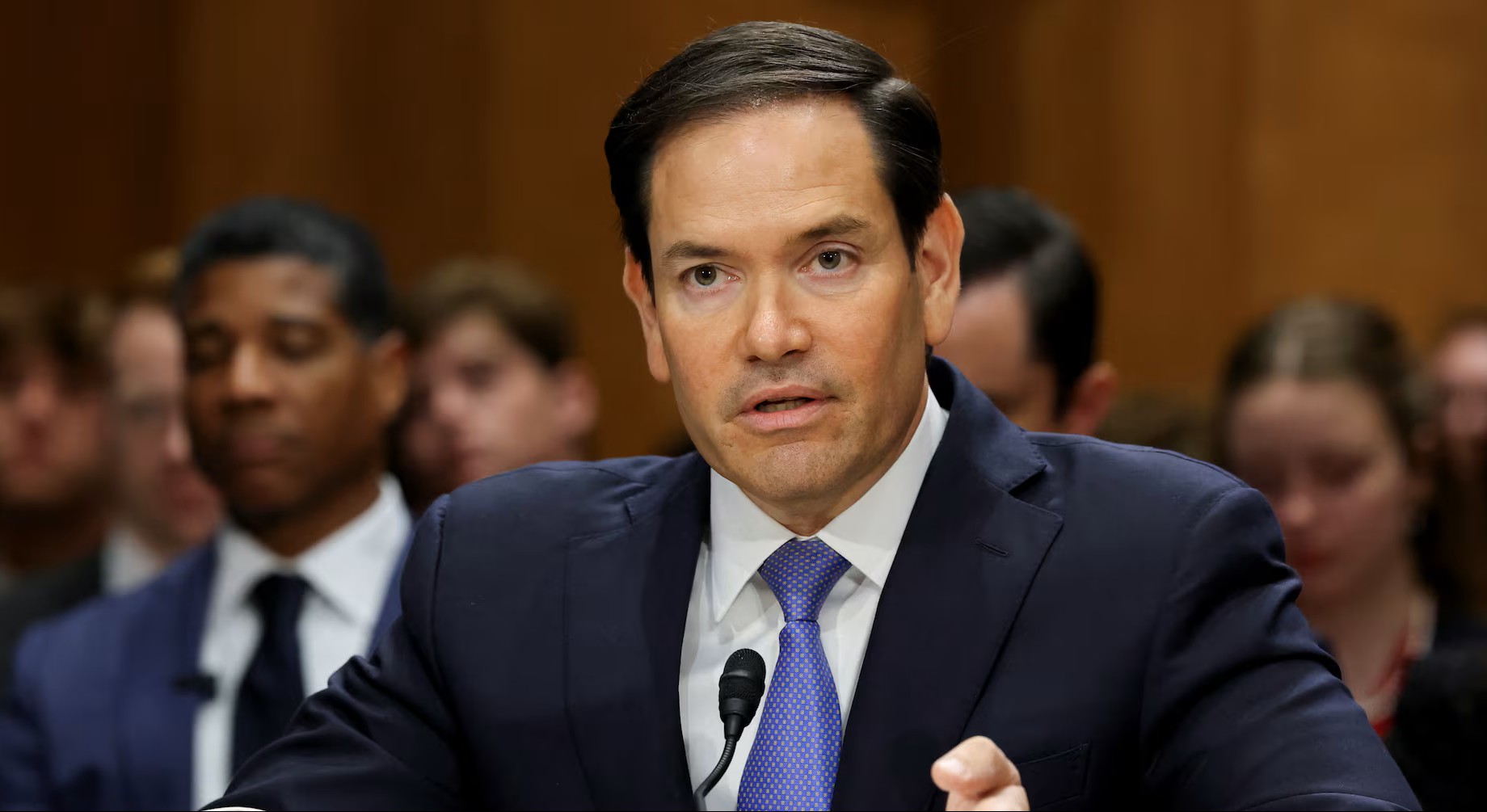
Secretary of State Marco Rubio, in a January 4 statement marking Burma’s Independence Day, urged the junta to cease violence, release detainees including Aung San Suu Kyi, and restore civilian rule. These words matter. But words alone are no longer sufficient.
One cannot prosecute narco-governance in Venezuela while tolerating it in Myanmar. One cannot claim peace while imprisoning peace itself. Aung San Suu Kyi is not a bargaining chip. She is a living symbol of nonviolent resistance, and her continued imprisonment is a stain on the global conscience.
If President Trump were to state plainly and publicly that Min Aung Hlaing must release Aung San Suu Kyi, President Win Myint, and Myanmar’s elected leaders—now—backed by targeted sanctions, asset freezes, and coordinated Indo-Pacific pressure, the effects would be seismic.
Such clarity would fracture the junta’s architecture of fear, weaken narcotics pipelines, and allow a nation suffocating under military rule to breathe again.
There remains a dignified exit available to Min Aung Hlaing. Exile is still an option. Maduro chose defiance and now faces trial. The choice remains.
Democracy compromised anywhere is democracy compromised everywhere. Narco-states do not respect borders. Silence, in such circumstances, is not neutrality; it is collaboration.
President Trump has shown what decisive power looks like. The world now waits to see whether it will be selective—or principled.
History has opened the door.
The question is whether the free world has the courage to walk through it—now.
Alan Clements is an author and former Buddhist monk who has written for four decades about Myanmar, nonviolence, and the psychology of authoritarian power. His latest book is Politics of the Heart: Nonviolence in an Age of Atrocity.
DVB publishes a diversity of opinions that does not reflect DVB editorial policy. We’d like to hear what you think about this or any of our stories: [email protected]