


Guest contributor
James Shwe
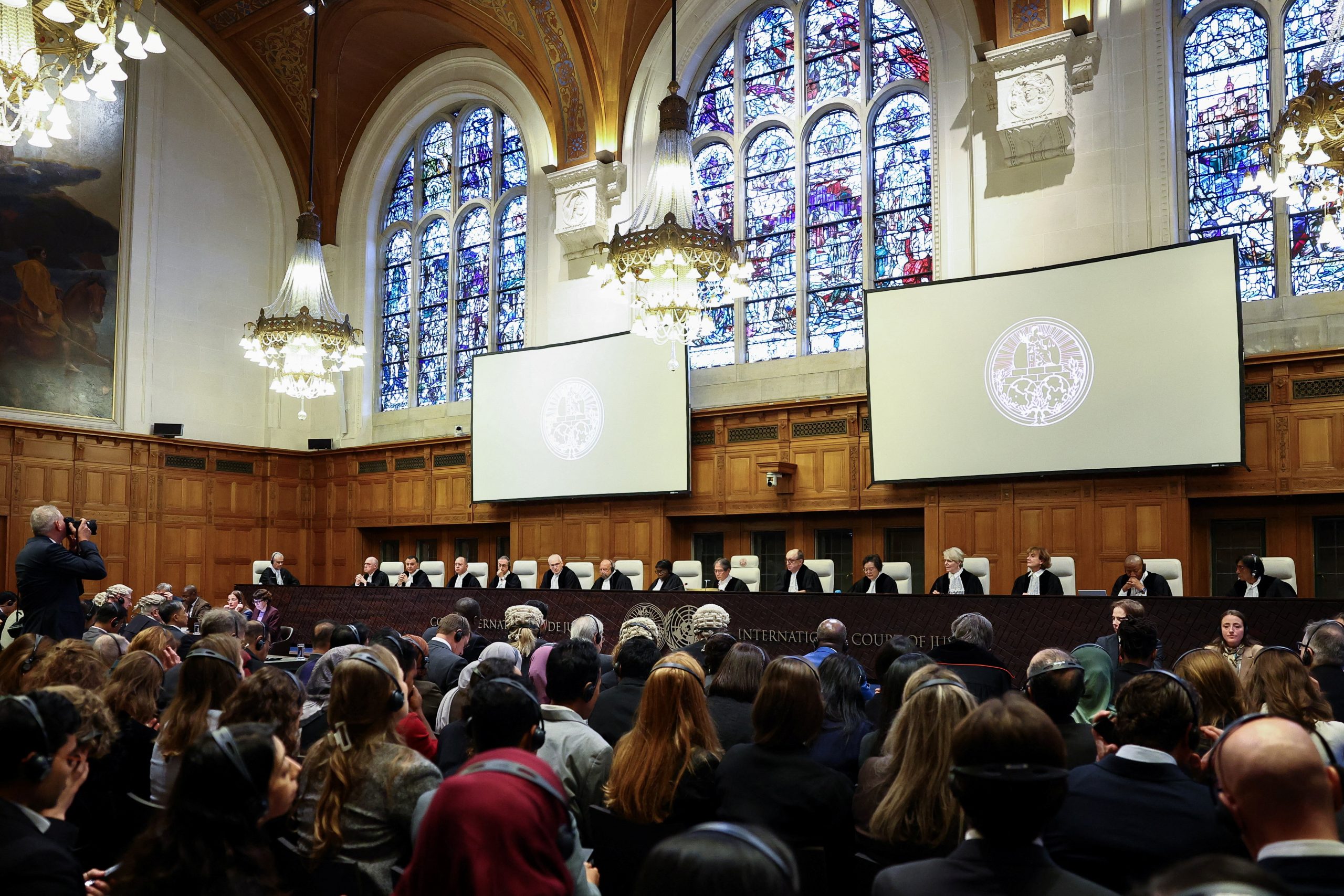
On November 19, the International Court of Justice (ICJ) in The Hague delivered a final, binding, and unappealable judgment in The Gambia v. Myanmar.
By a nine-to-six majority, the World Court ruled for the first time in its 80-year history that a state itself committed genocide directly under Article II of the 1948 Genocide Convention during the Myanmar military’s 2017 clearance operations against the Rohingya in northern Rakhine State.
The diplomatic floor shifted within hours. A day before the verdict, the United Nations General Assembly’s Third Committee approved its latest Myanmar human rights resolution.
Within hours of ICJ President Yuji Iwasawa’s three-hour reading, British Foreign Secretary Ed Miliband expelled Myanmar’s defense attaché from London, summoned the regime’s chargé d’affaires, and called for an urgent session of the U.N. Security Council, where Britain holds the pen on Myanmar.
For Rohingya survivors—more than 1.2 million of whom remain in crowded camps in Cox’s Bazar where tens of thousands of children have known nothing since 2017 except displacement—the judgment is a historic, hard-won recognition of truth.
For Myanmar’s broader democratic resistance, it is a test of political discipline and strategic clarity.
How we respond in the coming weeks will determine whether this judgment fractures our movement or tightens the legal and financial noose around Min Aung Hlaing’s regime.
Four priorities should guide what Myanmar’s resistance and international partners do next.
Do not turn on one another
Our first task is the simplest and hardest: refuse to be divided.
In January, the junta’s agent at The Hague, Ko Ko Hlaing, previewed the regime’s domestic script by calling the genocide case an “indelible stain” on the nation—attempting to hide the generals behind the country’s name and use ordinary citizens as a moral and political shield.
Now that the Court has ruled on state responsibility, junta propagandists and political opportunists on every side will try to turn the verdict into a weapon of collective blame, sectarian grievance, or factional point-scoring.
We must reject both traps. Recognizing the gravity of what the military inflicted on the Rohingya does not diminish the suffering of Chin, Kachin, Karen, Karenni, Mon, Rakhine, Shan, or Bamar communities bombed and displaced by the same army; nor does defending the public from collective guilt excuse decades of exclusionary laws and state propaganda that made 2017 possible.
The ICJ adjudicates disputes between states, not individual criminal guilt. Individual criminal responsibility belongs to the men who gave the orders and the units that carried them out.
That track is moving separately: at the International Criminal Court, where an arrest warrant request for Min Aung Hlaing has been pending since November 2024, and in national courts exercising universal jurisdiction—from arrest warrants issued in Argentina in February 2025 to the landmark war-crimes proceedings opened by Timor-Leste’s judiciary in February 2026 on evidence brought by the Chin Human Rights Organization.
Pursue the commanders who ordered the burning of villages from Maungdaw to Sagaing and Mindat, not their neighbors.
Cut military procurement, not family lifelines
Second, international enforcement following the ICJ ruling must target the regime’s war chest without strangling Myanmar’s civilians.
On October 30, the Financial Action Task Force (FATF) kept Myanmar on its high-risk “blacklist” alongside only Iran and North Korea, warning that countermeasures will be considered in February 2027 if no progress is made on illicit finance and extensive cyber-scam operations flourishing under military protection.
Crucially, the FATF also instructed governments to ensure that enhanced due diligence does not disrupt or discourage flows of funds for humanitarian assistance, legitimate non-profit activity, and family remittances.
As London, Washington, Brussels, and regional financial centers weigh follow-on measures after The Hague’s ruling, blunt de-risking is the wrong answer.
Cutting off ordinary cross-border banking channels punishes migrant workers sending money home, drives families into unregulated hundi networks, and obstructs funds for food, medicine, and cross-border aid.
Precision is what hurts Naypyitaw: sanctioning junta-controlled state banks, state-owned enterprises, aviation-fuel supply chains, and foreign currency settlements that pay for Russian and Chinese weapons, while enforcing clear humanitarian and remittance carve-outs so ordinary people can survive.
Use the U.N. Stolen Asset Recovery framework so the generals pay
Third, we must answer the question junta mouthpieces are already weaponizing: who pays?
Alongside ordering Myanmar to enact legislation fulfilling the Genocide Convention, prosecute perpetrators, and guarantee safe, voluntary, and dignified return and family reunification, the ICJ ordered restitution and compensation for Rohingya victims.
Crucially, the Court set a two-year deadline—until November 2028—for Myanmar to report back on its restitution measures and on the amount and modalities of compensation, reserving a subsequent phase if needed.
Ordinary Myanmar citizens should not pay a single kyat out of public schools, hospitals, or household savings for crimes committed by generals who have looted the country for more than sixty years.
From Ne Win’s overseas accounts to Than Shwe’s fire-sale privatizations and Min Aung Hlaing’s family-and-crony conglomerates, every military seizure of power has enriched a narrow clique while impoverishing the public.
To be clear, the ICJ did not itself mandate a specific funding mechanism today. What we should propose—to U.N. member states, the National Unity Government (NUG), and international financial institutions—is using the two-year reparations window to activate the Stolen Asset Recovery Initiative (StAR), a joint partnership of the U.N. Office on Drugs and Crime (UNODC) and the World Bank Group operating under Chapter V of the U.N. Convention against Corruption (UNCAC), which Myanmar ratified in December 2012.
Under StAR’s established eight-stage asset recovery process, states parties are empowered to trace, freeze, confiscate, and return wealth derived from corruption and state abuse. Applied to Myanmar, that roadmap is concrete:
One, use law-enforcement cooperation and open-source financial intelligence—building on the documentation compiled by groups like Justice For Myanmar—to construct forensic financial profiles of senior generals, their families, and arms-brokering cronies.
Two, pierce the shell companies and nominee directors hiding beneficial ownership of luxury real estate, bank accounts, and corporate stakes abroad, leveraging heightened bank scrutiny under Myanmar’s FATF blacklisting.
Three, deploy mutual legal assistance and civil or criminal forfeiture orders in foreign jurisdictions to freeze and confiscate those illicit assets.
Four, hold recovered funds in protected foreign confiscation accounts or international escrow—never transferring them to Naypyitaw—and channel them under World Bank and independent civil-society monitoring directly toward survivor reparations and post-junta reconstruction, a victim-return pathway StAR’s own framework explicitly recognizes.
Anchor accountability in legitimate representation
Finally, none of these legal or financial tracks operate in a vacuum.
Min Aung Hlaing’s regime spent early 2026 staging a controlled election, swapping his uniform for a presidential sash on April 10, and asking diplomats in ASEAN and New York to treat a rebranded coup as normal statehood.
Today’s ICJ judgment strips away that costume. The self-styled president in Naypyidaw is the very commander whose 2017 operations the World Court has just judged to be genocide.
Accepting credentials from his junta in New York, or leaving Myanmar’s U.N. seat silent, would hand diplomatic cover to the principal perpetrator at the exact moment the U.N.’s highest court has demanded accountability.
Preserving Ambassador Kyaw Moe Tun’s seat and coordinating closely between democratic institutions, Rohingya representatives, and ethnic resistance authorities is essential if Myanmar is to meet its international obligations honestly.
The ICJ’s judgment is final. Our response should be just as clear: refuse internal division, block arms money rather than family remittances, trace and seize the generals’ stolen wealth to fund reparations for survivors, and hold the commanders—not the captive nation they robbed—to account.
James H. Shwe is a semi-retired professional engineer and Myanmar democracy advocate based in Los Angeles, California.
DVB publishes a diversity of opinions that do not reflect DVB editorial policy. We’d like to hear what you think about this or any of our stories: [email protected]