


Junta airstrikes killed nearly 800 women last year. Awareness campaigns are not enough. The world must refer the military to the ICC.
Guest contributor
Maggi Quadrini
On July 14, three people, including an expectant mother in her third trimester, were killed when junta-deployed gyrocopters attacked a local tea shop in Ayadaw Township, Sagaing Region.
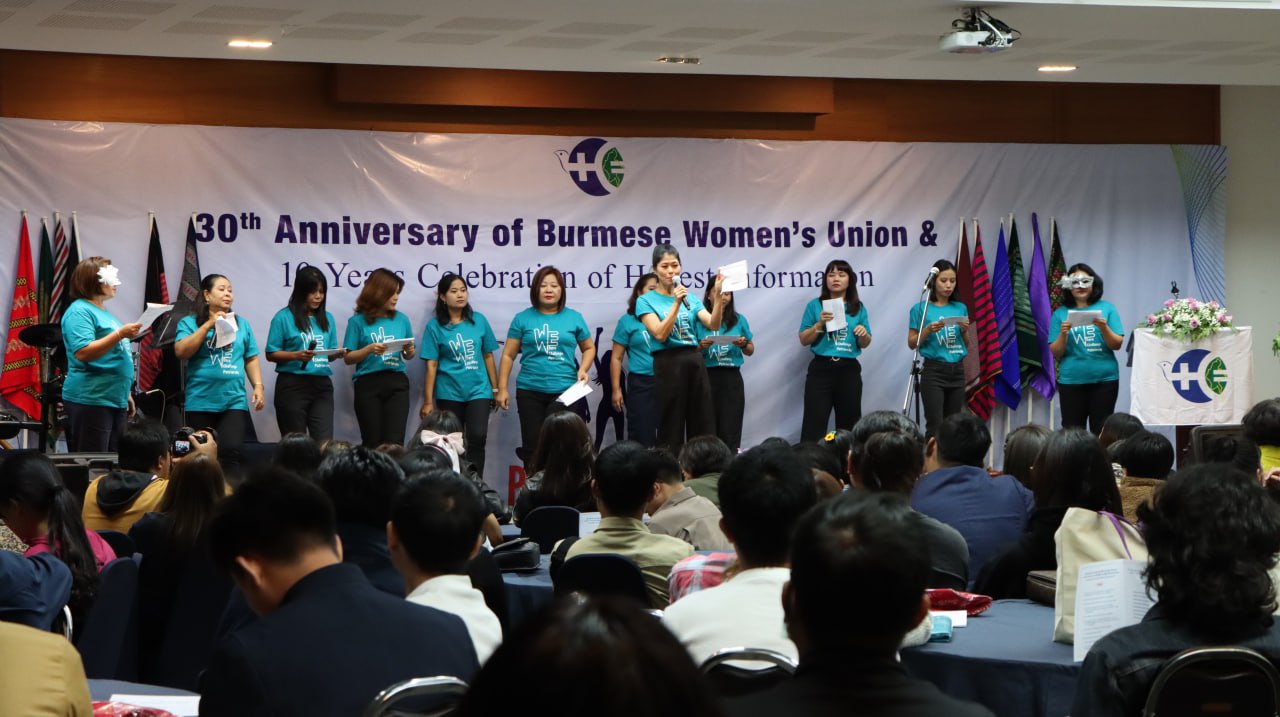
By the end of last year, the Burmese Women’s Union (BWU) noted in their 2025 annual report that 792 women were killed, including 154 girls under 18 and 5 pregnant women, with 815 more injured.
In February alone, BWU reported that over 60 women were killed across Myanmar as a result of the air and ground attacks by the junta.
As the human rights situation on the ground worsens, the gendered protection and security concerns surrounding women and girls demand all the more attention and decisive action.
Ahead of the annual 16 Days of Activism, there is a reminder and a reinforced call that in war-torn communities, women and girls are struggling in an endless pursuit of accountability as military impunity continues to deny them justice.
Every year, the campaign runs from November 25 to December 10 to bring awareness to the epidemic of gendered violence, where, alarmingly, one in three women are impacted nationwide.
Since the 2021 military coup, there has been a worrying increase in the cases of conflict-related sexual violence (CRSV) documented as military junta soldiers continue to commit crimes against women and their communities, including female political prisoners.
The junta has also relentlessly harassed, intimidated and threatened those who assist conflict-affected groups by blocking the delivery of supplies, including menstrual pads and hygiene kit items.
This has increased stress for women operating in areas where their presence makes them targets.
Since 2021, women have faced increased ongoing oppression in devastating ways. More than 16 million people urgently need assistance as the rapidly deteriorating human rights landscape has left families without work and without the means to secure basic daily needs, such as food, water, and shelter.
With over 40 per cent of women without an income amid a mismanaged economy, those in conflict-affected areas are at especially high risk, where employment falls to just 62 per cent.
Mobility restrictions and heightened care demands are driving the livelihood gaps.
High male unemployment has not shifted the burden of care, which still falls on women.
Strain at home drives drug and alcohol abuse, which fuels domestic violence.
Survivors have few routes to justice, and community justice systems, which handle many cases, often favour outcomes that keep women living with their abusers.
The sudden funding cuts in 2025, widely considered ‘recklessly abrupt’ by Amnesty International, reduced access to life-saving health services and have also contributed to additional strain in the lives of women and girls.
The funding halt caused projects to close overnight.
The challenges being faced on the ground are immense, exposing existing vulnerabilities and leaving women and girls increasingly at risk of being exposed to various forms of violence.
And given that women and children are the most impacted by the violence, the need for support currently outweighs the limited amount of resources available.
In the aftermath of the funding cuts, large-scale non-profits were forced to close programs in refugee camps, displacement sites, and conflict-affected areas, while ethnic women-led organizations have continued to fill service gaps.
For more than 70 years, Myanmar’s military has waged violent, extractive war on its own country, committing war crimes and crimes against humanity that have left women and children deeply traumatized and without access to justice.
Aircraft bomb schools in unpredictable strikes. Women who flee to remote areas to escape the junta’s jets end up cut off from health care, shelter, and psychological support.
The collapse of formal justice systems in Myanmar is evident in the lack of a stable, reliable rule of law.
This broken justice system deliberately undermines the protection, promotion and preservation of women’s rights.
Women’s access to justice is obstructed by discriminatory patriarchal and cultural norms, customary laws, economic barriers, and corruption.
Discrimination against women is widespread, impacting their ability to enjoy their rights and seek justice for violations, as corruption in the courts is willingly endorsed by the regime.
Further, there is a long-overdue effort by regional and international actors to take a firm stance against the military junta’s ongoing crimes.
Impunity has been a defining hallmark of the regime. And safe spaces are constantly under attack, including temporary shelters and displacement sites.
Survivor-centred solutions funded by donors are lacking, yet women’s organizations urgently need them to meet local needs in timely and effective ways.
Women and girls in Myanmar need action, not just attention. The 16 Days of Activism shines a light on the violence and how much more effort is required to eradicate it in all its forms.
The Rome Statute of the International Criminal Court classifies rape, sexual slavery, enforced prostitution, forced pregnancy, and enforced sterilization as both war crimes and crimes against humanity.
The world must back Myanmar’s women activists and civil society, amplify their voices, and put gender at the centre of its crisis response.
Maggi Quadrini is a women’s rights advocate working on the Thailand-Myanmar border. She works side by side with community-based organizations, providing technical support to drive gender equality and humanitarian solutions shaped by the communities themselves.
DVB publishes a diversity of opinions that does not reflect DVB editorial policy. We’d like to hear what you think about this or any of our stories: [email protected]